

More news on this day
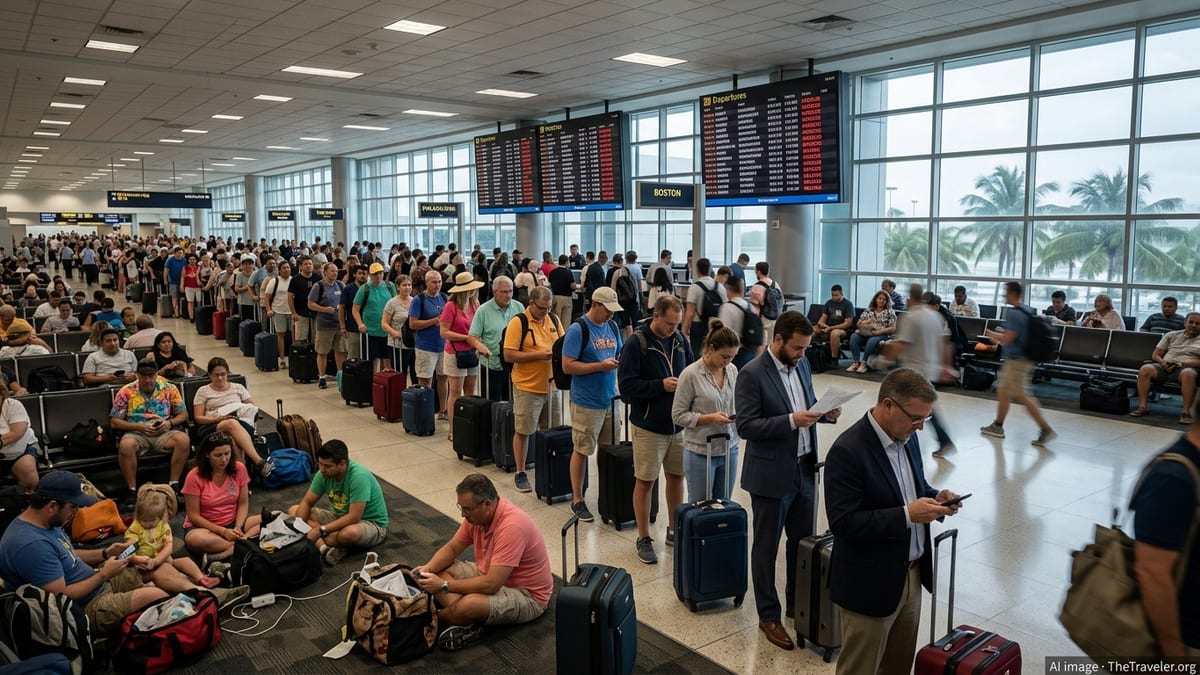
Hundreds of travelers were left stranded this week after widespread flight cancellations and cascading delays at San Juan’s Luis Muñoz Marín International Airport disrupted key routes to Boston, Orlando, Philadelphia and other major U.S. cities.
Get the latest news straight to your inbox!
Storm Fallout and System Strain Hit Key Mainland Gateways
The disruption comes on the heels of a powerful late-winter pattern that has repeatedly strained airline operations across the eastern United States, particularly in the busy corridor from Boston to Philadelphia. Recent storms in February brought heavy snow, strong winds and widespread travel restrictions across New England and the Mid-Atlantic, triggering thousands of cancellations and delays system-wide. Those knock-on effects continue to ripple through airline schedules well into March as carriers work through aircraft and crew imbalances.
Publicly available tracking data over recent days shows clusters of canceled and heavily delayed departures connecting San Juan with Boston, Orlando and Philadelphia, among other cities. Travellers report missed connections and overnight maroonings in both Puerto Rico and mainland hubs as aircraft struggle to reposition and rolling weather disruptions in the Northeast and Florida further squeeze capacity.
According to published coverage of recent storms in the Northeast, airports from Boston to Philadelphia have already been dealing with elevated cancellation counts and ground stops this winter season. Combined with volatile spring weather in Florida, these conditions make routes linking San Juan with Orlando and major East Coast cities especially vulnerable when even a single storm system or operational glitch hits.
Industry analysts note that when a hub like San Juan sees multiple waves of disruption over several days, the recovery is often uneven. Flights to high-demand leisure destinations such as Orlando and Boston tend to fill quickly, leaving rebooking options limited and pushing some travelers to wait days for an available seat.
Travelers Report Long Lines, Limited Rebooking Options
Travelers sharing their experiences on public forums describe scenes of crowded departure halls, long security lines and mounting frustration as departures to the mainland are repeatedly delayed or scrubbed. Accounts from passengers attempting to fly between San Juan and Boston this month detail abrupt cancellations, overnight waits in terminals and limited guidance beyond automated rebooking notices.
On routes to Orlando, which is one of San Juan’s busiest leisure links served by several low-cost and hybrid carriers, passengers describe arriving at the airport to find long boards of delayed and canceled flights and standby lists stretching into the dozens. Some reports indicate travelers have been stuck in Orlando for multiple days after previous cancellations, with seats back to Puerto Rico or onward to the Northeast in short supply.
Similar stories are emerging from the Philadelphia market and other East Coast gateways that rely on connecting traffic to and from Puerto Rico. Publicly available flight-status snapshots over the past several days show multiple cancellations on San Juan services clustered around the same periods that storms and strong winds have affected operations further north.
As often happens during major disruptions, travelers report that alternative options can be both scarce and expensive. With many flights fully booked at the start of spring break season, some passengers describe being offered new departures several days later or needing to route through additional hubs, extending what should have been a three- or four-hour journey into a multi-day ordeal.
Airlines Serving San Juan Feel the Pressure
Luis Muñoz Marín International is a significant Caribbean gateway for a mix of legacy, low-cost and ultra-low-cost carriers. Public schedules show that airlines including JetBlue, Frontier, Spirit and Southwest all connect San Juan with Orlando, Boston or Philadelphia, while larger network carriers tie the airport into their mainland hubs. When winter and early spring storms hit multiple parts of this network, the impact can quickly broaden beyond a single route.
In recent weeks, travelers have highlighted a pattern of operational stress affecting some of the same carriers in other airports. Public posts about scenes in Orlando, for example, describe long queues at check-in counters, extensive same-day cancellations and large standby lists for departures on certain low-cost airlines. When those same airlines also operate dense schedules into San Juan, a rough day in Orlando or another hub can cascade into missed rotations and grounded aircraft in Puerto Rico.
Industry observers note that leisure-oriented routes are particularly sensitive to these shocks. Many flights connecting San Juan with Boston, Orlando and Philadelphia are heavily seasonal and timed to peak weekend and holiday demand. When storms or staffing challenges erase a day’s worth of flying, there are fewer spare seats in the following days to absorb displaced passengers.
Publicly available scheduling data also indicates that some carriers have adjusted their San Juan service patterns this year, adding new routes or seasonal frequencies in late March. While these additions are intended to capture strong demand, they can also mean tighter aircraft utilization, leaving little slack in the system when weather or air traffic control constraints intervene.
What Passengers Can Expect in the Coming Days
With the broader U.S. system still recovering from recent winter and thunderstorm activity, travel experts caution that conditions on San Juan routes may remain uneven in the short term. Weather in both New England and central Florida remains changeable in March, and even isolated thunderstorms or strong winds at a key hub can cause further pockets of disruption on already stressed schedules.
Publicly available advice from airlines and travel organizations continues to emphasize flexibility. Passengers booked on near-term flights between San Juan and cities such as Boston, Orlando and Philadelphia are being encouraged, through published alerts and notices, to monitor their flight status frequently, make use of mobile rebooking tools where available and consider traveling with carry-on luggage only to allow for quick rerouting.
Observers also highlight the importance of building extra time into itineraries that rely on connections, especially when the first leg involves an airport currently experiencing heavy disruption. For travelers flying home from Puerto Rico to smaller markets via Boston or Orlando, leaving wider buffers between flights can reduce the risk of being stranded overnight if an earlier segment is delayed or canceled.
As airlines gradually reposition aircraft and crews and spring weather patterns stabilize, operations at Luis Muñoz Marín International Airport are expected to improve. For now, however, travelers moving between Puerto Rico and major U.S. gateways continue to experience an unpredictable mix of cancellations, rolling delays and crowded terminals as the winter travel season draws to a close.