

More news on this day
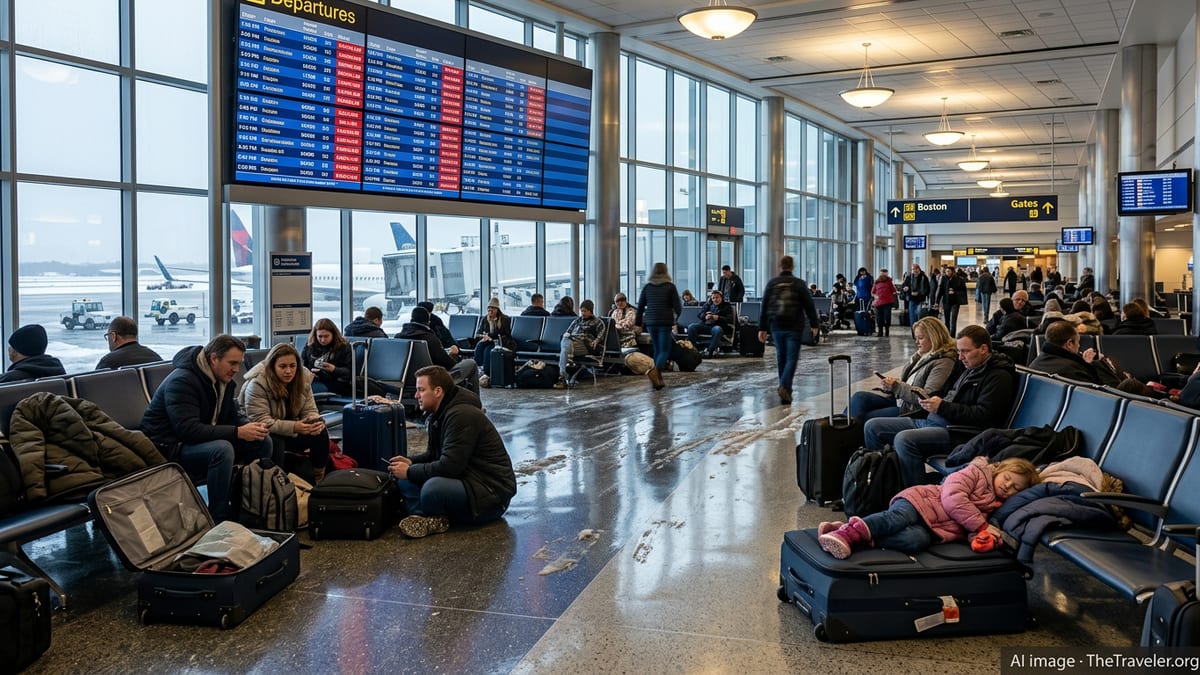
Hundreds of passengers were left stranded at Boston Logan International Airport after widespread flight cancellations linked to late‑winter storms and ongoing operational knock-on effects disrupted travel across the northeastern United States.
Get the latest news straight to your inbox!
Late-Winter Weather Triggers Major Disruption
Boston Logan International Airport has faced repeated operational strain in recent weeks as powerful winter systems moved through New England and the broader Northeast. A series of snow and wind events in late January and February led to large-scale schedule disruptions, and the latest round of adverse weather is again causing numerous cancellations and delays for flights into and out of Boston.
Publicly available aviation data and airline alerts show that carriers serving Logan trimmed schedules and preemptively cancelled flights as forecasts called for periods of heavy snow, low visibility and strong crosswinds over Boston Harbor. These conditions can make takeoffs and landings more challenging, particularly during peak travel times, prompting airlines and air traffic managers to reduce overall traffic to maintain safety margins.
Weather-related disruptions do not always coincide with a single dramatic event. Instead, a sequence of storms and fast-changing conditions has produced a stop-start pattern at Logan, where operations partially recover between systems before coming under pressure again. This pattern has left some travelers experiencing multiple rebookings, rolling delays and unexpected overnight stays in Boston.
In addition to local conditions at Logan, disruptions at other major hubs along the East Coast and in the Midwest have compounded problems. When storms affect aircraft and crews based in other cities, cancellations can ripple into Boston even when skies briefly clear over Massachusetts.
How Many Flights Are Affected and Where
Recent winter storms have produced some of the most significant aviation disruption the region has seen in several years. During one late-January system, hundreds of flights at Boston Logan were cancelled in a single day, part of a nationwide spike that pushed U.S. cancellations to levels not seen since the early stages of the pandemic. More recent storms in February and March have continued to generate notable, if somewhat smaller, waves of disruption.
On the busiest days, the number of cancelled departures and arrivals at Logan has reached into the high hundreds, according to operational tallies referenced in airline communications and aviation tracking data. These cancellations have affected a mix of short-haul regional routes to nearby Northeast cities, medium-haul domestic flights to hubs such as Chicago and Atlanta, and select transatlantic services linking Boston with Europe.
Travelers connecting through Boston have been particularly exposed. When an inbound flight is cancelled or significantly delayed, passengers can miss onward connections, straining rebooking options on already busy alternative routes. This effect has been especially visible during peak periods such as weekends and school holidays, when load factors are high and spare seats are limited.
While the cancellations are disruptive, they are generally spread across multiple carriers rather than concentrated on a single airline. Logan’s role as a hub and focus city for several major U.S. and international airlines means that any sustained weather system or air-traffic constraint quickly shows up across departure boards in multiple terminals.
Key Causes: Weather, Staffing and Network Ripple Effects
Weather remains the primary catalyst for the latest disruptions, but the underlying causes are more layered than snow alone. Strong wind gusts, shifting runway configurations and limited visibility can reduce airport capacity and force traffic-management measures, such as slowing the rate of arrivals and departures. When these constraints coincide with peak schedules, airlines may cancel flights in advance to prevent more chaotic, last-minute disruptions.
In parallel, aviation observers point to the lingering effects of tight staffing in parts of the air travel system, including ground handling, customer service and, in some cases, air traffic control. When schedules are already near capacity, the added strain of weather-driven changes can push operations beyond what available staff and crews can comfortably absorb, increasing the likelihood of cancellations and extended delays.
Network ripple effects are also significant. An aircraft scheduled to operate multiple legs in a single day can be taken out of sequence if its first flight is cancelled or heavily delayed by weather at another airport. This displacement can then impact flights later in the day at Logan, even if local conditions have improved. Similar dynamics apply to flight crews, who are subject to strict duty-time limits that can trigger cancellations when disruptions accumulate.
These interacting factors help explain why passengers sometimes encounter cancellations at Logan on days when weather appears relatively calm. The visible conditions at the terminal may not reflect the full chain of operational challenges playing out across multiple time zones and hubs.
What Affected Travelers Should Do Now
For passengers facing cancellations or lengthy delays at Boston Logan, the most effective steps often begin well before arriving at the airport. Airline mobile apps and websites typically display real-time flight status updates and rebooking options, and many carriers encourage travelers to confirm their flights repeatedly in the hours leading up to departure during periods of disruption.
When major weather systems are forecast, airlines frequently publish travel waivers that allow customers to change dates or routes without standard change fees, provided certain conditions are met. Publicly available information from multiple carriers indicates that such waivers have been used repeatedly this winter for Boston and other Northeast airports, giving travelers more flexibility to depart earlier or later than originally planned.
Passengers whose flights are already cancelled should generally pursue rebooking through digital channels first, as call centers and in-person counters can become overwhelmed when large numbers of people seek assistance at the same time. Some travelers may find that alternative routings involving a different connection city, or even a nearby departure airport in New England, provide a faster path to their destination than waiting for the next nonstop from Logan.
Given the potential for extended waits, especially during peak travel periods, travelers passing through Logan are often advised to bring essential medications, chargers, snacks and basic toiletries in their carry-on luggage. This preparation can make unexpected overnight stays or long delays in the terminal more manageable.
Looking Ahead for Spring Travelers
With the calendar moving toward spring, many travelers may hope for a quick end to winter-related disruptions at Boston Logan. While snow and ice risks typically diminish as temperatures warm, early spring in New England can still produce impactful coastal storms and strong wind events that affect aviation. Forecast variability can also make it difficult for airlines to anticipate exactly when conditions will deteriorate or improve.
Travel industry commentary suggests that airlines have learned from the most severe disruptions of recent years by trimming schedules during known peak weather windows and adjusting crew planning in advance. These strategies can reduce, but not entirely eliminate, the risk of mass cancellations in complex weather scenarios, especially at a busy coastal airport like Logan.
For travelers planning trips over the coming weeks, flexible itineraries remain valuable. Selecting flights earlier in the day, considering nonstop options where possible and allowing extra connection time can provide additional buffers when the system comes under stress. Monitoring forecasts for both Boston and any connecting hubs is also important, since conditions elsewhere often determine whether a scheduled aircraft and crew will arrive on time in Massachusetts.
Despite the current disruptions, Boston Logan continues to operate as a critical gateway for New England, and most flights are still departing and arriving as scheduled on days without major weather. However, the recent wave of cancellations underscores how quickly conditions can change, and why travelers using the airport this season should stay alert, plan conservatively and build flexibility into their journeys.