

More news on this day
Air travel across Türkiye has been severely disrupted in recent days, with widespread flight cancellations and delays at key hubs leaving thousands of passengers stranded and scrambling to rebook their journeys.
Get the latest news straight to your inbox!
Weather Systems and Regional Tensions Hit Flight Schedules
Reports from Turkish and international aviation trackers indicate that a combination of late-winter storms over parts of Türkiye and neighboring regions has forced airlines to trim or cancel large portions of their schedules. Low visibility, strong crosswinds and thunderstorms have particularly affected operations at Istanbul Airport and Istanbul Sabiha Gökçen, the country’s two main international gateways.
Publicly available information also points to knock-on disruption from regional instability in parts of the Middle East. In recent weeks, Turkish carriers have adjusted timetables or issued flexible booking policies for routes touching conflict-affected airspace, and those changes are now intersecting with weather-related constraints. The result is a compressed flight program in and out of Türkiye, even on purely domestic routes that would typically be more resilient.
Industry briefings suggest that safety-driven decisions to suspend or reroute flights have created bottlenecks in air traffic flows over the eastern Mediterranean. When multiple carriers avoid the same corridors at the same time, air traffic control capacity tightens, forcing further schedule reductions. For travelers, this is translating into last-minute cancellations and long ground holds, sometimes after boarding has begun.
While exact cancellation totals fluctuate hour by hour, aggregation of flight-status data shows hundreds of flights affected over the most recent peak travel days. Istanbul, Ankara and Antalya feature prominently in disruption tallies, reflecting their role as primary transit points for both domestic and international traffic across Türkiye.
Long Queues, Overnight Stays and Patchy Passenger Care
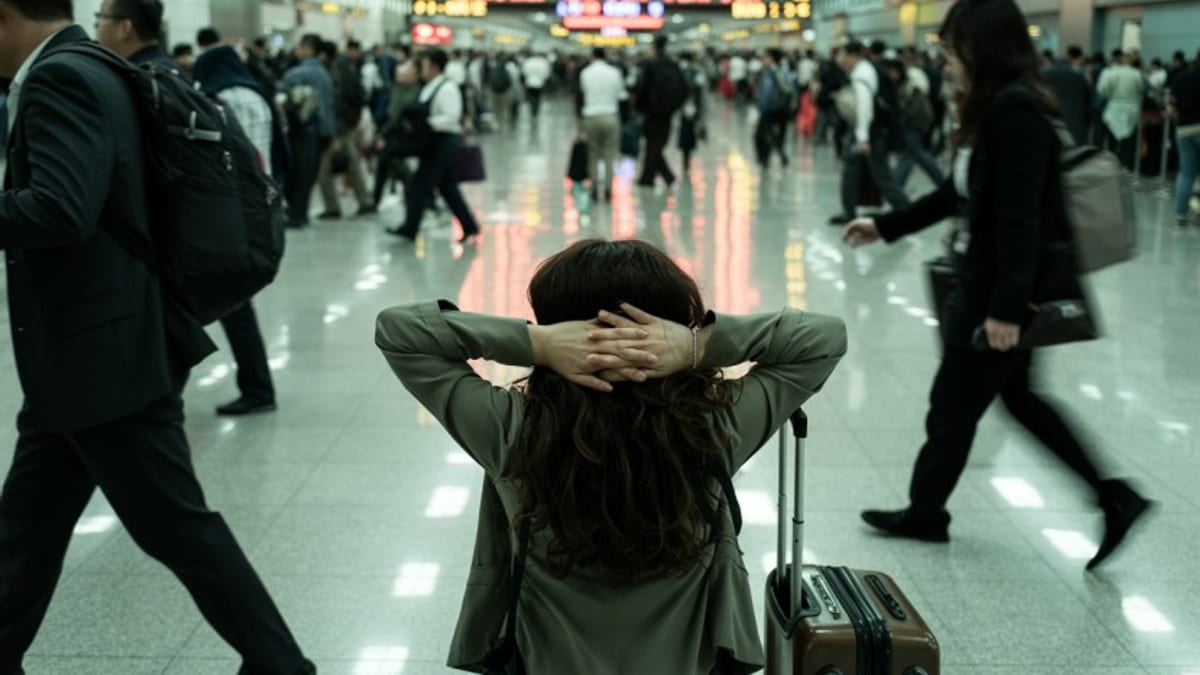
Scenes shared through social media and traveler forums show long lines forming at check-in counters and ticket desks as passengers attempt to secure alternative flights. Many report waiting several hours to speak with airline agents, particularly during evening waves of cancellations when multiple departures are scrubbed in quick succession.
Travelers connecting through Türkiye’s hub airports have described missed onward flights and unplanned overnight stays. In some cases, passengers say they were rebooked onto services departing more than 12 hours later, while others recount being advised to seek hotel rooms on their own in already busy airport districts. Crowded terminal seating, limited availability of cots, and restaurants operating at or beyond normal capacity are recurring themes in these accounts.
Passenger experiences appear to vary widely between carriers and even between flights on the same airline. Some travelers describe being provided with meal vouchers, transportation to nearby hotels and rebooking support, while others report receiving only basic information about cancellations and being directed to online self-service tools. The uneven application of assistance policies is contributing to frustration among stranded passengers unfamiliar with local consumer-protection rules.
Travel discussion boards focused on Türkiye indicate that families with children, elderly passengers and those traveling on separate or complex tickets have been particularly exposed. When itineraries involve multiple airlines or separate bookings, travelers often discover that only one segment is formally canceled, complicating efforts to obtain through rebooking or comprehensive care.
Airlines Balance Safety, Capacity and Compensation Rules
According to published coverage from aviation industry outlets, Turkish airlines are attributing most of the latest wave of cancellations to safety considerations tied to weather and airspace conditions. Airlines are required to prioritize operational safety, and grounding flights in poor conditions is a standard response, even when it significantly disrupts schedules.
However, the same reports note that the broader environment for air travel in and around Türkiye remains strained. Persistent air traffic control staffing limitations in parts of Europe and the eastern Mediterranean, high seasonal demand and tighter aircraft utilization are leaving carriers with less flexibility to absorb irregular operations. When several flights are canceled in a short window, there are fewer spare aircraft and crews available to reposition or deploy on recovery rotations.
Travel-law specialists commenting in public forums emphasize that the cause of a cancellation can also affect passenger rights to compensation or reimbursement. Under Türkiye’s own aviation passenger regulations, travelers on Turkish carriers may be entitled to assistance and, in some cases, financial compensation, depending on whether the disruption is considered within an airline’s control. Weather and airspace closures are often treated differently from technical or staffing issues, which can be a point of contention for affected passengers.
As complaints rise, some travelers have begun sharing step-by-step experiences of filing claims through Türkiye’s civil aviation complaint channels and through equivalent bodies in the European Union for flights touching EU territory. Early indications suggest that processing times for such claims can stretch to several weeks or longer, further extending the disruption beyond the travel date itself.
Domestic Network Under Pressure as Airports Fill
The impact of the cancellations is not limited to long-haul or regional services. Domestic routes linking Istanbul, Ankara, Izmir, Antalya and other major Turkish cities have also come under pressure as airlines attempt to consolidate operations and prioritize certain connections. Flight-status boards at several airports have displayed clusters of cancellations or significant delays on routes that are usually among the country’s most frequent and reliable.
Available airport performance data for Türkiye show that domestic traffic had been on a steady recovery trajectory, with airlines rebuilding frequencies and passenger numbers over the past year. The current disruption risks temporarily reversing some of that progress, particularly if schedule instability continues into upcoming holiday and business travel periods.
Airport operators are responding by adjusting staffing levels, opening additional security lanes where possible and deploying more customer-service personnel onto terminal floors. Public updates from airport information channels emphasize that ground operations are continuing, even as flight volumes fluctuate. Nonetheless, higher passenger density in waiting areas and a surge in customer inquiries are testing the capacity of terminal services.
Travelers arriving at smaller regional airports in Türkiye are also feeling the effects. When inbound flights are canceled or significantly delayed, downstream services that rely on tight turnarounds can be disrupted, leading to gaps in connectivity for communities that depend on air links to Istanbul or Ankara for business, education and health-related travel.
What Travelers Can Do as Disruptions Continue
Consumer travel advisories circulating in Turkish and international media encourage passengers with upcoming journeys to build additional time into itineraries, particularly when making connections in Istanbul or other busy hubs. Flexible routing, including considering alternative airports within Türkiye where feasible, is being recommended for those whose travel plans allow it.
Frequent travelers suggest that monitoring airline apps and airport information channels closely in the 24 hours before departure can provide earlier warning of potential changes, enabling quicker rebooking. Many airlines operating in Türkiye have expanded digital self-service options that allow travelers to switch flights, request vouchers or adjust itineraries without waiting in line at the airport, though these tools may be limited for complex or multi-airline tickets.
Travel experts contributing to public forums are also advising passengers to review fare rules and travel insurance documents ahead of time. Some policies explicitly cover additional accommodation, meals or alternative transport when cancellations are outside the traveler’s control, while others provide only limited benefits. Knowing in advance which expenses may be reimbursable can help travelers make faster decisions in the midst of disruption.
With weather patterns and regional dynamics remaining unpredictable, it is not yet clear how long the current wave of cancellations across Türkiye will persist. For now, publicly available information points to a fluid situation in which air travelers are likely to continue facing elevated risks of disruption, even as airlines and airports work to stabilize schedules and restore confidence in one of the country’s most vital transport sectors.