

More news on this day
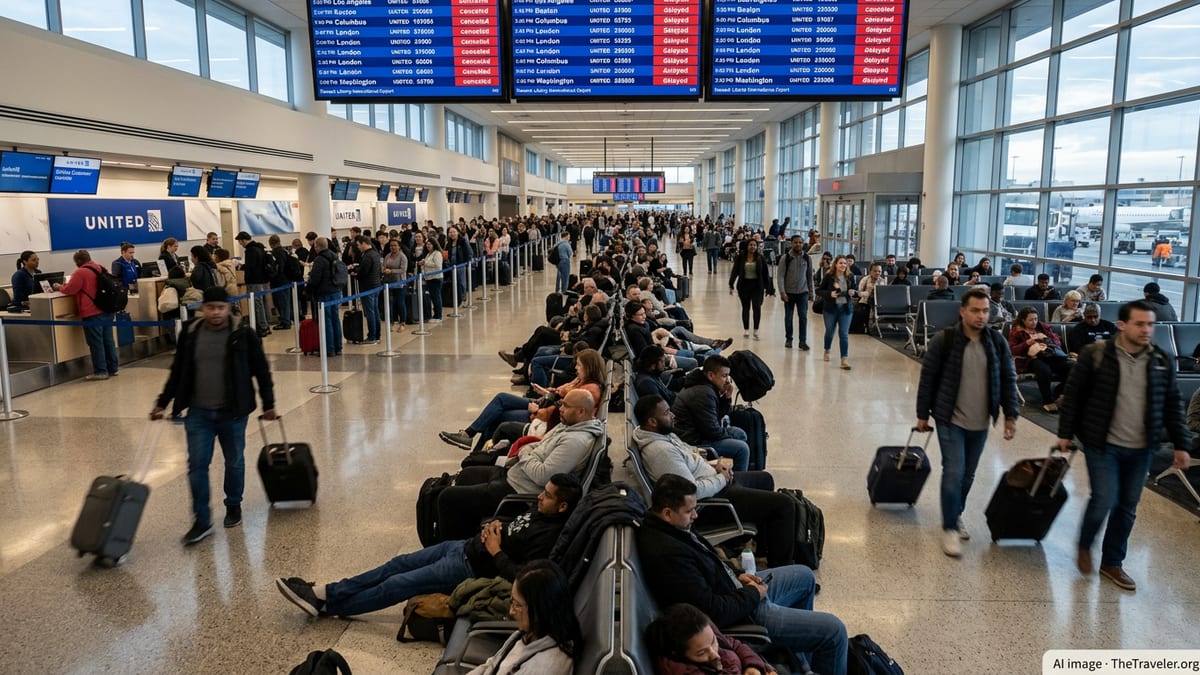
Hundreds of passengers were left stranded at Newark Liberty International Airport on Wednesday as a fresh wave of disruptions forced more than 100 flight cancellations and over 200 delays, snarling operations for major carriers including United Airlines, regional partners Republic and GoJet, Lufthansa, Spirit and others on some of the airport’s busiest routes.
Get the latest news straight to your inbox!
Major Hub Brought to a Crawl
The latest disruption at Newark Liberty International Airport, one of the country’s key air travel gateways, rippled across the national network throughout the day. Flight tracking data showed cancellations clustering around peak morning and late afternoon banks, when United and its regional affiliates typically funnel passengers to and from major cities such as Los Angeles, Boston, Columbus and Washington.
Travelers reported long lines at check-in counters and customer service desks, with departure boards showing rows of flights listed as delayed or canceled. The heaviest impacts were on transcontinental services to the West Coast and shuttle-style routes to the Northeast corridor and Midwestern business centers, which together account for a large share of Newark’s daily schedule.
While the precise trigger for Wednesday’s problems was not immediately clear, the scale of the disruption underscored how vulnerable the airport remains to operational shocks despite federal efforts to cap capacity and smooth traffic flows over the past year.
United and Partners Hit Hard on Core Routes
United Airlines, which operates its largest East Coast hub at Newark, bore the brunt of the day’s turmoil. Mainline United flights, along with United Express services operated by regional partners Republic Airways and GoJet Airlines, saw a cascade of cancellations on key domestic trunk routes linking Newark with Los Angeles, Boston, Columbus and Washington area airports.
Passengers booked on multi-leg itineraries said missed connections quickly snowballed into overnight delays or complete travel plan overhauls. Some reported being rebooked on later United departures or shifted to other Star Alliance carriers where space was available, while others were advised to return on Thursday when more seats were expected to open up.
The disruptions were particularly painful for business travelers reliant on high-frequency shuttle routes to Boston and Washington, where even relatively short delays can derail packed day-trip schedules. Families heading toward spring break destinations via Los Angeles and other West Coast hubs also faced the prospect of shortened vacations or missed cruises and tours.
International Links to London and Beyond Disrupted
Across Newark’s international concourses, the knock-on effect was equally evident. Lufthansa, which connects Newark to major European hubs and onward destinations, canceled or heavily delayed several departures, including services feeding into London-bound itineraries and other key transatlantic routes.
Long-haul passengers arriving from Europe reported holding patterns and extended waits on the tarmac before gates became available, while outbound travelers queued at carrier desks seeking rerouting options. Some were reprotected via alternate East Coast gateways such as John F. Kennedy International or Washington Dulles, adding hours and extra connections to already lengthy journeys.
The disruption highlighted the delicate balance at Newark, where tight scheduling and high utilization leave little slack when irregular operations strike. Even a limited number of cancellations on wide-body flights can displace hundreds of travelers at once, straining hotel availability and rebooking systems across multiple airlines.
Low-Cost Carriers and Regional Flyers Feel the Squeeze
Spirit Airlines and other low-cost and regional operators at Newark were not spared. With gate space scarce and runway time at a premium, secondary carriers often see their flights pushed back or rescheduled when the operation begins to fray, even if their own aircraft and crews are ready.
Budget-conscious travelers, many of whom plan shorter weekend or midweek trips around nonrefundable hotel and rental car bookings, voiced frustration as delays mounted. With fewer daily frequencies compared with larger network airlines, a single canceled flight on a low-cost carrier can mean no same-day alternatives, forcing passengers to abandon their trips or pay higher last-minute fares on competitors.
Regional routes to smaller cities, which depend heavily on aircraft and crew rotations through Newark, also experienced disruptions. Delays on early-morning departures cascaded through the day, leaving some communities facing reduced service windows and limited options for reaching larger hubs.
Persistent Structural Strains at Newark
Wednesday’s chaos unfolded against the backdrop of ongoing structural challenges at Newark Liberty International Airport. In recent years, the Federal Aviation Administration has imposed and then extended limits on the number of arrivals and departures permitted per hour, aiming to reduce chronic congestion stemming from air traffic control staffing shortages, infrastructure work and previous technology outages.
Despite those caps, the airport remains one of the most delay-prone in the country during periods of heavy demand or adverse conditions. Even modest weather systems or localized equipment issues can quickly trigger ground delay programs and ripple effects across carriers sharing the tightly scheduled airspace and runway configuration.
For travelers, the latest episode serves as a reminder to build extra time into itineraries involving Newark, particularly when connecting to international flights or time-sensitive events. Airlines, for their part, continue to adjust schedules and staffing in an effort to navigate the constraints, but Wednesday’s disruptions show that the margin for error at the busy New Jersey hub remains slim.