

More news on this day
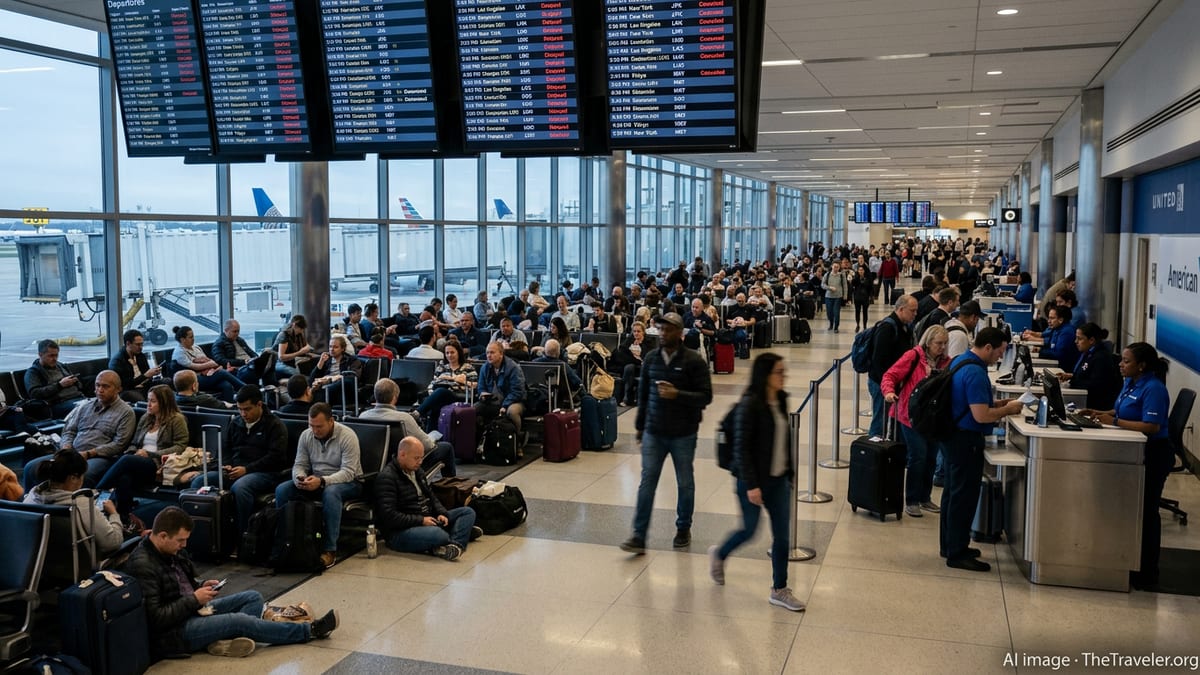
Hundreds of passengers were left stranded at Chicago O’Hare International Airport after a wave of operational disruptions led to approximately 525 flight delays and 95 cancellations on SkyWest, American Airlines, and United, rippling across major domestic and international routes including New York, Los Angeles, London, Tokyo, and other key US cities.
Get the latest news straight to your inbox!
Major Hub Disruption Sends Shockwaves Through Global Network
Chicago O’Hare, one of the busiest hubs in the United States and a central node for both domestic and international traffic, experienced a sharp spike in flight disruptions as delays and cancellations mounted across multiple carriers. Publicly available tracking data and media coverage indicate that SkyWest, American Airlines, and United were among the most affected operators, collectively accounting for roughly 525 delayed flights and 95 cancellations.
The disruption at O’Hare had an immediate effect on connectivity, stranding travelers mid-journey and breaking complex itineraries that rely on tight connections through the hub. Passengers traveling between major cities such as New York, Los Angeles, Dallas, and Denver, as well as long-haul routes linking Chicago with London and Tokyo, experienced extended waits, missed onward flights, and unexpected overnights.
Reports from passenger forums and flight-tracking dashboards describe crowded gate areas, long customer service lines, and recurring schedule changes as airlines attempted to reset operations. In many cases, flights were held on the ground awaiting crews or aircraft, creating rolling knock-on effects throughout the day and into the night.
As one of the Midwest’s primary transfer points, O’Hare’s troubles extended far beyond Chicago, with downstream airports from the East Coast to the West Coast forced to absorb late arrivals and last-minute cancellations. That cascading pattern is consistent with broader US aviation trends, where a single hub facing constraints can quickly trigger nationwide schedule instability.
Operations Hampered by Weather, Congestion, and Crew Constraints
While precise causes varied flight by flight, publicly available information points to a familiar mix of contributing factors at O’Hare: unsettled weather, air traffic congestion, and crew availability. Even modest storms or low ceilings in the Chicago area can slow arrivals and departures, leading to extended taxi times, holding patterns, and ground delay programs that compress already busy schedules.
Airline reliability data from recent years shows that O’Hare has historically been vulnerable to delays during active weather periods, with busy runway configurations and heavy traffic volumes leaving little margin when conditions deteriorate. When aircraft arrive late, subsequent departures can quickly fall behind schedule, especially during peak bank periods for hub carriers such as United and American.
Crew duty limitations add another layer of complexity. When flights are delayed beyond certain thresholds, pilots and flight attendants can “time out,” meaning they are no longer legally permitted to operate additional segments. Publicly available commentary from industry observers notes that, once this happens, airlines must either find replacement crews or cancel the affected legs, which is particularly challenging late in the day when staffing is already stretched.
The result at O’Hare was a patchwork of rolling delays, aircraft out of position, and schedule gaps that proved difficult to recover quickly. SkyWest, which operates many regional connections on behalf of larger carriers, was especially exposed to ripple effects because a single delayed aircraft can disrupt multiple short-haul rotations in succession.
Domestic and International Travelers Face Missed Connections and Overnight Stays
The disruption hit both short-haul and long-haul travelers, with flights linking Chicago to major US cities such as New York, Boston, Washington, Phoenix, San Francisco, and Los Angeles experiencing significant hold-ups. Passengers arriving late into O’Hare often found their onward connections already closed, forcing rebookings onto later flights or even next-day departures where capacity was limited.
International itineraries were particularly vulnerable. Long-haul services connecting Chicago with cities like London and Tokyo typically operate once daily or on limited schedules, leaving travelers with fewer backup options when their inbound flights misaligned. In some cases, travelers faced unplanned overnight stays in Chicago or their origin cities while airlines worked to re-accommodate them on alternative routings through other hubs.
For business travelers and those with time-sensitive plans, the operational turbulence translated into missed meetings, disrupted events, and reworked itineraries. For leisure travelers connecting to onward vacations or cruises, the knock-on impacts could be more complicated and costly, especially when travel insurance or flexible tickets were not in place.
Publicly available airline policy information indicates that rebooking options, meal vouchers, and hotel accommodations can vary depending on whether a disruption is classified as weather-related or within an airline’s control. That distinction left some passengers eligible for broader assistance than others, contributing to frustration at customer service counters and on social media platforms where travelers shared their experiences.
Airlines Move to Reset Schedules and Clear Backlogs
In the hours following the initial wave of delays and cancellations, network data shows carriers working to restore stability by trimming frequencies, consolidating lightly booked flights, and repositioning aircraft and crews. At large hubs like O’Hare, this often involves tactical decisions such as canceling shorter regional segments to protect longer-haul or heavily booked departures, with the aim of reducing overall disruption in subsequent days.
Published performance analyses of recent US aviation seasons suggest that such concentrated recovery efforts are increasingly common as airlines operate with tighter spare capacity than before the pandemic. With fewer backup aircraft and leaner staffing, even moderate weather events or operational hiccups can take longer to unwind, especially at complex hubs where multiple airlines share constrained airspace and runway infrastructure.
Travelers caught in the O’Hare disruption were encouraged by airline advisories and booking tools to monitor mobile apps and automated notifications, which often update more quickly than airport departure boards. Industry guidance frequently recommends that passengers proactively search for alternative routings via other hubs, such as Dallas, Denver, Houston, or Newark, when major disruptions hit a single airport like Chicago.
As schedules gradually reset, residual delays can linger for 24 to 48 hours, with early-morning departures sometimes operating more reliably than late-evening flights that are more exposed to the day’s accumulated irregularities. Experts who study air travel patterns note that the resilience of the network depends not only on weather and infrastructure but also on how quickly airlines can realign planes and crew to match actual demand.
What Travelers Can Learn from the O’Hare Disruption
The latest wave of delays and cancellations at Chicago O’Hare highlights several lessons for future travelers across the United States and on transatlantic and transpacific routes. First, itineraries that rely on short connection windows through busy hubs carry elevated risk, particularly during seasons prone to thunderstorms, winter weather, or heavy holiday demand.
Second, travel planning resources and federal consumer information emphasize the value of knowing each airline’s policies on rebooking, vouchers, and overnight accommodations before departure. Understanding the difference between weather-related and controllable disruptions can help passengers anticipate what assistance may be available when things go wrong.
Finally, the O’Hare disruption underscores the interconnected nature of modern air travel. A localized spike in delays involving carriers such as SkyWest, American Airlines, and United can quickly send shockwaves through routes reaching New York, Los Angeles, London, Tokyo, and dozens of other cities, affecting travelers far from the original point of failure. As air traffic volumes continue to grow, managing that complexity will remain a central challenge for airlines, airports, and passengers alike.