

More news on this day
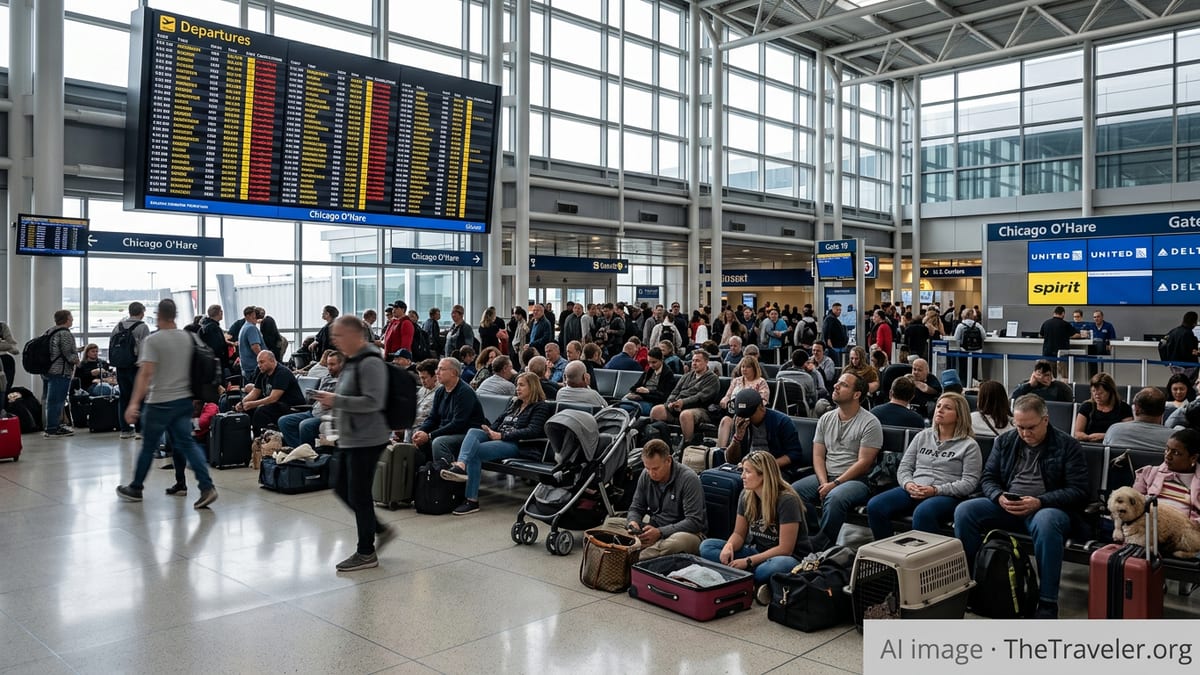
Thousands of air travelers were stranded at Chicago O’Hare International Airport on Friday as 1,359 flight delays and 35 cancellations snarled operations for United Airlines, Spirit Airlines and Delta Air Lines, triggering a cascade of disruptions for passengers connecting through New York, Los Angeles and other major U.S. cities.
Get the latest news straight to your inbox!
Severe Disruptions at One of America’s Busiest Hubs
The wave of delays at O’Hare built steadily through the morning rush, overwhelming departure boards with rolling schedule changes and leaving concourses packed with frustrated passengers. With O’Hare serving as a critical national hub for United and an important node for Spirit and Delta, the operational strain quickly spread beyond Chicago.
By midday, airport terminals were crowded with travelers sitting on floors near power outlets, queuing at customer-service desks and crowding around flight information screens as estimated departure times shifted repeatedly. Many passengers reported being held on aircraft waiting for gates, while others faced multiple rebookings as connecting flights downline were thrown off schedule.
Gate agents made frequent announcements about crew availability, congested airspace and aircraft repositioning, underscoring how an initial surge of delays can rapidly compound across a tightly packed schedule. For some travelers, relatively short initial disruptions turned into missed connections and overnight stays.
United, Spirit and Delta Grapple With Backlogs
United, O’Hare’s dominant carrier, bore the brunt of the disruption as it worked to manage both local departures and inbound aircraft feeding its nationwide network. Longer connection banks through Chicago left little room to absorb cascading delays, especially for flights linking the Midwest with the East and West Coasts.
Low-cost carrier Spirit, which operates a dense schedule of leisure routes into and out of Chicago, also struggled with tight aircraft utilization. Even minor delays on early turns forced the carrier to juggle aircraft assignments and crews, particularly on flights heading to and from major markets such as New York and Los Angeles.
Delta, which uses O’Hare primarily as a spoke rather than a hub, nonetheless saw its operation affected as delayed Chicago departures threatened onward connections through its main hubs. For travelers, the distinctions between hub and spoke offered little comfort as they navigated long lines for rebooking and customer assistance.
Ripple Effects Across New York, Los Angeles and Other Major Cities
The disruption in Chicago quickly propagated across the country, hitting some of the nation’s busiest air travel corridors. Flights linking O’Hare with New York area airports faced rolling delays, creating bottlenecks on routes that carry large numbers of business travelers and international connections.
On the West Coast, Los Angeles-bound flights from Chicago encountered extended departure holds, forcing some passengers to miss evening connections onward to Hawaii, Latin America and Asia. Airlines scrambled to find alternative routings via secondary hubs, adding travel time and complexity to already long days for many customers.
Other major cities, including Denver, Dallas, Atlanta, San Francisco, Boston and Washington, also experienced knock-on effects as delayed Chicago flights disrupted aircraft rotations and crew schedules. In some cases, aircraft that were scheduled to overnight in smaller markets arrived hours late, raising the possibility of residual delays into the weekend.
Passengers Face Long Lines, Limited Options and Mounting Costs
Inside O’Hare, the human impact of the operational turmoil was most visible at customer-service counters and along concourses where travelers camped out with luggage, children and pets. With same-day rebooking options limited on heavily traveled routes, many passengers were offered stand-by status, connections through secondary hubs or flights departing the following day.
Hotels near the airport reported a sharp uptick in last-minute bookings as travelers resigned themselves to unexpected overnight stays. Some passengers, particularly families and international visitors, faced mounting expenses for meals, accommodations and ground transportation as they waited for confirmed seats.
For business travelers, the ripple effects included missed meetings, canceled events and disrupted schedules in multiple cities. Many turned to airline apps and chat support to secure new itineraries, only to encounter digital queues and slow response times as airlines managed a surge in requests.
Operational Strain Highlights Broader Capacity Concerns
The latest disruption comes as aviation authorities and airlines continue to scrutinize capacity at O’Hare, which has been operating near its limits during peak travel periods. Even on days without severe weather, minor operational hiccups can escalate into large-scale delay events when there is little slack left in the system.
Ongoing construction and modernization projects at O’Hare, while aimed at improving long-term efficiency and passenger experience, have reduced some flexibility in the short term. With gates, taxiways and terminal areas in flux, airlines have less room to shuffle aircraft and clear backlogs when schedules begin to unravel.
Industry analysts note that as airlines push to restore and grow capacity across their networks, large hub airports remain especially vulnerable to cascading disruptions. Friday’s events in Chicago, with more than a thousand delays and dozens of cancellations in a single day, are a stark reminder of how quickly the nation’s air travel system can be thrown off balance and how widely the impact can spread for travelers far beyond the initial point of disruption.