

More news on this day
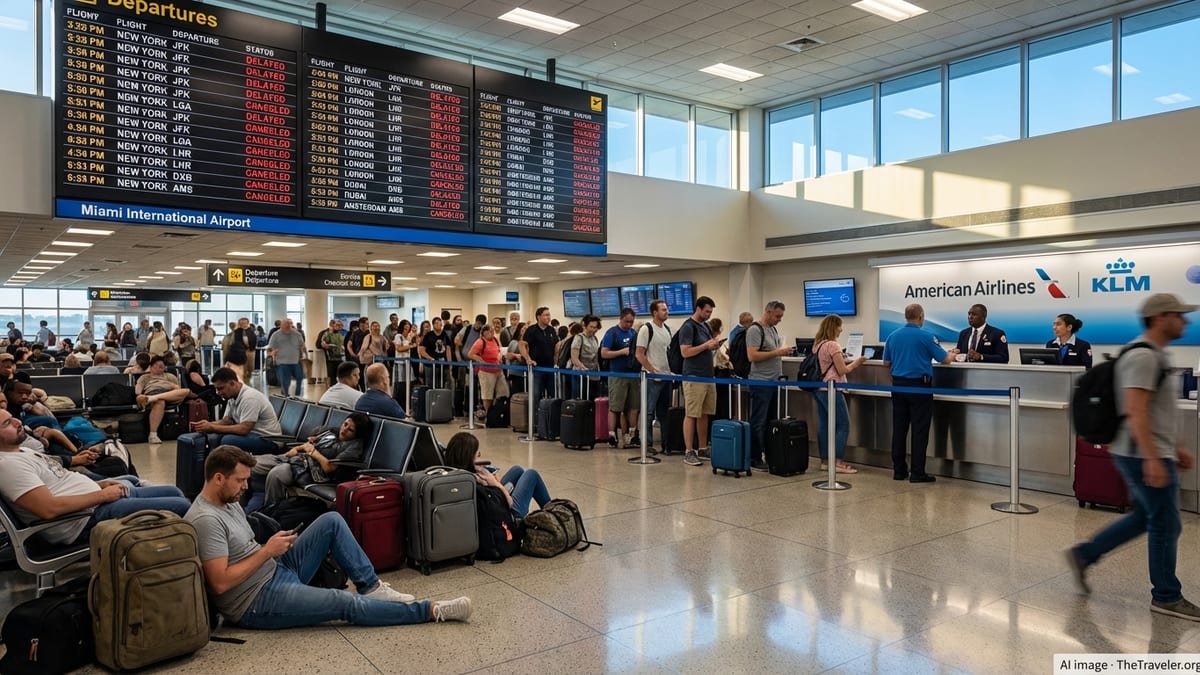
Hundreds of passengers were left stranded at Miami International Airport on Sunday after a wave of 182 delays and eight cancellations rippled across its schedule, disrupting services operated by Emirates, KLM, American Airlines and other major carriers to key destinations including New York, London, Dubai, Amsterdam and several other US cities.
Ripple Effects From Global Turmoil Hit Miami Hard
The disruption at Miami International unfolded as global aviation continued to reel from the closure of large swaths of Middle Eastern airspace following fresh escalations in the region. With major hubs such as Dubai, Abu Dhabi and Doha either shut or heavily restricted, carriers were forced to reroute or ground aircraft, creating knock-on effects that reached South Florida on March 1.
Operational data from flight tracking and analytics providers showed Miami’s schedule fraying through the morning and early afternoon as aircraft and crews failed to arrive on time from Europe, the Middle East and other US airports already coping with weather and congestion. Departures to transatlantic gateways like London and Amsterdam, as well as long haul services to Dubai, were among those hit by cascading delays.
While most of the day’s flights from Miami eventually operated, often hours behind schedule, the eight cancellations amplified disruption for passengers on tightly timed itineraries. Many were connecting through Miami to reach East Coast cities such as New York and Washington or onward to Europe and the Gulf, and suddenly found themselves without a clear path forward.
Airport officials described the situation as a system wide shock rather than a local failure, noting that airlines were dealing simultaneously with airspace restrictions abroad and adverse winter weather on parts of the US East Coast. This combination limited options to reassign aircraft or reroute passengers quickly.
Emirates, KLM and American Struggle to Keep Long Haul Networks Moving
International carriers using Miami as a key US gateway faced some of the toughest operational choices. Emirates, whose global network is centered on Dubai, has been contending with the partial shutdown of its home hub and widespread cancellations across the Gulf region. Services linking Miami and Dubai were affected by the loss of viable routings over the Middle East and the backlog of aircraft and crews stranded at closed airports.
KLM also confronted a complex set of challenges as its Amsterdam hub absorbed delays related to both the Middle East security crisis and winter weather in northern Europe. Previous disruptions tied to snow and ice on the US East Coast had already stretched aircraft rotations thin, and Sunday’s events further compressed the airline’s ability to maintain punctual service into and out of Miami.
American Airlines, the dominant carrier at Miami International, spent much of the day rebalancing its schedule as congestion from other hubs bled into South Florida. With operations at New York area airports, Washington and Boston under pressure from recent storms and crew duty time limits, flights shuttling between those cities and Miami were among the 182 delayed. Domestic knock on effects compounded problems for travelers trying to connect from American’s US network onto transatlantic and Middle East partner flights from Miami.
Other international airlines operating at Miami saw scattered delays as they navigated new routings to avoid restricted airspace or waited on connections bringing passengers from disrupted airports in Europe and the Gulf. For many carriers, Sunday became a day of continual schedule revisions rather than business as usual.
Travelers Face Overnight Stays, Rebookings and Uncertain Timelines
Inside the terminals, the operational gridlock translated into long queues at check in counters and service desks as travelers sought answers about missed connections and canceled departures. Passenger announcements throughout the day urged customers to monitor airline apps and messaging channels for the latest status updates, as gate assignments and departure times shifted repeatedly.
Stranded passengers heading to New York, London and other major centers reported being offered hotel vouchers and meal coupons when overnight stays became unavoidable. Others were rebooked on alternative routings, sometimes involving additional stops through secondary hubs in the United States or Europe as airlines tried to piece together available seats.
Families returning from Caribbean cruises, business travelers leaving trade events in Miami and leisure travelers connecting to European city breaks all found their plans in flux. Some opted to accept refunds or travel credits and delay their journeys for several days, wary that conditions in the Middle East and the broader global network would take time to stabilize.
Airport staff and airline agents worked extended shifts to manage the crush, but acknowledged that information often lagged behind events. In many cases, flight crews were still out of position or awaiting new flight plans to skirt closed airspace, leaving departure times subject to last minute change.
Miami’s Role as a Global Hub Exposes Vulnerability to Far Reaching Shocks
The difficulties at Miami International underscored how deeply interconnected modern air travel has become. Although the South Florida airport is thousands of miles from the Middle East, its status as a major gateway for links between North America, Europe, Latin America and the Gulf leaves it exposed whenever a key region of global airspace goes offline.
Long haul operations rely on tight aircraft rotations and finely tuned crew schedules. When flights into Dubai, Abu Dhabi, Doha and other Gulf hubs are canceled or rerouted, aircraft that would normally cycle between those cities and US or European gateways quickly fall out of position. That imbalance then shows up as late or canceled departures at airports like Miami, even when local weather and infrastructure remain normal.
Miami’s heavy dependence on connecting traffic magnifies the impact. A delayed arrival from Amsterdam can push back an onward departure to New York or Chicago, while a missed inbound from Dubai might strand passengers who had planned to connect to Latin American destinations through South Florida. The result is a domino effect that can take days to unwind once the root cause of the disruption begins to ease.
Aviation analysts noted that the latest episode follows a series of shocks to the global system in recent years, from pandemic era shutdowns to regional conflicts and severe weather. Each new disruption, they said, highlights the importance of flexible contingency planning by airlines and clearer communication with passengers caught in the middle.
What Passengers Can Expect in the Coming Days
With airspace closures in the Middle East and lingering winter weather on parts of the US East Coast, Miami International is likely to feel aftershocks beyond Sunday. Airlines have signaled that additional schedule adjustments are possible as they reassess security briefings and gradually reposition aircraft and crews.
Travelers booked on upcoming flights from Miami to New York, London, Dubai, Amsterdam and other major cities are being urged to check their flight status frequently on airline apps and sign up for text or email alerts. Even flights still listed as on time may encounter operational delays if inbound aircraft arrive late or new routing constraints are imposed.
Passengers already holding tickets for itineraries through disrupted regions have been offered varying degrees of flexibility, including fee waivers for date changes and, in some cases, refunds or travel vouchers. Policies differ by carrier and route, and travelers are being encouraged to review the latest conditions before heading to the airport.
While operations at Miami International continued throughout the day, the atmosphere on March 1 reflected a broader unease in the global aviation network. For stranded travelers, the priority remained simple: finding any reliable way out, even if that meant longer journeys, extra connections and a lingering sense that the world’s flight paths have become less predictable.