

More news on this day
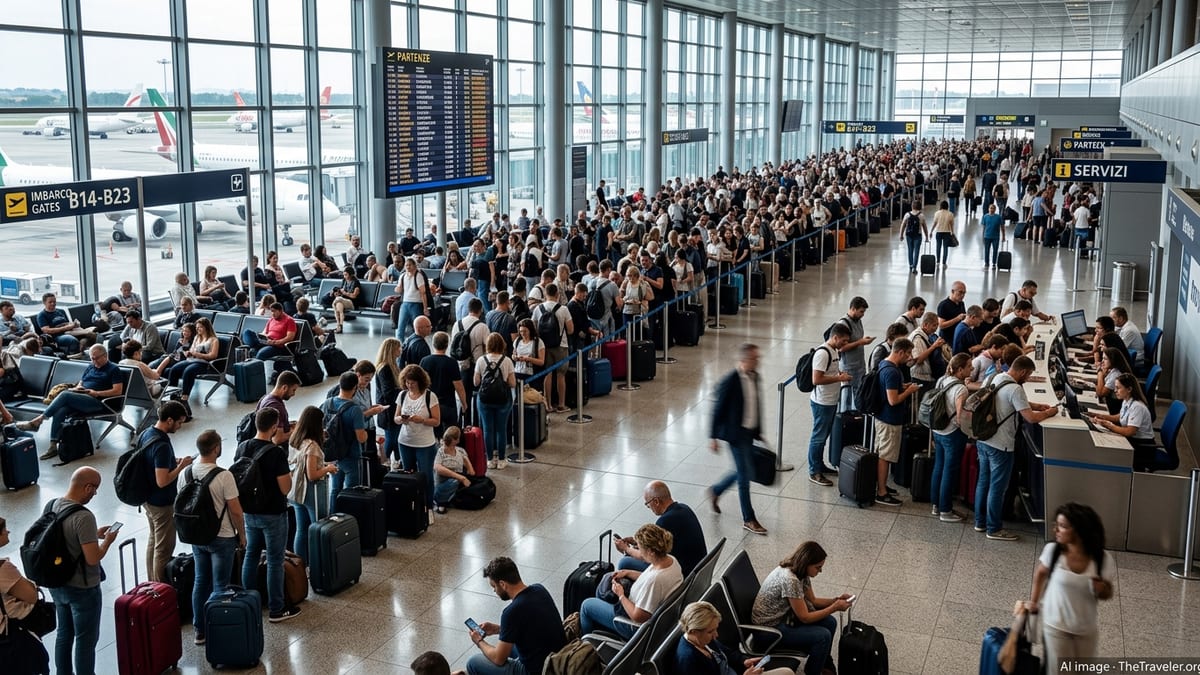
Hundreds of passengers were left stranded across Italy on Thursday as widespread disruption at Rome and Milan airports delayed around 250 flights and forced the cancellation of several more, snarling operations for ITA Airways, Ryanair, Wizz Air and other carriers at key hubs including Rome Fiumicino and Milan Malpensa.
Get the latest news straight to your inbox!
Widespread Disruption Hits Italy’s Busiest Air Hubs
Operational disruption rippled through Italy’s aviation network as Rome and Milan, home to the country’s busiest airports, recorded around 250 delayed flights and at least six cancellations over the course of the day. Publicly available tracking data and local media reports indicated that the bulk of the problems were concentrated at Rome Fiumicino and Milan Malpensa, with knock-on effects at secondary airports serving the two cities.
The pattern of disruption mirrored previous episodes in which local bottlenecks quickly cascaded into broader schedule problems across European networks. With Rome and Milan acting as major transfer points for both domestic and international routes, delays of even 30 to 60 minutes on core services led to missed connections, aircraft rotation issues and further hold-ups later in the day.
Information from flight-status platforms showed a mix of late departures, extended ground holds and last-minute cancellations, affecting a variety of European city pairs. Travellers heading to and from key destinations such as London, Paris, Barcelona and Eastern European hubs reported significantly longer journey times, rebookings onto late-night alternatives and, in some cases, overnight stays near the airports.
ITA Airways, Ryanair and Wizz Air Among Most Affected
National carrier ITA Airways and low-cost giants Ryanair and Wizz Air featured prominently among the disrupted services, reflecting their sizeable operations at Rome Fiumicino and Milan’s airports. According to published schedules, ITA Airways uses Fiumicino as its primary hub, while Ryanair and Wizz Air operate multiple short-haul routes in and out of both Rome and Milan, amplifying the impact of any local disruption.
Publicly accessible flight data showed numerous ITA Airways departures from Fiumicino pushed back well beyond their scheduled times, with some domestic routes to northern cities and onward European connections experiencing delays that stretched into several hours. For Ryanair and Wizz Air, the knock-on effect was visible in a series of late-running low-cost services, where aircraft operating multiple segments in a single day struggled to return to timetable.
Reports also indicated that other European carriers, including legacy airlines from neighboring countries, experienced secondary delays as they awaited inbound aircraft and departure slots from the congested Italian hubs. The combination of high traffic volume, tight turnarounds and limited slack in the system left little room to recover once the morning wave of disruption had taken hold.
Scenes of Long Queues, Missed Connections and Overnight Stays
At terminal level, passengers at Rome Fiumicino and Milan Malpensa faced long queues at check-in, security and airline service desks as the day progressed. Travellers posting on social media described crowded departure halls, rapidly changing information screens and difficulty obtaining clear estimates for revised departure times.
For connecting passengers, the situation proved particularly challenging. Even moderate delays on feeder flights into Rome or Milan were enough to break carefully timed itineraries to North America, the Middle East and other long-haul destinations. Some travellers reported being rebooked onto next-day departures or rerouted via alternative European hubs, extending journeys by many hours.
Hotel rooms near both airports became scarce as evening approached, with anecdotal reports of travellers being advised to seek accommodation further from the terminals or to consider rail options for shorter intra-European legs. For those on low-cost tickets without flexible conditions, securing new arrangements on busy routes added an extra financial burden on top of the disruption.
Knock-on Effects Across European Networks
The congestion in Rome and Milan fed into wider pressure on European air-traffic flows, particularly on popular north-south corridors linking Italy with the United Kingdom, France, Germany and Spain. Tracking services showed aircraft arriving late into outstations, then departing behind schedule for their return legs, prolonging the disruption well into the evening.
Industry data and previous summers’ reports have highlighted Rome Fiumicino and Milan’s airports as among Europe’s busiest and most delay-prone during peak travel periods, given the combination of high leisure demand, complex connecting traffic and frequent weather or airspace constraints. Observers noted that the latest episode once again underscored the vulnerability of tightly packed schedules when any one part of the system comes under strain.
Airlines typically attempt to recover from such days by adjusting rotations overnight, substituting larger aircraft on certain services and trimming frequencies where possible. However, passengers booked to travel in the following 24 to 48 hours were advised by travel agents and consumer groups to monitor their flight status closely, as residual delays and occasional cancellations often persist even after the immediate bottleneck eases.
What Travellers Should Do If Their Flight Is Affected
Consumer organisations and travel advisers recommend that passengers affected by significant delays or cancellations originating in the European Union carefully check their rights under EU air passenger regulations. Depending on the cause of the disruption and the length of delay, travellers may be entitled to assistance at the airport, rebooking on the next available flight and, in some circumstances, financial compensation.
Passengers are urged to retain boarding passes, booking confirmations and any written communication from airlines, as well as receipts for meals, transport or accommodation purchased during the disruption. These documents can be important when submitting claims directly to carriers or, if necessary, escalating the matter through national enforcement bodies or alternative dispute resolution schemes.
For upcoming travel in and out of Rome or Milan, widely shared advice is to allow extra time at the airport, travel with carry-on luggage where possible and keep a close eye on live flight-status updates provided by airlines and airports. Travellers with tight connections are also encouraged to consider longer layovers or more flexible itineraries during periods of heightened operational strain.