

More news on this day
Hundreds of travelers faced hours of disruption at Houston’s George Bush Intercontinental Airport on Saturday as publicly available tracking data showed 138 flight delays and three cancellations, rippling through schedules for United Airlines, American Airlines, Delta Air Lines and several smaller carriers.
Get the latest news straight to your inbox!
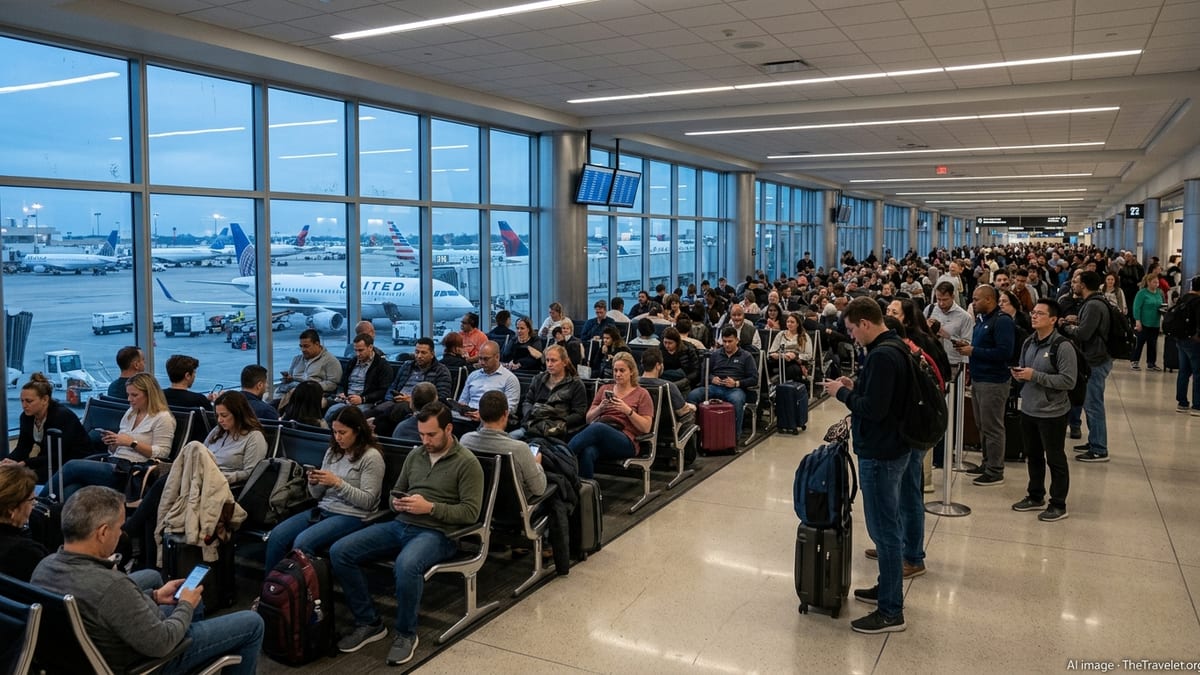
Delays Mount Across Terminals at Key Texas Hub
George Bush Intercontinental Airport, a major hub for both domestic and international travel in Texas, experienced a sharp spike in operational disruption as the day progressed. Flight status boards across multiple terminals reflected growing delays, with aircraft departures slipping well beyond scheduled times and a limited number of outright cancellations compounding the pressure on gate areas.
Tracking platforms indicated that 138 flights were delayed and three were canceled, a relatively modest cancellation count but a significant volume of schedule slippage for passengers relying on tight connections. For many travelers, the impact was measured less in the number of axed flights and more in the cascading effect of late departures, missed onward journeys and extended waits in crowded concourses.
The disruption affected a broad mix of services, from short-haul hops within Texas and the U.S. Gulf Coast region to longer domestic routes linking Houston with key cities across the country. With Houston positioned as a central connecting point, the delays radiated outward, creating secondary knock-on effects at other airports as late-arriving aircraft struggled to get back on schedule.
Reports from the airport environment described busy gate areas and extended lines at customer service counters as travelers attempted to secure rebooking options, meal vouchers or overnight accommodation where connections had been lost. While operations continued, the strain on the airport system was evident in the growing backlog of delayed aircraft and the difficulty of returning to normal timing.
United, American, Delta and Others Feel the Strain
As the dominant carrier at Bush Intercontinental, United Airlines bore a substantial share of the disruption. United operates a dense schedule of departures and arrivals through Houston, and delays to early and mid-day flights can quickly propagate across its network. Publicly viewable schedules showed multiple United departures pushed back, affecting both hub-to-hub services and regional connections operated by United Express partners.
American Airlines and Delta Air Lines, which operate smaller but still significant schedules at IAH, also experienced delays among their Houston services. For travelers connecting between major carriers and regional affiliates, even a short delay at departure could mean missed onward flights and the need to reroute through other hubs such as Dallas Fort Worth, Atlanta, Denver or Chicago.
Several other domestic and international airlines using Bush Intercontinental as a gateway to Texas and the broader U.S. market were drawn into the disruption as shared infrastructure, air traffic constraints and congested taxiways slowed the pace of operations. Publicly available information indicated that even carriers with relatively few daily flights at IAH were not immune to the ripple effects of constrained airport capacity.
The uneven spread of delays across airlines and time bands created a patchwork of experiences for passengers. Some flights departed close to on time, while others remained at the gate for extended periods awaiting aircraft, crew or departure slots, underlining how quickly tightly timed hub operations can become stressed when conditions deteriorate.
Knock-On Effects for Connections and Travel Plans
For many travelers, the most consequential impact of the disruption was felt not in Houston itself but at their intended destinations and onward points. Delays of an hour or more on key trunk routes from IAH left passengers with narrow connection windows in other hubs suddenly facing missed flights, overnight stays and rebooked itineraries stretching well into Sunday.
Published guidance from airlines serving Houston in recent days has highlighted the availability of flexible travel waivers around the city, allowing some customers to adjust plans without additional fees. Such policies, which have been updated repeatedly through late March, are intended to help redistribute demand and give passengers more options when operational reliability is uncertain.
Travelers whose plans hinged on time-sensitive events, from business meetings and conferences to sports fixtures and family gatherings, were left recalibrating schedules. Public commentary on social platforms reflected a mix of frustration at extended waits and appreciation when crews managed to secure new routings or narrow connection windows at downline airports.
Even for those whose flights eventually departed, extended ground time and congested airspace meant aircraft often arrived well behind schedule. The cumulative result was a day in which the formal number of cancellations remained low, but the lived experience for many passengers closely resembled that of a more severe disruption.
Underlying Pressures on Houston’s Aviation System
The latest wave of delays came as Houston’s airport system continues to manage elevated passenger volumes and a challenging operating environment. Recent public data from the Houston Airport System has highlighted steady growth in traffic at Bush Intercontinental, reflecting both the strength of United’s hub operation and the city’s role as a gateway for business and leisure travel.
In parallel, national aviation coverage over the past week has focused on the strain placed on federal aviation and security staffing during the ongoing U.S. government funding impasse. Reports indicate that Houston has been among the airports experiencing longer security lines and higher rates of staff callouts, contributing to congestion at checkpoints and increasing the potential for knock-on delays at the gates.
Weather has also been a recurring wildcard in Texas airspace through March, with earlier ground stops and flow restrictions in the region showing how quickly thunderstorms and low visibility can cascade into broader schedule disruption. Even when conditions at Bush Intercontinental itself are flyable, constraints in surrounding airspace and at feeder airports can slow the arrival of inbound aircraft and crew.
These overlapping factors create a delicate balance in daily operations. When weather, staffing and aircraft availability individually appear manageable, the system can still tip into widespread delays if two or more pressures coincide at a busy hub like Houston, leaving passengers exposed to long waits even in the absence of dramatic headline events.
What Travelers Through IAH Should Expect Next
With delays accumulating through the day, publicly available schedules suggested that evening and late-night operations at Bush Intercontinental would focus on clearing the backlog and positioning aircraft for Sunday’s departures. Airlines tend to prioritize maintaining the integrity of their broader network, which can mean selectively canceling lower-demand flights or consolidating services to restore aircraft and crew rotations.
Travelers planning to pass through Houston in the coming 24 to 48 hours are likely to encounter some residual disruption as airlines work to realign schedules. Repositioning aircraft, reassigning crews within regulatory limits and accommodating displaced passengers can take several cycles to normalize, particularly at a hub where connections drive a large share of traffic.
Publicly available guidance continues to emphasize the importance of monitoring flight status closely, checking in early and allowing additional time at the airport for security screening and terminal transfers. Where flexible travel options or alternative routings via other hubs are available, some passengers may find it advantageous to adjust their plans preemptively rather than risk tight connections through Houston.
For now, the day’s pattern at Bush Intercontinental offers a clear reminder of how quickly conditions can shift at a major U.S. hub. Even with only a small number of outright cancellations, the combination of 138 delayed flights and heavy passenger volumes was enough to leave hundreds of people temporarily grounded, underscoring the continuing fragility of the aviation system during a period of heightened operational stress.