

More news on this day
Hundreds of travelers at Orlando International Airport faced a chaotic travel day on March 12, as 376 flights were delayed and eight were canceled, disrupting passenger plans to major hubs including New York, Los Angeles, Dallas and Chicago.
Get the latest news straight to your inbox!
Ripple Effects Across Major U.S. Hubs
The disruption at Orlando International Airport unfolded during an already strained period for the U.S. aviation network, compounding nationwide delays reported across multiple large hubs. Passengers departing central Florida for New York, Los Angeles, Dallas and Chicago encountered rolling schedule changes, tighter connection windows and, in many cases, missed onward flights at those connecting airports.
Operational data indicated that the bulk of the impact was on domestic routes linking Orlando with key business and leisure destinations. Morning departures to New York area airports and Chicago were especially hard hit, with aircraft pushed back in the queue as air traffic managers attempted to meter volume through crowded airspace. Travelers bound for Los Angeles and Dallas reported onboard announcements citing congestion and flow restrictions further along their routes.
The resulting ripple effect extended beyond passengers originating in Orlando. Inbound aircraft arriving late from other cities further constrained available capacity, forcing airlines to reshuffle aircraft and crews and contributing to the tally of delayed and canceled flights.
Operational Strain and Weather-Linked Disruptions
While specific causes varied flight by flight, aviation officials and analysts pointed to a familiar mix of factors behind the spike in delays at Orlando International. High traffic volumes at one of the nation’s busiest leisure gateways left operations especially vulnerable to any disturbance, whether from weather along flight paths, congestion at major connection points or minor technical issues that became harder to absorb.
Industry data from recent weeks show that systems across the country have been repeatedly tested by winter weather patterns and lingering operational bottlenecks. Storms affecting the Northeast and Midwest, including the New York and Chicago areas, have led to ground holds, slower arrival rates and aircraft repositioning, all of which can cascade back to origin airports like Orlando when aircraft and crews are not where they are scheduled to be.
In this latest wave of disruptions, even routes not directly affected by adverse conditions in Florida were impacted when aircraft heading into or out of weather-hit regions were delayed en route. That dynamic left airlines juggling tight schedules at Orlando, where departures are heavily banked around peak leisure travel times.
Long Lines, Missed Connections and Frustrated Families
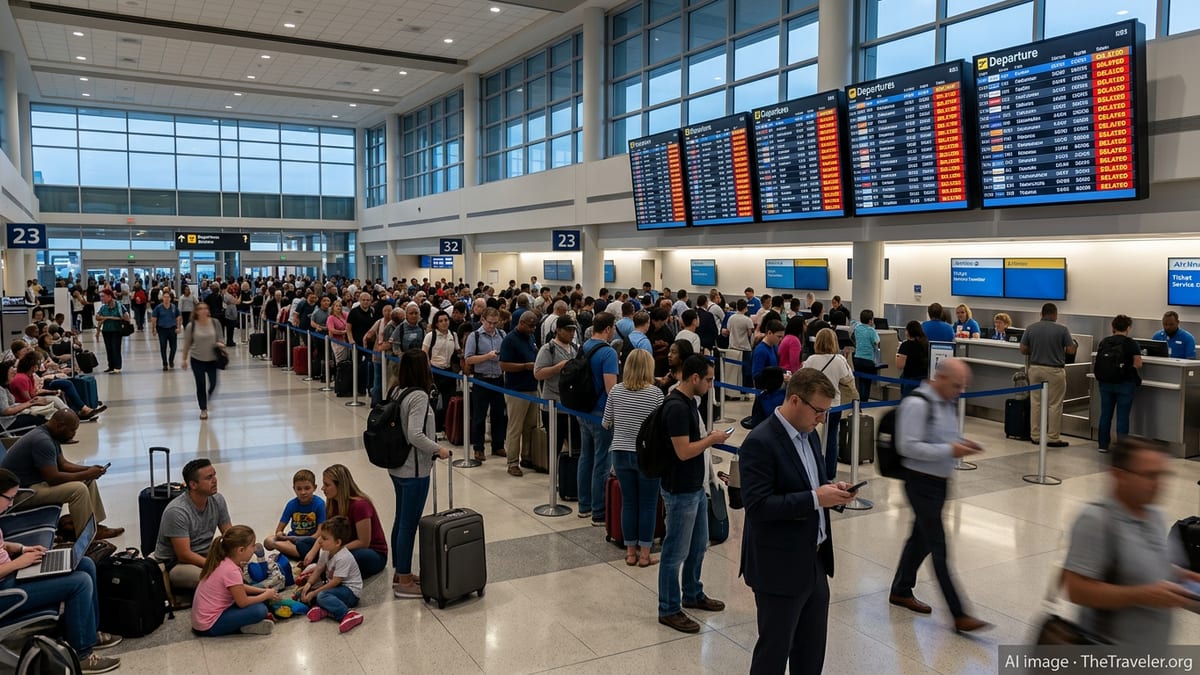
Inside the terminals, departure boards filled with red and yellow delay notices as frustrated passengers queued at customer service counters and waited for updates on gate screens. Families returning from central Florida’s theme parks and attractions described hours-long waits as they tried to secure alternative itineraries to reach home in New York, Los Angeles, Dallas and Chicago.
For some travelers, delays stretched well beyond the initial estimates. Passengers reported multiple successive schedule changes, with flights pushed back in 30- or 60-minute increments before finally departing or, in the most disruptive cases, being canceled after several hours. Those facing cancellations often had to wait until the following day to secure seats, particularly on heavily booked routes to major hubs.
Business travelers were similarly affected, with missed meetings and lost workdays as connections at hub airports evaporated. Reports from the concourses described crowded seating areas, scarce power outlets and long lines at food concessions as travelers settled in for extended waits.
Airlines Rebook, but Capacity Remains Tight
Airlines operating from Orlando responded by waiving certain change fees, rebooking affected passengers on later departures and, where possible, rerouting travelers through alternative hubs. However, with strong demand on many of the disrupted routes, particularly to New York, Los Angeles, Dallas and Chicago, available seats were limited and options for same-day recovery were often scarce.
Carriers also faced the challenge of repositioning aircraft and crews to restore normal operations. Once delays accumulate to the scale seen in Orlando, the disruption can extend for many hours, and in some cases into the next operational day, as airlines work to rebalance aircraft utilization and crew duty limits.
Airport staff urged passengers to work directly with their airlines via mobile apps and customer service channels rather than relying solely on departure boards, noting that rebooking options can appear first in digital channels. Travelers were also encouraged to monitor their email and text alerts, where many carriers now send real-time updates on gate changes and revised departure times.
What Travelers Should Do Next
With hundreds of flights affected in a single day, travel experts stressed the importance of preparation for passengers with upcoming departures from Orlando and other busy U.S. hubs. They recommend arriving at the airport early, traveling with essential items and medications in carry-on bags, and building longer connection times into itineraries when routing through congested hubs such as New York, Los Angeles, Dallas and Chicago.
Passengers whose flights are significantly delayed or canceled should carefully review airline policies on rebooking, vouchers and refunds, and keep records of delay notifications and receipts for any out-of-pocket expenses. While compensation rules vary by carrier and circumstance, clear documentation can be important for any later claim.
Travel advisors also suggest that passengers keep a flexible mindset when disruptions of this scale occur. Accepting alternative airports in the same metropolitan area, flying at less desirable times of day or taking connecting flights instead of nonstops can sometimes speed up recovery from a severely delayed itinerary, particularly when schedules at major hubs are already stretched.