

More news on this day
Austin-Bergstrom International Airport faced severe disruption as 183 flights were delayed and 28 canceled, creating widespread knock-on effects for passengers traveling to major cities across the United States.
Get the latest news straight to your inbox!
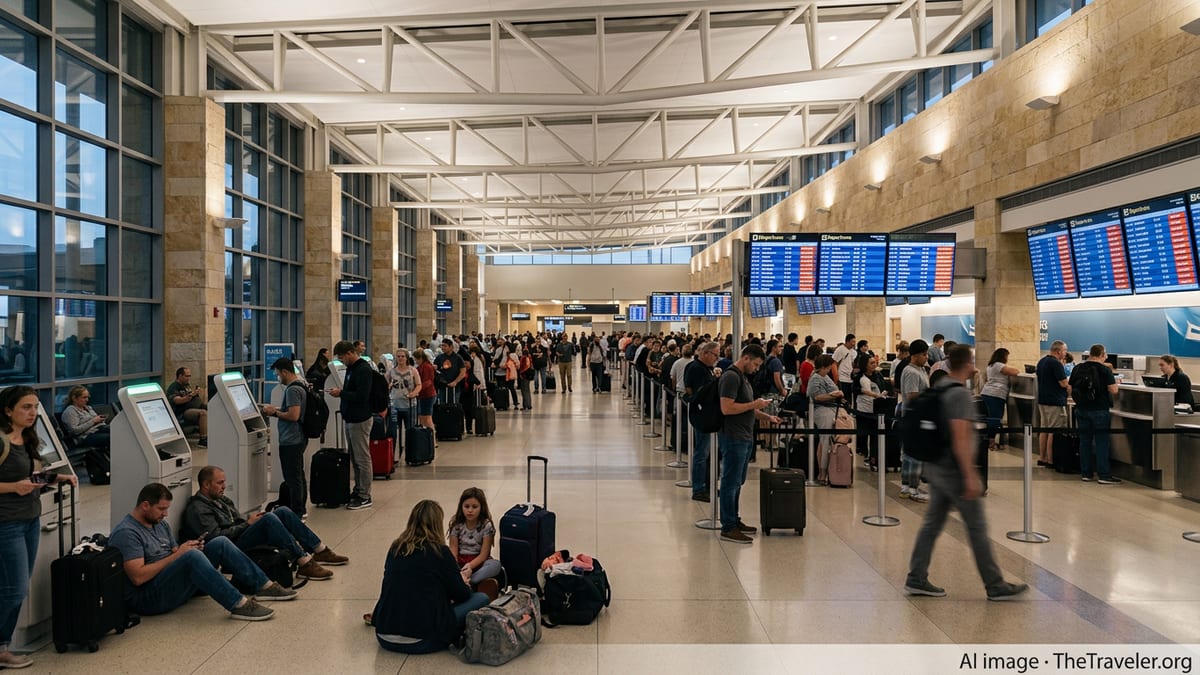
Operational Disruptions Ripple Through a Busy Regional Hub
The latest disruption at Austin-Bergstrom International Airport unfolded during already heavy travel demand, quickly turning a localized operational issue into a systemwide problem for travelers. Publicly available flight-tracking data showed 183 delayed departures and arrivals and at least 28 cancellations, affecting a broad mix of domestic routes that connect through Austin to larger national networks.
The disruption left many passengers facing extended waits in the terminal, missed onward connections, and last-minute rebookings. With Austin serving as a key link between major hubs such as Dallas, Denver, Atlanta, Chicago, Los Angeles, and New York, delays in central Texas translated into lost seats and overbooked flights hundreds of miles away.
Reports indicate that the concentration of delays over several hours contributed to gate congestion on the ground and tighter sequencing for departures. Aircraft and flight crews arrived late, compressing schedules and limiting the ability of airlines to recover quickly once the immediate cause of the disruption began to ease.
According to published coverage and aviation data dashboards, many of the impacted departures were short- and medium-haul domestic flights, which are particularly sensitive to even modest disruptions. When an aircraft operating a short route is delayed on its first leg, all subsequent flights using the same aircraft often face cascading delays.
Staffing Strains and Infrastructure Limits Under Scrutiny
The episode has renewed attention on the structural pressures facing Austin-Bergstrom, which has grown rapidly in recent years as both the region’s population and its tech-driven economy have expanded. Public records and earlier reports about the airport’s operations highlight recurring challenges tied to staffing, air traffic control capacity, fueling logistics, and gate availability.
Past summaries of airport performance and federal aviation documents show that staffing shortfalls, particularly in air traffic control and ground operations, can trigger ground delay programs that hold incoming flights or slow departures. When these measures are in place, airports often see rising numbers of late arrivals and missed departure slots, which can lead to broader congestion and, in some cases, cancellations when crews or aircraft time out of their legal operating limits.
Separate accounts from travelers in recent months have described frequent late departures from Austin linked to limited gate space and tight turnaround times. When an arriving aircraft must wait on the taxiway for a gate to open, the outbound flight using the same aircraft typically departs late, pushing delays later into the day. If such patterns coincide with staffing constraints or weather in other parts of the network, recovery becomes more difficult.
Airport planning documents published by the City of Austin point to long-term efforts to expand terminal facilities, add gates, and upgrade fuel storage and airside infrastructure. However, these projects are multi-year endeavors, and the current passenger loads mean that even relatively brief operational disruptions can quickly translate into large numbers of affected travelers.
Nationwide Impact on Major Domestic Routes
The travel chaos at Austin-Bergstrom did not remain a local story. Publicly accessible flight-status portals indicated that flights between Austin and major U.S. gateways experienced accumulated delays as the day progressed. Routes to and from major connection points such as Dallas-Fort Worth, Houston, Atlanta, Denver, Phoenix, Chicago, Los Angeles, San Francisco, and New York were among those affected, in part because they rely heavily on tight turnarounds and high daily frequencies.
For some travelers, the problem was not simply a late departure from Austin but the risk of missing onward connections at hub airports. When inbound flights arrive outside their scheduled connection windows, passengers can lose access to their original itineraries and are forced onto later flights that may already be heavily booked due to strong national demand.
According to airline operations data cited in previous analyses of Austin-Bergstrom’s performance, domestic networks are particularly vulnerable when disruptions occur at growing mid-continent airports. These locations often serve as spokes into larger hubs, so a cluster of delayed flights can strain seat availability on onward segments and complicate crew assignments.
On social media and travel forums, passengers described waits of several hours, rebookings onto late-night flights, and, in some cases, overnight stays after missed connections. While such individual accounts vary, they collectively highlight how quickly localized operational issues can propagate through a national air travel system operating near capacity.
Travelers Advised to Adjust Plans and Timelines
In the wake of the latest disruption, seasoned travelers and aviation analysts alike emphasized the importance of building extra time into itineraries that pass through Austin. Public guidance previously shared by the airport and travel industry publications recommends arriving earlier than the minimum check-in times, especially during peak periods and on days when storms or staffing constraints are reported anywhere along a route.
For passengers with connections in other cities, experts commonly suggest allowing longer layovers when originating in airports that have experienced frequent congestion. A buffer of two to three hours between flights can sometimes provide enough margin to absorb moderate delays without causing missed onward segments, particularly on complex itineraries involving multiple carriers.
Published travel advice also stresses the value of monitoring flight status and gate information in real time through airline apps and airport display systems. When disruptions begin to appear across many flights, travelers who act quickly may have more options for rebooking, rerouting through alternative hubs, or shifting to earlier or later departures that still permit them to reach their destination on the same day.
The latest wave of delays at Austin-Bergstrom underscores that, even as airlines and airports work on long-term capacity and infrastructure upgrades, travelers remain exposed to short-notice disruptions. With the airport’s passenger numbers trending upward in official reports, operational resilience and traveler preparedness are likely to remain central themes for one of the country’s fastest-growing air gateways.