

More news on this day
Hundreds of passengers have been left stranded or facing long waits at airports across France after a fresh wave of disruptions caused 231 delays and 23 cancellations affecting services operated by SAS, Air Baltic, Lufthansa, Eurowings, KLM and Turkish Airlines, disrupting links to Oslo, Amsterdam, London, Keflavik and Rome.
Get the latest news straight to your inbox!
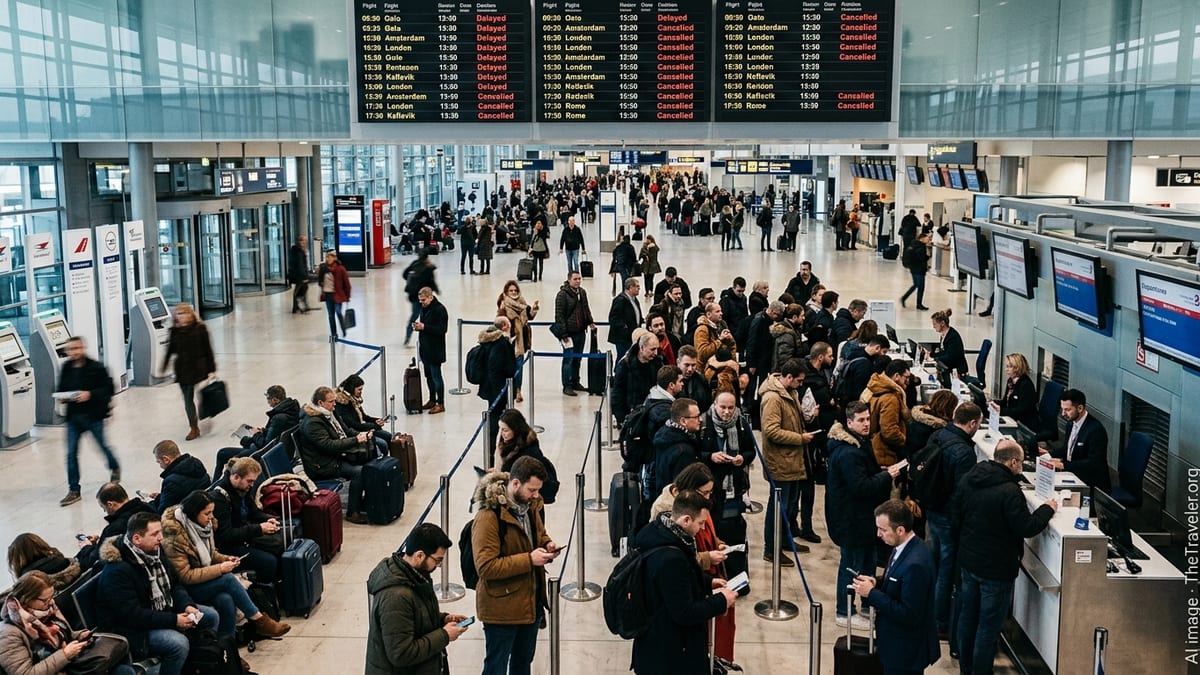
Widespread Disruptions Hit Key European Routes
Reports from flight tracking services and airport operational data indicate that the latest disruption has concentrated heavily on services linking French airports with major European hubs, including Oslo, Amsterdam, London, Keflavik and Rome. The affected airlines form a cross section of Scandinavian, Central European and Turkish carriers, underscoring how quickly operational problems in France can ripple across the wider network.
The pattern of 231 delayed flights and 23 outright cancellations is consistent with recent periods of turbulence in European aviation, where localized constraints, such as staffing shortages, weather or airspace restrictions, have produced knock-on effects well beyond a single country. Travelers connecting through France onto long haul or onward European services have been among the hardest hit, with missed connections and last minute rebookings adding to congestion at transfer hubs.
Although detailed, real time tallies vary by airport and carrier, publicly available data shows that flights to and from major capitals and transit points have borne much of the pressure. Services between France and Oslo, Amsterdam and London play a vital role for both business and leisure travel, while links to Keflavik and Rome connect passengers to transatlantic routes and Mediterranean destinations.
Airlines Struggle To Recover Schedules
The disruption is affecting airlines that normally score comparatively well on European punctuality tables. Historical performance data from aviation authorities and industry groups shows that SAS, Lufthansa, Eurowings, KLM and Turkish Airlines typically maintain on time performance in the upper tier of European carriers, even if they are not immune to broader systemic issues. When several of these operators experience simultaneous disruption in one region, recovery can take multiple rotations to stabilize.
Operational patterns suggest that some delays in France have cascaded across an entire day’s flying. Once an early rotation between, for example, Paris and Oslo runs late, subsequent turns of the same aircraft to Amsterdam, London or Rome can quickly fall behind schedule. With aircraft and crew tightly rostered, even modest ground or air traffic restrictions can rapidly generate a backlog of delayed services.
For carriers like Air Baltic and Turkish Airlines, whose French services feed into larger hub operations elsewhere in Europe and beyond, late arrivals can jeopardize onward connections. That pushes airlines to make difficult choices between holding connecting flights for inbound passengers or prioritizing network punctuality at the expense of those already delayed.
Impact On Travelers Across France And Beyond
The operational snarl has translated into crowded terminals and improvised travel plans for passengers. Social media posts and traveler reports describe long lines at customer service desks, uncertain rebooking options and limited availability of same day alternatives on popular routes, particularly to Northern European hubs and London area airports.
Travelers bound for Keflavik and Rome have also reported challenges securing timely alternatives, as services to Iceland and Italy are often less frequent than those linking France with Amsterdam or London. For some, this has meant overnight stays near French airports, while others have opted for rail or coach journeys to nearby countries in the hope of catching outbound flights from less affected airports.
Families returning from holidays, business travelers with tightly timed meetings and transit passengers connecting from long haul flights have all been caught up in the disruption. In addition to delays, the uncertainty around rebookings and baggage handling has compounded stress for those trying to navigate busy terminals and changing boarding information.
Passenger Rights And What Travelers Can Expect
Under European air passenger protection rules, including the Air Passengers Rights Regulation, travelers whose flights are significantly delayed or cancelled may be entitled to meals, accommodation and, in some cases, financial compensation. Eligibility depends on factors such as the length of delay, distance of the flight, where the flight originates and whether the disruption was within the airline’s control.
Legal and consumer guidance notes that compensation typically applies to flights departing from an EU or EEA airport, or to flights into the region operated by an EU or EEA carrier. Many routes affected by the current French disruption fall into those categories, meaning that passengers on SAS, Lufthansa, Eurowings, KLM and Air Baltic services from France to Oslo, Amsterdam or London may have specific rights to claim once their journeys are complete.
Travel experts frequently advise passengers to retain boarding passes, booking confirmations and receipts for any out of pocket expenses incurred during unexpected delays or overnight stays. These documents can be important later when submitting formal claims to airlines or, if necessary, to national enforcement bodies responsible for overseeing passenger rights.
Ongoing Volatility In European Air Travel
The latest wave of delays across France comes against a broader backdrop of unstable operating conditions in European aviation. Recent seasons have seen airports from Amsterdam to London and major hubs in Scandinavia grapple with weather events, staffing limitations and air traffic management constraints, all of which can affect punctuality even for well run carriers.
Industry analyses point out that while overall air traffic has largely recovered from the pandemic era downturn, the resilience of ground operations and airspace management has not always kept pace with demand. When pressures converge over a key transit country such as France, disruptions can reach widely into neighboring markets, catching passengers on regional links to Oslo, Keflavik or Rome who might not immediately associate their journey with events further south.
As airlines and airports work to restore normal operations after the latest disruption, passengers with upcoming trips are being urged by travel advisors and consumer organizations to monitor flight status closely, allow extra time for connections and consider flexible booking options where possible. While most flights across Europe continue to operate, the experience of hundreds of stranded travelers in France underscores how quickly conditions can change for anyone planning to fly between major European hubs.