

More news on this day
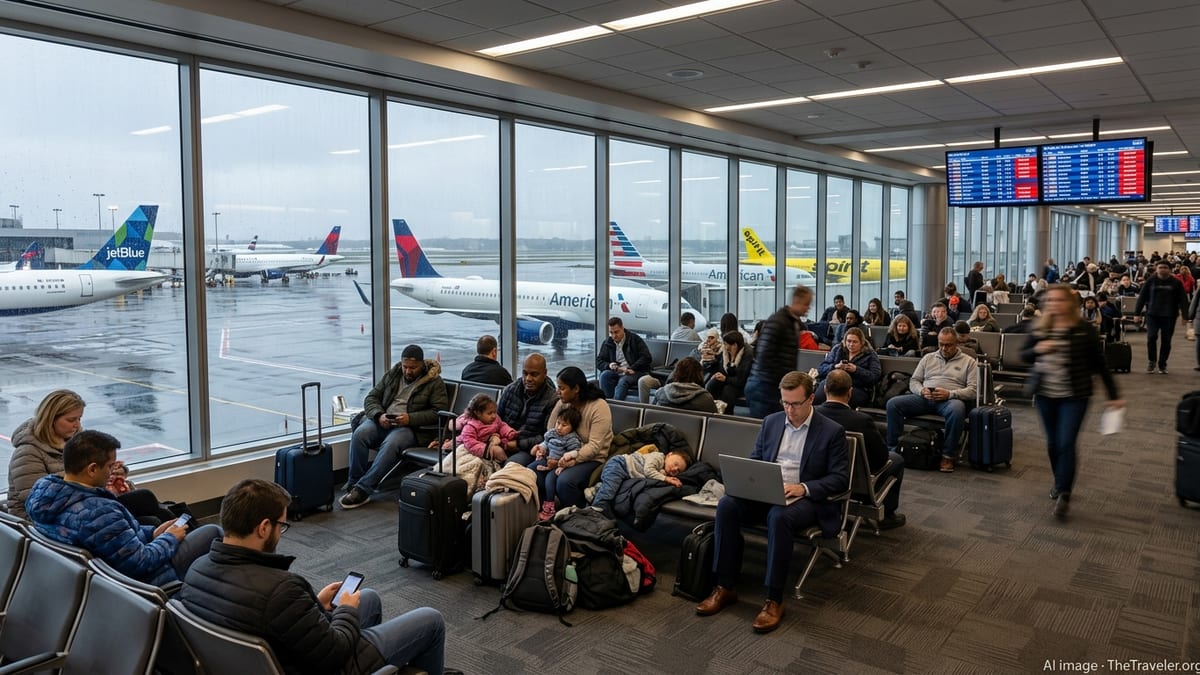
Passengers at Boston Logan International Airport faced hours of disruption on Friday as more than 140 flight delays and several cancellations snarled departures to major U.S. hubs including New York, Chicago, and Los Angeles, affecting operations for JetBlue, Spirit, American Airlines, Delta, and other carriers.
Get the latest news straight to your inbox!
Heavy Disruptions Across Key Domestic Routes
Tracking data from major flight-monitoring platforms on Friday indicates Boston Logan recorded around 145 delayed departures and at least six flight cancellations, concentrating pressure on some of the busiest domestic corridors in the United States. High-frequency routes to New York City area airports, Chicago, and Los Angeles were among the hardest hit, with knock-on disruption reported on connections across the country.
Publicly available information shows that the wave of delays at Logan began building through the morning peak and extended into the afternoon, with many departures pushed back by more than an hour. While the majority of affected flights eventually left the gate, rolling schedule changes left passengers facing extended waits in crowded terminal areas and at packed gate lounges.
The pattern of disruption mirrors recent weather-related and operational challenges across the Northeast. Coverage of the mid-March storm system that impacted New England earlier in the week documented dozens of cancellations at Logan and strong winds that complicated airport operations, and Friday’s backlog appears to reflect ongoing recovery and congestion in airline networks built around Boston and other East Coast hubs.
Although Friday’s totals are modest compared with the widespread shutdowns seen during major blizzards or nationwide system outages, the concentration of delays on popular domestic routes amplified the impact for travelers trying to make weekend plans or connect onward to other U.S. cities.
JetBlue, Spirit, American, and Delta Among Affected Carriers
JetBlue, which maintains a significant presence at Boston Logan, appeared prominently in Friday’s delay tallies, with multiple departures to New York, Florida, and West Coast destinations posting late departure times. Past federal data from the Air Travel Consumer Report has already highlighted how busy JetBlue operations at Boston can be sensitive to weather and traffic bottlenecks, and Friday’s disruptions added fresh strain to the carrier’s schedule.
Low-cost operator Spirit Airlines, which has grown its Boston footprint with links to Florida and other leisure markets, also experienced delays and at least one cancellation affecting southbound routes. Recent online discussions among travelers have pointed to repeated schedule reliability issues for some Spirit services touching Boston, and Friday’s conditions contributed further to that perception among stranded passengers.
American Airlines and Delta, both of which use Boston as an important gateway in their national networks, were also drawn into the disruption. Public tracking services recorded delayed departures on American’s links to major hubs such as Chicago and connecting points in the Midwest, while Delta services bound for New York and other East Coast cities also reported schedule slippage.
The combined impact across these four brands meant that many travelers found rebooking options limited. With seat availability already tight on peak-day departures, even a small number of cancellations can force passengers to accept significantly later flights or itineraries involving additional stops.
Weather, Congestion, and Network Knock-on Effects
Recent reporting on the mid-March storm system across the northeastern United States has documented heavy rain, wind, and localized power outages in Massachusetts and neighboring states, as well as dozens of flight cancellations at Boston earlier in the week. Although conditions improved by Friday, airline networks were still working through residual congestion that can persist for days once rotations and crew schedules are disrupted.
Operational data and prior federal analyses show that when a hub like Boston Logan experiences several days of uneven operations, disruptions often cascade far beyond the original weather event. Aircraft and crews that arrive late into Boston can push back subsequent departures, a pattern that multiplies through the day as each delay affects the next leg in the rotation.
Industry metrics published in recent Air Travel Consumer Reports illustrate how tarmac delays and prolonged gate holds tend to cluster on days with severe weather or high traffic volume. While Friday’s situation at Logan did not match the scale of historic winter storms, it fit a familiar pattern in which even moderate operational challenges can translate into extensive inconvenience for travelers on busy corridors such as Boston to New York, Chicago, and Los Angeles.
Congestion in the broader Northeast airspace, including traffic management initiatives affecting New York area airports, may also have contributed to the slower flow of departures. When air traffic control programs limit the rate at which flights can depart or arrive at key choke points, airlines are often forced to hold aircraft at the gate in Boston, adding to the visible build-up of delays on departure boards.
Passengers Face Extended Waits and Limited Alternatives
Accounts shared on social media and travel forums on Friday described long lines at customer service counters, crowded seating areas in Logan’s terminals, and passengers attempting to rearrange complex itineraries as delays mounted. Some travelers reported spending much of the day in the airport waiting for repeatedly adjusted departure times, while others recounted missed connections at hub airports further along their journeys.
For those facing outright cancellations, rebooking proved difficult. Publicly available information on airline schedules showed that many later departures on the same routes were already operating close to capacity, giving airlines limited flexibility to accommodate displaced passengers. Travelers bound for popular destinations such as New York, Chicago, and Los Angeles sometimes accepted next-day flights or routings through alternate hubs to complete their trips.
Online discussions about recent travel from Boston have also highlighted broader frustrations with ground operations at Logan, including gate availability and baggage handling delays. In this environment, daylong disruptions like Friday’s can compound existing concerns for frequent flyers who rely on tight connections and predictable turnaround times.
Consumer advocates regularly point to such episodes as reminders for travelers to allow extra time for connections when flying through busy Northeast airports during the shoulder seasons, when fast-changing weather can swiftly alter operating conditions and lead to ripple effects across the national network.
What Travelers Can Expect in the Coming Days
Forecasts and published operational outlooks for the coming days suggest that weather across New England is expected to moderate compared with the strong system earlier in the week, which should help airlines gradually restore more regular patterns at Boston Logan. However, experience from past disruptions indicates that residual delays can linger as crews and aircraft reposition and as airlines clear backlogs of displaced passengers.
Travel industry coverage frequently advises passengers flying shortly after such events to monitor their flight status closely, check in early, and be prepared for gate changes or schedule adjustments, particularly on routes that depend on tightly timed aircraft rotations. This guidance is especially relevant for services linking Boston to major hubs like New York, Chicago, and Los Angeles, where small timing shifts can have outsized effects on onward connections.
Federal transportation data continues to underscore that, even in challenging conditions, the vast majority of scheduled flights in the United States ultimately operate. Yet as Friday’s situation at Boston Logan demonstrated, a cluster of around 145 delays and several cancellations concentrated on busy domestic routes can still leave thousands of travelers temporarily isolated in terminal concourses, waiting for the system to catch up.
For now, Boston remains fully open, with airlines working to move passengers through the network as capacity allows. Travelers with flexible plans may benefit from choosing off-peak departure times or alternative routings, while those with fixed schedules are likely to keep a close eye on departure boards as Logan’s operations gradually stabilize after a turbulent week.