

More news on this day
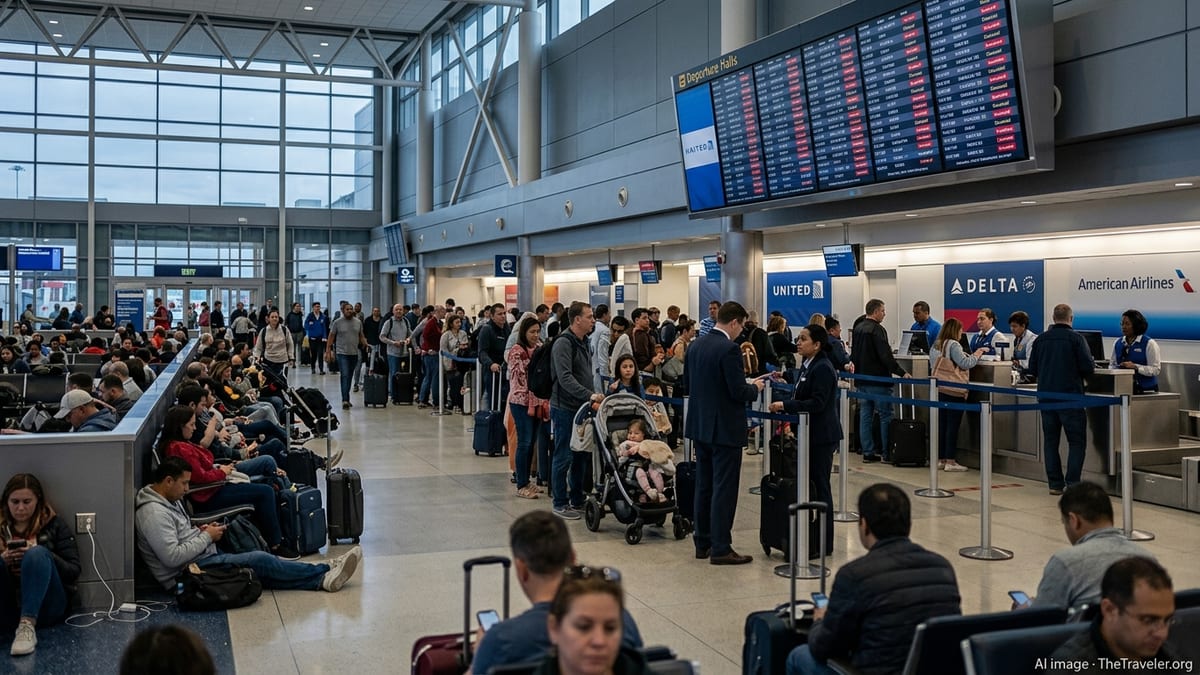
Hundreds of travelers at Newark Liberty International Airport in New Jersey faced long waits, missed connections, and last-minute rebookings as 168 flights were delayed and 10 were canceled, disrupting operations for major US airlines and throwing schedules to Chicago, Miami, Orlando, and other key destinations into disarray.
Get the latest news straight to your inbox!
Major Carriers Hit as Schedules Unravel
Publicly available flight-tracking data for Newark Liberty International Airport on Monday, March 23, 2026, shows extensive disruption across the day’s schedule, with delays and cancellations rippling through departures and arrivals. United Airlines, which operates a large hub at Newark, appears to be among the most affected carriers, alongside Delta Air Lines, American Airlines, and several low-cost airlines serving popular domestic routes.
The 168 delayed flights represent a significant portion of the airport’s daily operations, with many departures pushed back from their scheduled times by more than an hour. The 10 cancellations, though smaller in number, have had an outsized impact on passengers whose options for same-day rebooking were limited by already-busy services to other major hubs.
Newark Liberty has long been one of the most delay-prone airports in the United States, and recent federal documentation and industry analysis describe ongoing pressure on its infrastructure and airspace. Those underlying constraints appear to have amplified the effects of today’s operational challenges, leaving airlines with fewer options to absorb disruption.
Key Routes to Chicago, Miami, and Orlando Disrupted
The disruptions hit some of the country’s most heavily traveled corridors. Flight-status boards at Newark on Monday showed a cluster of late departures and rolling delays on services to Chicago, including flights bound for both O’Hare International Airport and Chicago Midway. These routes are essential connectors for business travelers and for passengers making onward connections across the Midwest and West.
Leisure destinations were also strongly affected. Flights to Miami and other South Florida airports, as well as to Orlando, experienced departure pushes and gate changes, creating uncertainty for vacationers and families traveling during a busy spring period. In some cases, delays pushed scheduled daytime arrivals in Florida into late evening, complicating ground transport and hotel check-ins at the far end of the journey.
Other major domestic destinations, including cities in Texas and the West Coast, also saw knock-on effects as aircraft and crews scheduled to operate later flights departed Newark late or did not reach the airport at all. Flight operations data indicate that once a delay pattern establishes on early departures from a congested hub like Newark, it can cascade across an airline’s network for many hours.
Passengers Face Long Waits, Rebookings, and Missed Connections
Reports from the terminal on Monday describe crowded gate areas, long lines at customer service counters, and passengers checking mobile apps repeatedly as departure times continued to shift. With multiple airlines affected simultaneously, the usual options for rebooking onto competing carriers were constrained, especially on peak-time departures to Chicago and Florida.
Travelers with onward international connections appeared particularly vulnerable to the day’s disruptions. Missed links in Chicago and Miami forced some passengers to overnight en route, while others were rerouted through alternative hubs such as Washington, Boston, or New York’s other airports. In a hub-and-spoke system, a relatively small number of cancellations at a major connecting point can strand passengers far from their final destinations.
Standard airline policies meant that many passengers were rebooked automatically, but those seeking earlier options or accommodations frequently faced long waits to speak with staff. Travel forums and social media posts highlighted frustration over limited information, changing gate assignments, and concerns about checked baggage for those shifted to new itineraries at short notice.
Structural Strain at One of America’s Busiest Airports
The latest wave of disruptions comes against a backdrop of persistent scheduling and airspace challenges at Newark Liberty. Federal aviation orders and policy documents over the past year have highlighted continued congestion, limited runway capacity, and air traffic control staffing constraints in the New York metropolitan area, prompting regulators to temporarily cap the number of flights at the airport in an effort to reduce chronic delays.
Industry reports indicate that, even with these constraints, Newark remains vulnerable to operational shocks. Weather systems moving through the Northeast, technical issues affecting aircraft or airport systems, and staffing gaps can all trigger delay programs that ripple through an already tight schedule. Once ground delays or flow restrictions are introduced, recovery can take many hours, especially on days with high passenger volumes.
Airlines operating at Newark have made public commitments to adjust schedules, add buffer time, and invest in operational resilience, but the scale of Monday’s disruption shows that progress remains uneven. Travelers transiting through the airport continue to face a higher-than-average risk of delays compared with many other US hubs.
What Travelers Can Do When Newark Disruptions Hit
While Monday’s events illustrate the limits of individual control over complex airport operations, experienced travelers often take steps to reduce their exposure to disruptions at Newark. Publicly shared advice from frequent flyers and travel experts typically includes booking earlier flights in the day, allowing generous connection times when transiting through Newark, and considering non-stop options when available to avoid tight hub connections.
Monitoring flight status closely in the 24 hours before departure can also help passengers react more quickly if delays or cancellations appear likely. Many travelers use airline apps to request same-day flight changes, stand-by listings, or reroutes through alternate hubs before queues at the airport grow long.
For those whose plans were derailed on Monday, travel insurance with trip interruption coverage and flexible hotel and ground transport bookings may offer some financial protection. However, as the situation at Newark Liberty demonstrates, the most significant cost of large-scale disruption is often measured in lost time, missed events, and the stress of navigating an already busy airport during a major operational downturn.