

More news on this day
Hundreds of travelers were left stranded or forced to sleep in terminals at Ronald Reagan Washington National Airport on Friday after a wave of disruptions delayed 201 flights and canceled 36 more, snarling operations for PSA Airlines, Delta Air Lines, American Airlines and their regional partners and rippling across major hubs in Washington, New York, Chicago and other U.S. cities.
Get the latest news straight to your inbox!
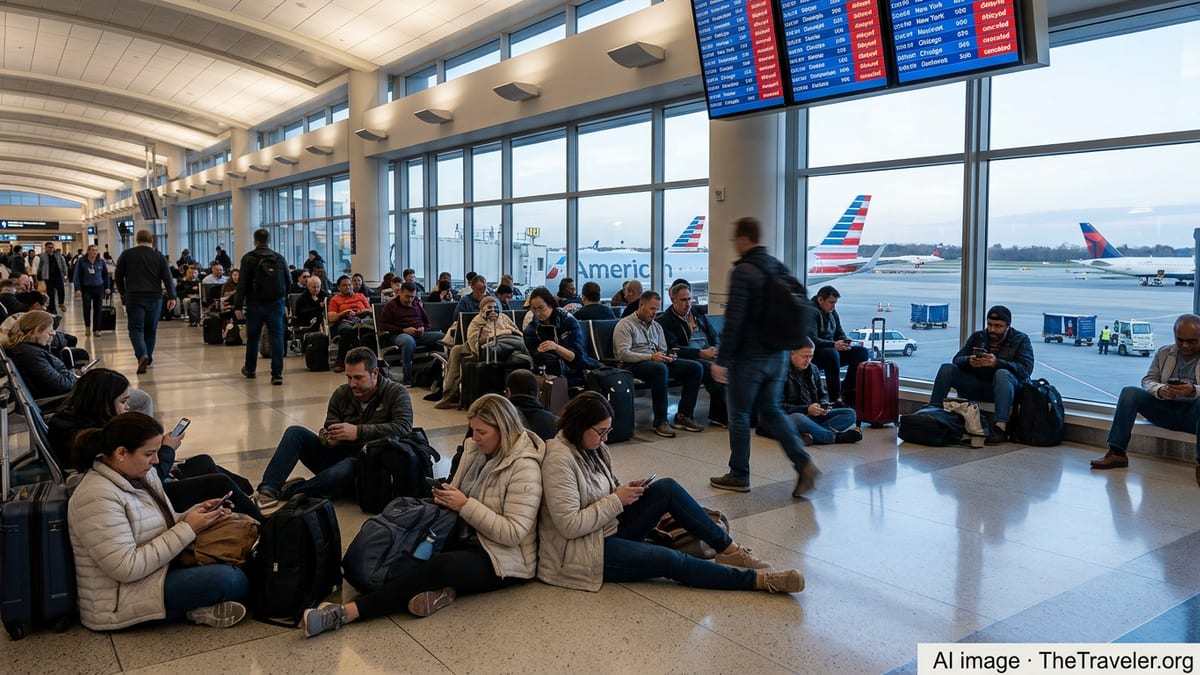
Widespread Disruptions Ripple Across Key U.S. Hubs
The disruption at Reagan National quickly spread beyond the Washington region as delayed and canceled departures cascaded through tightly timed evening and early morning schedules. Aircraft and crews scheduled to operate onward legs to New York, Chicago and other major markets were left out of position, creating knock-on delays even on routes untouched by local conditions.
Departures to New York area airports, including LaGuardia and John F. Kennedy, were among those hit hardest as bottlenecks developed on the busy Northeast Corridor. Passengers reported rolling delay estimates that shifted in 30 to 45 minute increments before some flights were ultimately canceled, a pattern that has become increasingly familiar during periods of strain on airline networks.
Chicago O’Hare, one of the nation’s largest connecting hubs, also saw growing clusters of late arrivals and missed connections as disrupted flights from Washington failed to arrive on time. Travelers attempting to reach smaller Midwestern cities via Chicago reported being rebooked onto late-night and next-day itineraries as seat availability tightened.
Secondary markets from the Mid-Atlantic to the Southeast felt the impact as well, particularly on routes where regional jets operating on behalf of major carriers provide the bulk of daily service. With limited spare aircraft and crews, airlines struggled to absorb the shock without resorting to cancellations.
PSA, Delta and American Among Hardest Hit Carriers
PSA Airlines, which operates many American Eagle regional flights into and out of Reagan National, was among the most visibly affected carriers as a string of delays compounded throughout the day. The airline’s smaller regional jets are central to American’s short-haul network along the East Coast, meaning any disruption can quickly spread across multiple states.
American Airlines, which maintains a significant presence at Reagan National, faced growing lines at customer service counters as travelers sought rebooking options, hotel vouchers and meal assistance. Some passengers reported being offered itineraries that routed them through distant hubs with long layovers, reflecting how few open seats remained during peak travel periods.
Delta Air Lines, which relies more heavily on its hubs in New York and Atlanta, also experienced schedule problems as aircraft scheduled to feed those hubs from Washington were delayed or canceled. Even in cases where flights ultimately departed, outbound crews and aircraft arrived late into connecting cities, putting pressure on already busy gate and runway operations.
Industry analysts noted that disruptions of this scale illustrate the continuing sensitivity of U.S. airline networks, where tight scheduling and high load factors leave limited room to recover quickly when something goes wrong at a major airport like Reagan National.
Passengers Face Long Waits, Limited Options and Mounting Frustration
Inside the terminals, the disruption translated into long queues, crowded gate areas and a familiar mix of confusion and fatigue. Families returning from vacations stretched out on the floor near power outlets, business travelers tried to rearrange meetings from gate seating, and solo passengers searched for the few remaining empty chairs as departure boards filled with delay notifications.
Some travelers arriving from other cities discovered their onward flights out of Reagan had already been canceled, leaving them effectively stranded far from home. With many hotels near the airport filling quickly, late-arriving passengers reported having to widen their search radius to find accommodation at short notice and at higher than usual prices.
Food and retail concessions inside the terminals experienced heavy demand as passengers waited out extended delays. Lines at coffee shops and quick-service restaurants stretched down concourses, while many outlets reported running low on popular prepared items by late evening as operational hours were stretched.
For travelers with tight personal or professional commitments, the ripple effects were significant. Missed weddings, delayed job interviews and lost vacation days were among the stories shared at gates and on social media as the full extent of the disruption became clear.
Operational Strain Highlights System Vulnerabilities
Aviation experts say such episodes expose how vulnerable tightly scheduled airline operations can be, especially at constrained airports such as Reagan National, where runway capacity and airspace limitations leave little flexibility during irregular operations. Once a critical mass of flights is delayed or canceled, recovering the schedule often requires several cycles of operations.
Regional airlines like PSA, which operate shorter flights with frequent turns, can be especially hard hit because a single delay early in the day can cascade across multiple subsequent sectors. If crews “time out” under federal duty regulations before they can complete a sequence of flights, airlines must scramble to find replacements, further complicating recovery efforts.
Major carriers such as Delta and American have invested heavily in technology and analytics to predict and manage disruptions, but experts note that even sophisticated tools cannot always overcome physical constraints at capacity-challenged airports and saturated airspace corridors along the East Coast. When conditions stack up against carriers, they often face a choice between prolonging delays or opting for cancellations that reset the schedule.
The latest disruptions come at a time when airlines are still working to restore traveler confidence after a series of high-profile meltdowns tied to weather, technology failures and staffing shortfalls in recent years. Persistent delays and cancellations risk eroding that progress and could invite renewed scrutiny from regulators and lawmakers focused on passenger protections.
What Stranded Travelers Can Expect Next
For passengers still trying to reach their destinations, airline operations teams are expected to spend much of the next 24 hours repositioning aircraft and crews, a process that often involves running a series of extra “ferry” or repositioning flights and consolidating lightly booked services where possible. Travelers with flexible schedules may be asked to volunteer for later departures in exchange for travel credits as airlines free up seats for those with urgent needs.
Customer service agents and call centers will continue to handle a high volume of rebooking requests, with priority generally given to those whose trips begin or end at affected airports. Travel advisors recommend that passengers monitor both airline apps and departure boards, and consider alternative airports within driving distance if space opens on nearby routes.
With the broader U.S. air travel system already operating near capacity on many days, especially around weekends and peak business travel periods, it may take several flight cycles before schedules fully stabilize. In the meantime, travelers passing through Washington, New York, Chicago and other key hubs should be prepared for the possibility of residual delays even once the immediate disruption at Reagan National subsides.
For those caught up in the latest wave of delays and cancellations, the episode serves as a reminder of how interconnected the nation’s air travel network has become, and how a bad day at a single airport can reverberate across the country in a matter of hours.