

More news on this day
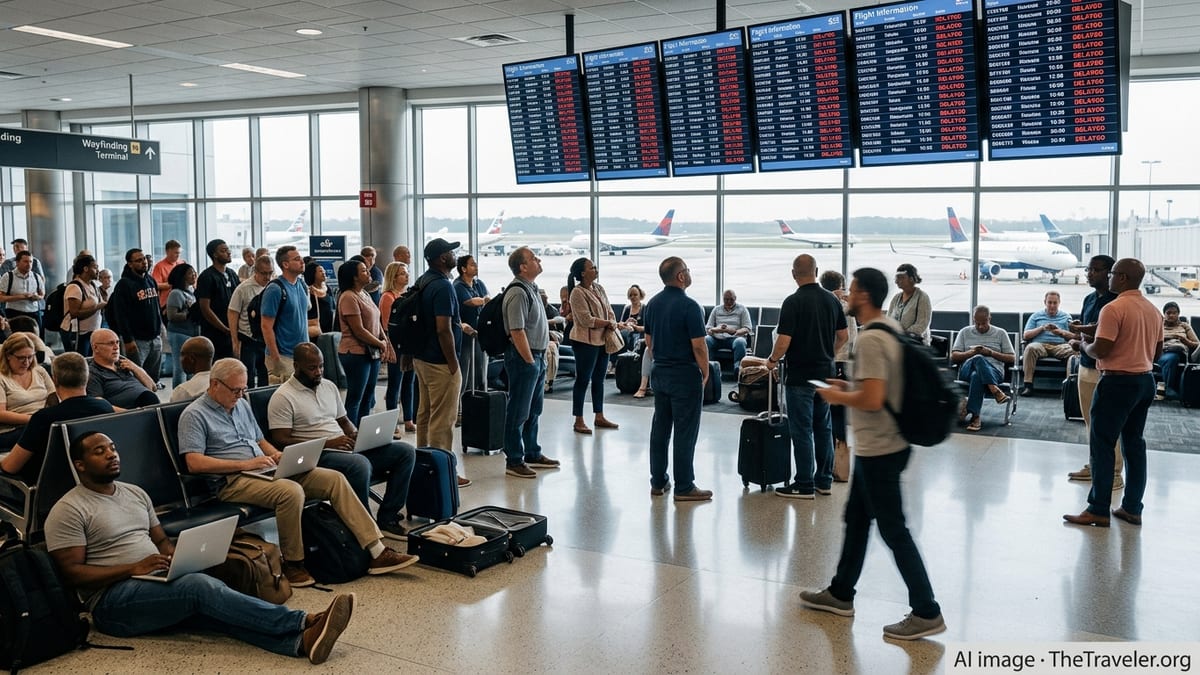
Hundreds of passengers were left stranded at San Francisco International Airport as 211 flights were delayed and at least 8 were canceled, disrupting operations for major carriers including Delta Air Lines, United Airlines, American Airlines, and others across key domestic and international routes.
Get the latest news straight to your inbox!
Wide-Ranging Disruptions Hit Domestic and International Networks
Publicly available flight tracking data indicates that the disruption at San Francisco International Airport affected a broad mix of short haul and long haul services. Flights to major US hubs such as New York and Chicago, as well as long haul links to Tokyo and London, were among those delayed or canceled. With 211 delays recorded alongside 8 cancellations, the impact was felt both by travelers departing from San Francisco and those connecting onward to other destinations.
The scale of disruption at a single hub like San Francisco can quickly cascade across airline networks. When one transcontinental departure to New York or an international departure to Tokyo is held at the gate or canceled outright, subsequent rotations for that aircraft often run late, causing knock-on schedule changes at downline airports. This pattern appeared to play out as delays at San Francisco rippled to other major hubs on the same day.
United Airlines, which carries a significant share of passengers at San Francisco, was heavily represented among the affected operations, alongside Delta and American Airlines. Several smaller and regional partners that feed traffic into these networks also experienced rolling timetable adjustments, compounding queues at gate areas and customer service counters throughout the terminals.
Passengers reported long waits near departure boards as status updates shifted from “on time” to “delayed,” often with revised departure times moving incrementally later. With only a small number of outright cancellations relative to the volume of delays, many travelers found themselves facing extended hours at the airport rather than clear-cut rebooking options.
Operational Strain at a Key West Coast Hub
San Francisco International Airport is one of the busiest gateways on the US West Coast, serving as a critical link between North America, Asia, and Europe. Industry analyses describe it as a major international hub, with a particularly strong role in transpacific traffic. Any sizable disruption there tends to have outsize effects on both domestic and overseas travel patterns.
Recent coverage on aviation capacity and safety has pointed to a tightening operating environment for flights into and out of San Francisco. New rules affecting how many aircraft can land per hour and ongoing runway infrastructure work have already been flagged by travel outlets as likely to increase delays for passengers using the airport. These constraints leave airlines with less flexibility to absorb schedule shocks when weather, congestion, or other operational challenges arise.
On the day of the latest disruption, the combination of a busy early April travel period and constrained arrival and departure windows appears to have reduced the room for recovery once delays began to accumulate. Each late inbound aircraft meant a late outbound departure, and with fewer available slots to compress operations, schedules became increasingly stretched as the day progressed.
Observers note that this situation reflects a wider pattern seen across the US aviation system, where high passenger demand, lean staffing, and infrastructure projects are converging to leave major hubs more vulnerable to cascading disruption than in previous years.
Stranded Passengers Face Long Lines and Limited Options
For travelers caught in the middle of the San Francisco disruption, the experience translated into hours of waiting in crowded terminals. Images shared across social platforms showed long customer service queues as passengers sought rebooking assistance, meal vouchers, or overnight accommodation guidance when missed connections made same day travel impossible.
Because only 8 flights were fully canceled, many travelers were technically still scheduled to fly, but with little clarity on when their aircraft would actually depart. This type of rolling delay can be particularly challenging for families with young children, older travelers, and those with tight onward rail, bus, or hotel arrangements in cities such as New York, Tokyo, and London.
Airlines typically respond to these situations by rebooking customers on later departures, rerouting them through alternate hubs, or placing them on partner carriers where interline agreements allow. However, during peak travel periods, spare seats are limited, meaning that even when options exist on paper, it can take time for agents to locate and secure available inventory for each customer.
Travel advocacy information emphasizes that passengers affected by extensive delays or cancellations should keep records of boarding passes, receipts for meals and lodging, and screenshots of flight status changes. These documents can be important later if travelers seek compensation, vouchers, or reimbursement under airline policies or applicable regulations.
Airline and Passenger Rights Context
Publicly available guidance from consumer agencies explains that in the United States, airlines are not automatically required to compensate passengers financially for delays or cancellations that are attributed to air traffic control constraints or certain operational factors. Instead, each carrier outlines its own service commitments, which can include meal vouchers, hotel rooms, or rebooking at no additional cost, depending on the circumstances.
Passengers on international itineraries that originate or terminate in regions covered by stronger consumer protections, such as the European Union, may have additional rights if their flights are significantly delayed or canceled. For example, travelers heading from San Francisco to London on an EU or UK carrier could fall under European-style compensation rules if they face long delays, provided their situation meets specific regulatory criteria.
Consumer advocates often encourage travelers to review the “customer service” or “conditions of carriage” sections of their airline’s website after an incident, as these documents describe what support may be available. In some cases, airlines also issue broad travel waivers during major disruption events, allowing passengers to change their itinerary without standard change fees or fare differences within a defined time window.
Given the complexity of rules across jurisdictions and airlines, many passengers rely on publicly available explainer resources or third party tools to understand whether they may be eligible for assistance after a day of widespread delays like those seen at San Francisco International Airport.
Ongoing Impacts and What Travelers Should Do Next
While the immediate disruption centered on the 211 delays and 8 cancellations at San Francisco, timetable adjustments can continue for hours or even days after such an event. Aircraft and crew may remain out of position, causing early morning flights the following day to depart late, particularly on heavily used transcontinental and transpacific routes.
Travel industry coverage recommends that passengers with upcoming departures from San Francisco monitor their flight status closely before heading to the airport, using both airline apps and airport information boards. Checking in as early as permitted can sometimes open up more rebooking choices if additional schedule changes occur.
Experts advising the traveling public also highlight the value of flexible planning during periods of heightened disruption risk. Building longer layovers into itineraries, selecting earlier departures where possible, and keeping essential items such as medications and a change of clothes in carry on bags can help mitigate the impact if a delay or missed connection occurs.
With San Francisco International Airport operating under ongoing capacity constraints and serving as a critical node in US and international air travel, further days of heavy disruption cannot be ruled out. Travelers heading to or through the airport in the coming weeks are likely to benefit from a cautious approach, extra time in their schedules, and close attention to evolving flight information.