

More news on this day
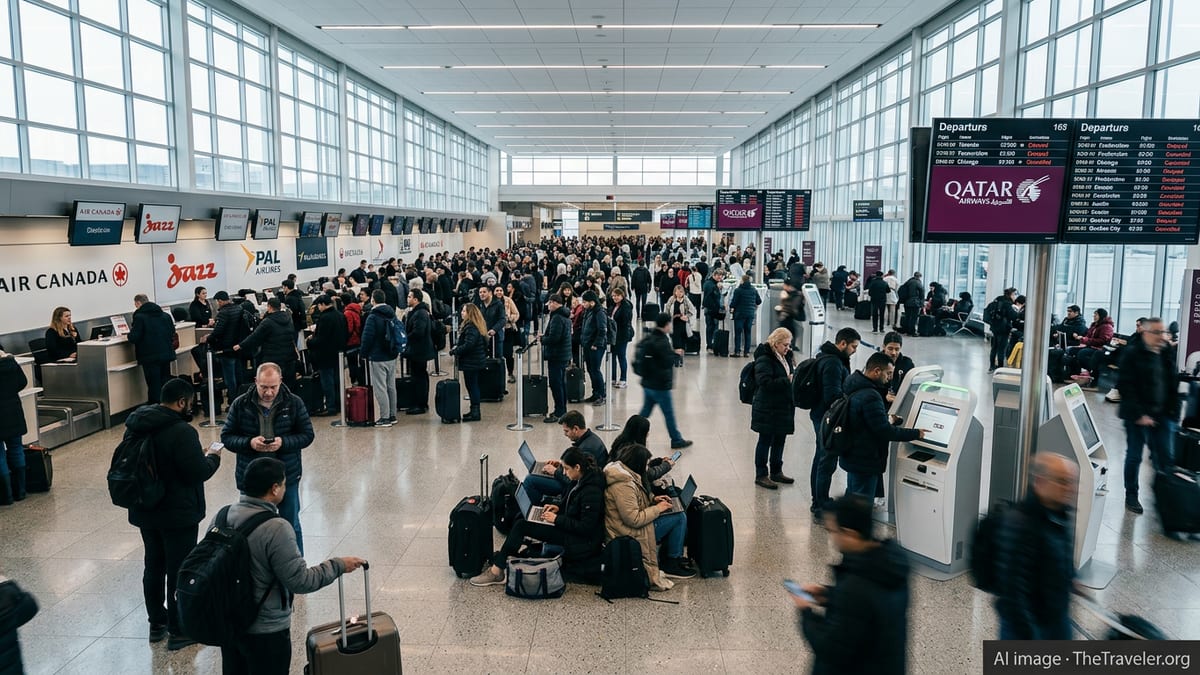
Travelers at Montréal–Trudeau International Airport faced extensive disruption today as aviation tracking data showed at least 36 flight cancellations and 95 delays affecting services operated by Jazz, Air Canada, Endeavor Air, PSA Airlines, WestJet and other carriers on major domestic and cross-border routes.
Get the latest news straight to your inbox!
Significant Operational Disruption Across Multiple Carriers
Publicly available flight-tracking dashboards for Montréal–Trudeau on Monday, March 16, 2026, indicated a broad wave of disruption, with cancellations and delays clustered around some of the airport’s most heavily used regional and transborder services. Regional affiliate Jazz, mainline Air Canada and U.S. partners including Delta’s Endeavor Air and American Eagle operator PSA Airlines all appeared among the affected operators, alongside Canadian rival WestJet and several smaller carriers.
The 36 cancellations recorded represented a substantial share of the day’s scheduled departures and arrivals, while 95 delayed flights pointed to mounting congestion across the airport’s operations. Many of the delays extended well beyond 45 minutes, with some departures pushed back for more than two hours as aircraft, crew and ground resources came under strain.
Arrival boards showed inbound services from key Canadian and U.S. hubs running behind schedule, creating knock-on effects for onward connections. According to published coverage and passenger reports on social platforms, travelers attempting to rebook found later flights already heavily booked, further complicating efforts to leave Montréal the same day.
Key Routes Hit: New York, Quebec City, Fort Lauderdale, Charlotte and Winnipeg
The disruption was felt most acutely on high-traffic routes linking Montréal–Trudeau to New York–area airports, Quebec City, Fort Lauderdale, Charlotte and Winnipeg, which together form a critical network of short- and medium-haul connections for business and leisure travelers. New York services, typically operated through a mix of Air Canada Express, Jazz and U.S. regional partners such as Endeavor Air and PSA Airlines, saw a combination of cancellations and rolling delays.
Flights to and from Quebec City, a short hop that often functions as a feeder for longer-haul international itineraries, were also affected. Even modest delays on this corridor can cause passengers to miss onward connections to Europe or Western Canada, increasing the likelihood of overnight stays and complex rebookings.
Published timetable data and schedule references show Montréal’s long-standing links to Florida and the U.S. Southeast, including Fort Lauderdale and Charlotte, as important seasonal and year-round routes. Today’s cancellations on those services added pressure during a period when many Canadians are travelling to sun destinations. Travelers bound for Winnipeg also faced uncertainty, with disruptions on a route that historically has seen schedule adjustments and competitive shifts between Air Canada and WestJet.
Possible Weather and Network Factors Behind the Disruptions
The reasons for individual cancellations and delays varied by carrier and route, but the pattern at Montréal–Trudeau unfolded against a broader backdrop of weather-related and systemic challenges in the North American air network in early 2026. Recent winter storms have already produced some of the highest cancellation totals in years across major hubs, and residual aircraft and crew positioning issues can linger for days.
Operations experts note that when storms or freezing precipitation affect multiple hubs simultaneously, regional operators such as Jazz, Endeavor Air and PSA Airlines are particularly exposed. Their tight aircraft rotations and crew duty-time limits mean that a single extended delay can force subsequent flights to be cancelled or significantly rescheduled, even after local weather improves.
Air Canada and WestJet, which both have extensive domestic and transborder networks, have also been contending with high demand, evolving fleet plans and pressure to recover from previous large-scale disruptions. Public analyses of airline performance in Canada in late 2024 and early 2025 highlighted sensitivity to winter operations, suggesting that even modest operational shocks can cascade quickly during peak travel periods.
Impact on Passengers at Montréal–Trudeau
The immediate impact at Montréal–Trudeau was felt in crowded departure areas, longer lines at customer service counters and uncertainty over when travel plans could resume. Social media posts from stranded passengers on March 16 described hours-long waits to speak with airline agents, difficulty accessing phone support and limited same-day rebooking options on popular routes.
Travelers on affected New York and Quebec City services reported challenges securing alternative flights in time to make meetings, cruises or onward international legs. Those heading to leisure destinations such as Fort Lauderdale faced the prospect of losing prepaid nights at hotels or missing the start of vacations, while travelers to Winnipeg and other domestic cities worried about missing family events and work commitments.
Some passengers turned to credit card travel insurance or standalone policies to cover unexpected expenses, including overnight stays, meals and replacement tickets on other carriers. Consumer forums have in recent years documented recurring complaints about long processing times and disputes over eligibility, underscoring how stressful such disruptions can be for infrequent travelers unfamiliar with the fine print of airline and insurance policies.
Passenger Rights and What Disrupted Travelers Can Do
Public guidance from consumer advocates and recent regulatory documents in Canada emphasize that travelers affected by cancellations and long delays should retain boarding passes, booking confirmations and all written communication about schedule changes. Receipts for hotels, meals and ground transportation can be critical when later seeking reimbursement from airlines or insurers.
Under Canada’s Air Passenger Protection Regulations, the level of assistance and possible compensation depends on the size of the carrier, the length of delay at arrival and whether the disruption is within the airline’s control, within its control but required for safety, or outside its control. Weather can limit compensation options, but carriers are still generally expected to provide standards of treatment such as food vouchers or accommodation in some circumstances.
Travel advisors recommend that passengers regularly monitor their flight status through airline apps and airport information screens, rather than relying solely on email notifications. When large numbers of flights are affected, rebooking options are typically more numerous earlier in the disruption. In some cases, publicly available guidance indicates that passengers may be able to request rerouting on partner airlines when no reasonable option exists on the original carrier within a set timeframe.
For those with upcoming itineraries through Montréal–Trudeau, current conditions highlight the value of allowing extra connection time, especially during late winter and early spring when storms and icing can quickly ripple through the network. Flexible fares, travel insurance and a clear understanding of airline policies may not prevent disruptions, but they can provide more options when plans suddenly change.