

More news on this day
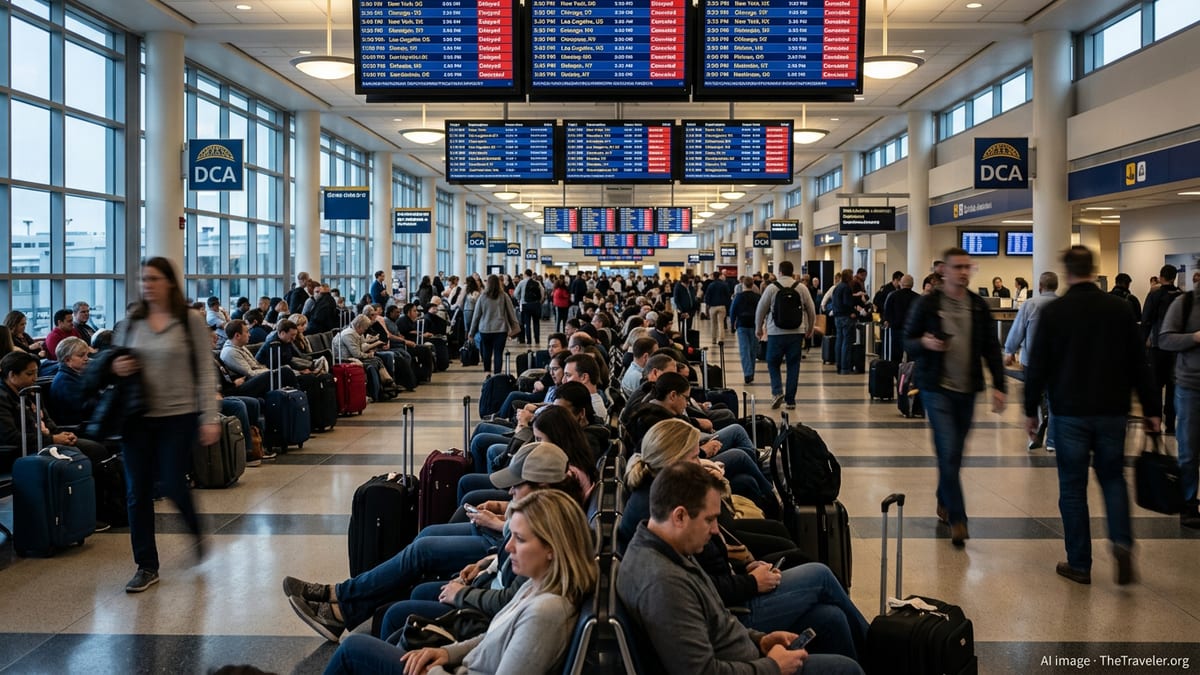
Hundreds of travelers were stranded across the United States after a wave of disruptions at Ronald Reagan Washington National Airport led to 326 flight delays and 74 cancellations involving PSA Airlines, American Airlines and Delta, halting or rerouting traffic to major hubs including New York, Chicago and Los Angeles.
Get the latest news straight to your inbox!
Chain Reaction of Disruptions From Washington to Major US Hubs
Operational data and flight-tracking dashboards show that the disruption at Reagan National rippled quickly through some of the country’s busiest air corridors, with aircraft and crews out of position for much of the day. Departures and arrivals linked to New York, Chicago and Los Angeles were among the hardest hit, limiting options for travelers trying to rebook or connect onward to smaller regional airports.
PSA Airlines, which operates regional flights marketed under the American Eagle brand, experienced a concentrated spike in late and canceled departures, affecting passengers booked on American Airlines itineraries. American’s mainline operation at Reagan National also saw knock-on delays as aircraft waited for open gates and new crew assignments, tightening already busy schedules on high-demand routes up and down the East Coast.
Delta’s schedule at the Washington airport, smaller but heavily focused on key business routes, was similarly disrupted. Delayed departures from Reagan National fed directly into congestion at Delta’s connecting hubs, particularly for flights touching New York and Chicago, where tight turnaround times left little margin for recovery once the initial disruption took hold.
By evening, the combined effect for PSA Airlines, American Airlines and Delta had reached 326 delayed flights and 74 cancellations linked to Reagan National, according to publicly available operational tallies, leaving aircraft, crews and passengers scattered far from their intended destinations.
Travelers Face Missed Connections, Limited Rebooking Options
For passengers, the numbers translated into long hours in departure halls and packed customer-service lines. The heavy concentration of delays at a slot-controlled airport like Reagan National meant that even when aircraft and crews became available, finding space in the schedule for recovery flights was challenging.
Travelers heading to or connecting through New York, Chicago and Los Angeles were especially constrained. These cities already operate near capacity during peak periods, and reports from airline and airport dashboards indicated that arriving late from Washington often meant missing final bank departures to smaller cities throughout the Midwest, Northeast and West Coast.
Some passengers were offered reroutes through alternate hubs such as Charlotte, Atlanta or Dallas, but these options often required overnight stays or lengthy layovers. Others chose to abandon air travel altogether, turning instead to rail or car rentals for shorter regional journeys when same-day rebooking was no longer realistic.
Published information on airline customer-service policies indicates that rebooking and meal vouchers were offered in many cases, but accommodation support varied depending on whether delays were classified as within the control of the airline or attributed to broader system and airspace factors.
Underlying Strains in the US Aviation System
The concentrated disruption at Reagan National comes against the backdrop of continuing strain in the US aviation system, where a mix of airline-controlled and national aviation system factors has contributed to elevated levels of delays and cancellations in recent years. Federal air travel consumer reports highlight that carriers such as PSA Airlines and Delta have recorded notable shares of delays and cancellations attributed to air carrier causes such as maintenance or crew availability, as well as to national aviation system constraints including congestion and non-extreme weather conditions.
Industry analyses and government data underscore how quickly local issues can cascade into a national problem. When aircraft and crews are tightly scheduled, a cluster of late departures at a key airport like Reagan National can disrupt entire daily rotations, particularly on short-haul routes that are designed for multiple legs per day between hubs such as Washington, New York and Chicago.
Recent high-profile disruptions involving major US carriers have also drawn attention to vulnerabilities in airline technology systems and scheduling practices. While the current issues at Reagan National are being described in operational terms rather than as a systemwide outage event, travel industry observers note that any additional stress on staffing, aircraft availability or air traffic flow can magnify the impact on passengers.
Regulatory filings and policy discussions have increasingly focused on how airlines classify and manage disruptions, and on what level of compensation or assistance passengers can expect when long delays and cancellations strand them far from home or from their intended connections.
Broader Impact on Business, Leisure and Connecting Traffic
Washington’s Reagan National serves a mix of business travelers, federal workers, tourists and regional passengers, meaning that the disruption’s effects were felt far beyond the airport’s immediate catchment area. Delayed flights to New York affected early-morning business meetings and same-day returns, while missed connections through Chicago and Los Angeles disrupted long-planned leisure trips and international itineraries.
Travel agencies and corporate travel managers tracking the day’s events reported growing reliance on contingency plans, including remote participation in meetings and alternative routings for time-sensitive trips. For leisure travelers, the impact was often more personal, with delays pushing back family reunions, vacations and key events that had been timed around specific arrivals.
The situation also strained airport services within Reagan National itself, where higher-than-usual numbers of passengers remained in terminals waiting for updates. Lines for food outlets, restrooms and charging stations grew steadily as the day progressed, and announcements of further rolling delays added uncertainty for those debating whether to leave the airport or remain close to their departure gates.
With peak summer and holiday periods still ahead on the travel calendar, analysts note that patterns seen in the Reagan National disruption underscore the continuing importance of system resilience, clear passenger communication and realistic scheduling in preventing localized issues from turning into nationwide travel disruptions.