

More news on this day
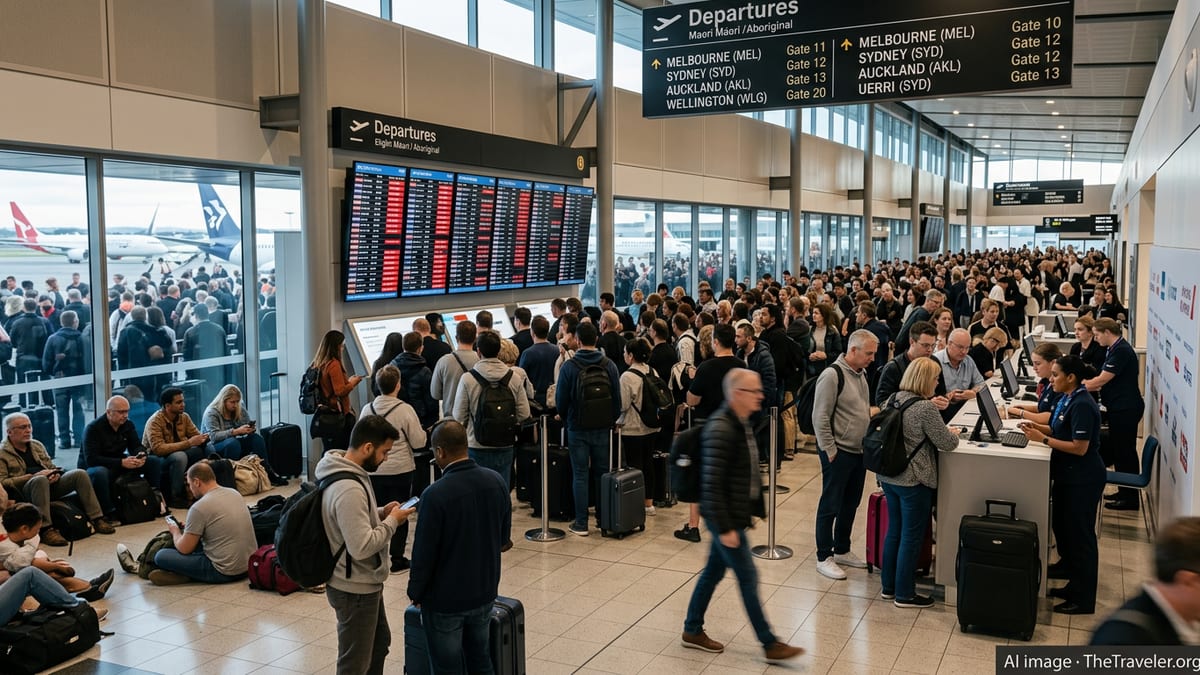
Thousands of travellers across Australia and New Zealand faced long queues, missed connections and overnight stays as widespread flight delays and cancellations rippled through major hubs including Melbourne, Sydney, Auckland and Wellington.
Wave of Disruptions Across Key Trans-Tasman Hubs
Operational data from aviation trackers on March 5 and 6 indicates hundreds of services impacted across the region, with a combined tally in the order of 645 delays and 51 cancellations affecting airports in Australia’s largest cities and New Zealand’s primary gateways. Melbourne and Sydney bore the brunt in Australia, while Auckland and Wellington recorded some of the heaviest disruption in New Zealand.
The disruption comes on top of an already fragile international network, with long-haul schedules to and from the Middle East and Europe still being rebuilt after earlier mass cancellations linked to geopolitical tensions. Airlines and airport authorities across the Tasman reported stretched operations as they worked to absorb schedule changes, aircraft rerouting and crew dislocation.
By late afternoon local time, departure boards at Melbourne Tullamarine and Sydney Kingsford Smith showed rows of delayed flights, particularly on the busy trans-Tasman and domestic trunk routes. In New Zealand, Auckland and Wellington passengers experienced rolling pushbacks of departure times, with some regional links also suffering knock-on effects.
Industry analysts said the scale of the disruption underscored how interconnected Australian and New Zealand aviation networks have become. A single long-haul delay or aircraft substitution can now echo across multiple short-haul rotations between the two countries.
Major Carriers Hit: Jetstar, Qatar Airways, Virgin and Air New Zealand
The disruption cut across full-service and low-cost carriers alike. Jetstar and Virgin Australia reported significant delays on high-frequency domestic services and key holiday routes, fuelling airport crowding as passengers queued to rebook and seek information. Longer-haul operators serving the region, including Qatar Airways, also faced schedule challenges as aircraft and crews were repositioned.
Air New Zealand, the dominant carrier on many trans-Tasman routes, saw a combination of delayed and cancelled services into and out of Melbourne and Sydney, putting pressure on its hub operations in Auckland and Wellington. Some flights were forced into extended holding patterns or diversions on earlier days this week due to severe winds in the lower North Island, adding to the operational strain.
On the Australian side, Virgin Australia and Jetstar faced particular scrutiny at Sydney and Melbourne as peak-hour departure banks fell behind schedule. Passengers reported gate changes, rolling estimated departure times and long waits at customer service desks, with some flights departing more than an hour later than scheduled.
Qatar Airways, which typically feeds Australian and New Zealand passengers into its global network via Doha, was among the international carriers juggling altered routings and constrained capacity. The realignment of Middle East flight paths has reduced the margin for recovery when delays occur, leaving connecting travellers in Melbourne, Sydney and Auckland especially vulnerable to missed onward services.
Weather, War-Related Rerouting and Operational Strain Converge
A combination of factors lay behind the wave of delays and cancellations. In New Zealand, strong winds earlier in the week in the lower North Island caused diversions and disrupted aircraft positioning, particularly around Wellington. That weather hangover was still working its way through schedules as airlines attempted to restore normal rotations across the country.
At the same time, the wider international network feeding Australia and New Zealand remains under unusual pressure. Ongoing airspace restrictions and rerouting around conflict zones in the Middle East have forced airlines to lengthen flight paths, adjust departure times and, in some cases, consolidate services. These changes reduce the flexibility carriers normally have to swap aircraft or crews to cover short-notice disruptions.
Airport infrastructure and staffing levels, still in a gradual recovery phase after the pandemic, added a further layer of vulnerability. Ground handling teams at Melbourne, Sydney, Auckland and Wellington have been working near capacity on busy days, meaning that even modest weather or air traffic control restrictions can cascade into multi-hour delays by mid-afternoon.
Aviation observers noted that while the total number of outright cancellations remained lower than during the worst of the pandemic, the sheer volume of delayed flights created a similar experience for passengers, with many missing connections and being forced into overnight stays.
Travellers Face Long Queues, Missed Connections and Limited Options
For passengers on the ground, the statistics translated into hours of inconvenience. At Melbourne and Sydney, security and check-in lines lengthened as airlines attempted to rebook customers onto later flights, often with limited spare seats available. Families returning from school holidays and business travellers on tight schedules were among those hardest hit.
In Auckland and Wellington, some travellers reported being held on aircraft awaiting departure slots, while others were left waiting at gates for updated boarding calls. With trans-Tasman flights often operating at high load factors, alternative same-day options were scarce, forcing many to accept next-day departures or circuitous routings via secondary hubs.
Accommodation near major airports quickly filled as airlines issued hotel and meal vouchers to stranded customers. However, passenger advocates warned that not all travellers would qualify for assistance, especially those on lower-cost tickets or journeys affected by factors deemed outside an airline’s direct control.
Travel agents and online booking platforms saw a sharp spike in customer contacts as people sought to rearrange complex itineraries involving multiple carriers. Some advisers recommended building in longer connection buffers on trans-Tasman journeys in the coming days as airlines work through residual backlogs.
What Passengers Can Expect in the Coming Days
Operational experts say it could take several days for schedules in Australia and New Zealand to fully stabilise, particularly on routes linking Melbourne, Sydney, Auckland and Wellington. While airlines have been adding spare turnaround time where possible and deploying reserve aircraft, ongoing airspace constraints and unsettled autumn weather leave little room for error.
Travellers booked to fly in the next week are being urged to monitor their flight status closely, use airline apps where available, and ensure contact details are up to date so carriers can provide real-time notifications of any changes. Those with critical connections or events may wish to consider travelling earlier than planned to allow for potential disruption.
Industry analysts suggest that the current wave of delays will sharpen calls in both Australia and New Zealand for clearer compensation rules and minimum service standards when flights are heavily delayed or cancelled. Consumer groups argue that predictable, enforceable protections would push airlines to build greater resilience into their schedules, reducing the likelihood of mass disruption on the scale seen this week.
For now, passengers at Melbourne, Sydney, Auckland, Wellington and other affected airports are being advised to pack patience along with their boarding passes as the region’s aviation sector confronts another stress test in a period of prolonged global turbulence.