

More news on this day
Hundreds of passengers were left stranded at Cairo International Airport as extensive disruptions rippled across regional and long haul services, with reports indicating 254 flights delayed and eight canceled, affecting routes to key hubs including Dubai, Riyadh, London, and Istanbul.
Get the latest news straight to your inbox!
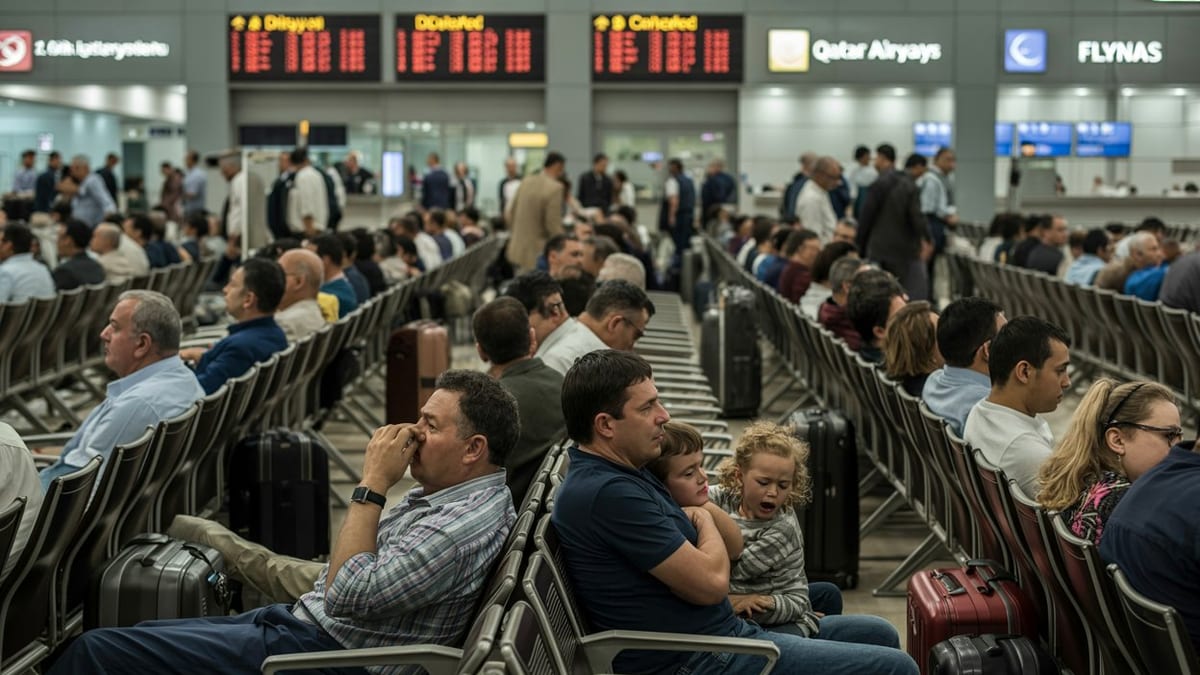
Image by Travel And Tour World
Ripple Effects Across Middle East and European Networks
Publicly available flight tracking data and local media coverage indicate that operations at Cairo International have been under severe strain, with a high volume of delayed departures and a smaller number of outright cancellations. The affected schedule spans regional links within the Middle East and North Africa as well as major intercontinental services to Europe and the Gulf.
Reports point to a complex mix of factors behind the bottlenecks. In recent weeks, airspace restrictions and intermittent closures in parts of the Gulf region have forced airlines to reroute or trim schedules, placing additional pressure on alternative hubs such as Cairo. As carriers adjust routing around sensitive air corridors, aircraft and crews have struggled to remain in position, feeding into knock on disruption for passengers.
The latest disruption at Cairo has had an outsized impact because the airport serves as both Egypt’s primary international gateway and a key transit point between Africa, the Middle East, and Europe. When departure waves are interrupted, onward connections quickly unravel, leaving transit passengers in particular vulnerable to missed flights and extended airport stays.
Operational challenges have been compounded by the need for airlines to balance safety, regulatory constraints, and schedule integrity. With regional air corridors still subject to changing risk assessments, even short notice adjustments can cascade through a tightly timed daily rotation of aircraft.
EgyptAir, Saudi Arabian Airlines, Gulf Air and Other Carriers Hit
National carrier EgyptAir has borne a significant share of the disruption, given its dominant presence at Cairo International. Published schedules show the airline operating dense banks of flights across the Middle East, Europe, and Africa, which leaves limited slack in the system when irregular operations strike.
Regional operators such as Saudi Arabian Airlines and Gulf Air have also been affected on services linking Cairo with major Gulf gateways. These routes are heavily used by business travelers, migrant workers, and religious visitors, meaning that delays and cancellations can have immediate knock on effects on work commitments, visa windows, and onward travel to cities across Saudi Arabia and the wider region.
Other international carriers serving Cairo have reportedly experienced knock on timetable changes, as aircraft arriving late from disrupted hubs are turned around for outbound legs to Europe and the Levant. Even when individual flights ultimately depart, extended delays can force missed curfews or crew duty time limits at downline airports, pushing further cancellations into subsequent days.
Available information suggests that airlines are attempting to consolidate passenger loads where possible by using larger aircraft, merging lightly booked services, or rescheduling certain departures into narrower operating windows. While these steps can gradually clear backlogs, they also create uncertainty for passengers who may see timings change repeatedly over a short period.
Key Routes to Dubai, Riyadh, London and Istanbul Affected
The disruption has been felt most acutely on some of Cairo’s busiest and most strategically important routes. Flights to Dubai and other United Arab Emirates gateways have already been affected throughout March by airspace and capacity constraints in the Gulf, and Cairo bound services have been caught up in the resulting congestion.
Connectivity to Riyadh and other Saudi cities has also come under pressure. Given the volume of workers, students, and religious travelers moving between Egypt and Saudi Arabia, any reduction or irregularity in these flights can quickly spill over into accommodation, ground transport, and rebooking challenges on both sides of the Red Sea.
Services to European hubs, particularly London and Istanbul, have likewise experienced significant delays. These routes serve as onward gateways to North America and wider Europe, so delays at Cairo risk breaking complex itineraries that may involve multiple carriers and booking systems. Once a long haul sector is missed, re accommodation can be difficult, especially while airlines are already operating limited schedules.
Istanbul’s role as a major transfer hub between Europe, Asia, and Africa means that disruption on Cairo Istanbul legs not only affects point to point travelers but also thousands of itineraries that rely on tight connections. With flights arriving late or departing out of sequence, the margin for maintaining those connections has narrowed considerably.
Stranded Travelers Face Long Waits and Limited Clarity
Accounts shared on social media and in local reporting describe passengers facing extended waits at Cairo International as they attempt to secure alternative flights. With 254 flights reported delayed and eight canceled in a concentrated period, airline and airport customer service desks have been stretched as travelers seek information, meal vouchers, and hotel accommodation where applicable.
Many affected passengers appear to be transit travelers whose journeys were structured around tight connection times in Cairo. When an inbound leg arrives significantly behind schedule, rebooking onto later departures can be complicated by already high load factors on remaining flights out of Egypt. In some cases, travelers have reported having to wait until at least the following day to secure confirmed seats.
The situation has underscored the limits of automated rebooking tools when there is a widespread schedule disruption. Although some itineraries are automatically reprotected, others require manual intervention, which can be slow when large numbers of passengers are affected simultaneously. For those traveling on separate tickets or via online travel agencies, coordination between different booking systems adds another layer of complexity.
Travel insurers and consular advisories have emphasized in recent weeks that travelers should build additional flexibility into itineraries across the wider Middle East region, particularly when connecting between different carriers or flying through multiple hubs that may be subject to rapid operational changes.
What Travelers Can Expect in the Coming Days
Industry observers suggest that while the peak of the disruption at Cairo International may ease as airlines gradually realign aircraft and crew rotations, knock on effects are likely to linger. Delayed aircraft can take several days to return to normal patterns, especially when they operate multi leg rotations that span several continents.
Publicly available updates from airlines and airports across the region indicate that carriers are continually reviewing flight paths and timetables in light of evolving airspace guidance. This means that schedules may remain fluid, with possible last minute adjustments to departure times, routings, and in some cases aircraft types on Cairo linked routes.
Travelers booked on upcoming flights through Cairo are being advised by consumer advocacy groups and travel industry analysts to monitor flight status closely in the 24 hours before departure and to allow extra connection time wherever possible. Opting for itineraries with longer layovers, or routing through alternative hubs where capacity is more stable, can offer an additional buffer against unexpected changes.
While the disruption at Cairo International has highlighted the vulnerabilities of interconnected air networks in the Middle East and beyond, it has also prompted airlines and regulators to revisit contingency planning, passenger care policies, and communication strategies. How those measures evolve in the weeks ahead will be closely watched by both the industry and travelers who rely on Cairo as a vital air bridge between regions.