

More news on this day
Travelers at Detroit Metropolitan Wayne County Airport faced hours of uncertainty as a fresh wave of disruptions led to 127 flight cancellations and 273 delays, snarling operations for Delta Air Lines, SkyWest Airlines and Spirit Airlines and rippling across major U.S. hubs including New York, Los Angeles and Atlanta.
Get the latest news straight to your inbox!
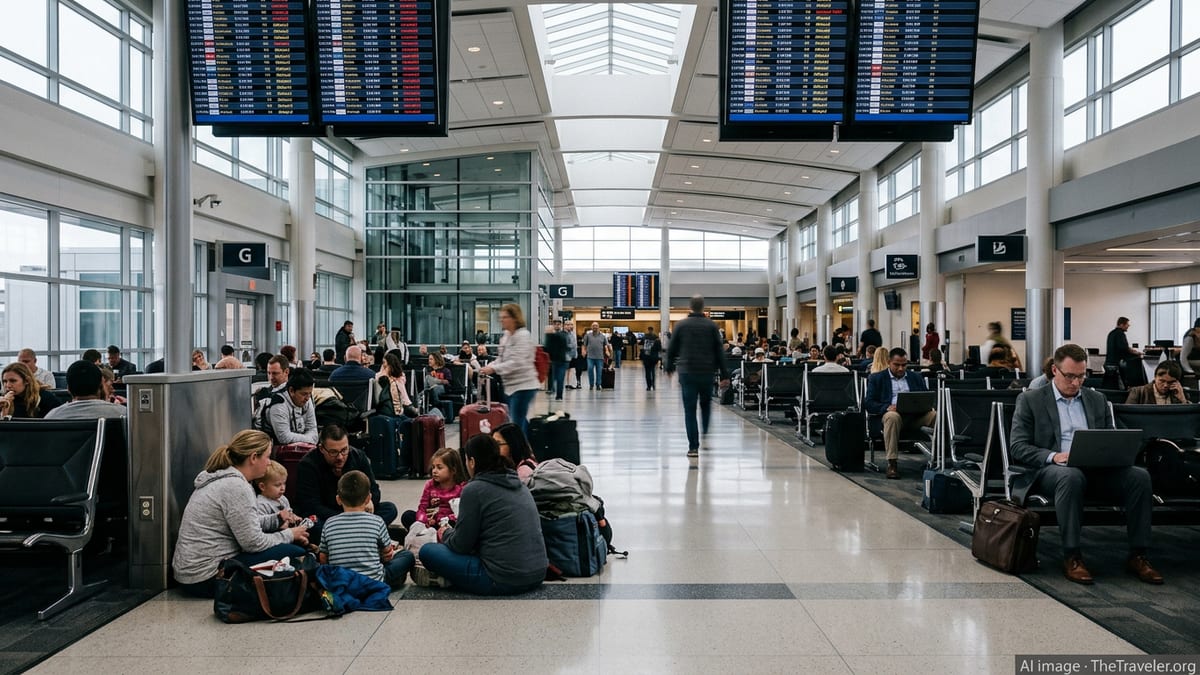
Operational Turbulence at a Key Midwest Hub
Detroit Metropolitan Wayne County Airport serves as one of the country’s most important connecting hubs, and disruptions there often echo throughout the national air network. The latest round of 127 cancellations and 273 delays created pockets of isolation in both the McNamara and Evans terminals, with passengers waiting for rebookings, updated departure times and available hotel rooms.
Publicly available flight-tracking data shows that a significant share of the affected services involved Delta and its regional partner SkyWest, along with ultra-low-cost carrier Spirit. With Detroit functioning as a major hub for Delta and a key station for Spirit, schedule changes in Michigan quickly translated into missed connections on routes serving New York-area airports, Los Angeles, Atlanta and other heavily traveled domestic destinations.
As the day progressed, travelers reported a familiar pattern of rolling delays that shifted from one departure time to the next. Early disruptions, particularly on morning and midday departures, appeared to cascade across later flights, a scenario that aviation analysts have long highlighted as a vulnerability in tightly timed hub-and-spoke networks when operations are strained.
While Detroit’s terminals remained open and functional, the concentration of grounded passengers in gate areas, food courts and seating zones underscored how quickly an airport can feel gridlocked when multiple carriers simultaneously trim their schedules.
Network-Wide Impact on Major U.S. Cities
The cancellations and delays at Detroit did not remain a local issue. Flight-status boards for New York, Los Angeles and Atlanta showed knock-on effects, with departures and arrivals linked to Detroit frequently listed as delayed, diverted or canceled. Travelers on multi-leg itineraries found that a problem on a Detroit segment often jeopardized flights later in the day out of coastal and Southern gateways.
According to data commonly used by aviation researchers, Detroit routinely ranks among the busiest connecting hubs in the Midwest, meaning disruptions there can create ripple effects from the East Coast to the West Coast. Journeys between New York and Los Angeles, or between Atlanta and secondary markets in the Midwest, are often stitched together through Detroit on both mainline and regional carriers.
When cancellations mounted, some passengers were rebooked through alternate hubs such as Minneapolis, Chicago or Dallas, but those reroutings sometimes involved overnight stays or arrival times pushed deep into the following day. That dynamic effectively left many travelers in limbo in Detroit, even if they eventually continued their journeys via other cities.
The network impact was especially visible on high-demand business routes, where even minor schedule adjustments can result in sharply reduced seat availability. As seats disappeared on remaining flights, travelers reported difficulty securing same-day alternatives, lengthening the practical impact of each canceled departure.
Weather, Congestion and Airline Constraints
Flight-performance statistics published by the U.S. Department of Transportation and other public databases indicate that a mix of factors typically drives large clusters of cancellations and delays. Extreme or fast-changing weather conditions around Detroit and other Midwest airports can slow operations, while congestion in crowded air corridors near New York and Southern hubs often triggers broader traffic-management initiatives.
In addition to weather and airspace constraints, operational limitations within airlines themselves can amplify the impact. Industry data frequently cites aircraft routing challenges, maintenance requirements and crew availability as leading reasons for schedule disruptions. Once a critical number of flights are delayed early in the day, carriers sometimes cancel later departures to reset aircraft positioning and crew rest schedules.
For regional operators such as SkyWest, which connect smaller cities into large hubs on behalf of multiple major airlines, a local disruption can be particularly complex. A grounded regional jet in Detroit might not only affect passengers headed to a Michigan destination, but also travelers connecting onward to New York, Atlanta, or West Coast cities on larger aircraft.
Spirit, which operates a point-to-point network with tight aircraft utilization, can also face outsized challenges when a single aircraft falls behind schedule. Because many of its jets are continuously cycling between different regions of the country, a delay or cancellation at Detroit can have consequences on later flights departing from cities hundreds or even thousands of miles away.
Stranded Passengers Navigate Long Waits and Limited Options
Within the airport terminals, the disruption translated into long lines at customer service counters, crowded seating near gate areas and heavy use of airline apps as travelers sought updates and alternative routes. Social media posts from passengers frequently highlight extended waits for rebooking assistance during similar disruption events, along with uncertainty over hotel and meal options when overnight stays become unavoidable.
Detroit’s amenities, including lounges, restaurants and connected hotel facilities, can ease the strain for some travelers, but the volume of affected passengers during a large disruption often exceeds what those services were designed to handle. Families with young children, travelers with tight international connections and passengers relying on time-sensitive business or medical appointments are typically among the most vulnerable when lengthy delays materialize.
Consumer advocates often advise passengers in these circumstances to monitor airline mobile apps and departure boards closely, as gate changes and revised departure times can occur with little warning. They also recommend that travelers familiarize themselves with airline-specific policies for meal vouchers, hotel accommodations and refunds, since the level of assistance can vary based on the cause of the disruption and the type of ticket purchased.
For international visitors connecting through Detroit to other parts of the United States, sudden changes in domestic schedules can be particularly disorienting. Limited familiarity with local geography and alternative airports can make it harder to judge whether rebooking through a different hub is likely to improve arrival times or simply add complexity to the journey.
What the Disruption Signals for Spring and Summer Travel
The scale of the latest disruptions at Detroit Metro comes as U.S. air travel demand continues to remain strong, particularly around weekends, school breaks and major events. Aviation industry forecasts suggest that domestic passenger volumes are likely to stay elevated through the spring and summer periods, putting added pressure on airlines and airports to manage tight schedules amid variable weather and airspace constraints.
Historical on-time performance figures for Delta, SkyWest and Spirit show that each carrier has navigated past periods of elevated cancellations and delays while generally maintaining on-time percentages in line with, or in some cases above, broader industry averages. However, even solid performance metrics provide little comfort on days when operations at a key hub become severely strained.
Travel planners note that episodes like the one at Detroit highlight the importance of building buffer time into itineraries, particularly for trips involving connections through busy hubs or transfers between domestic and international flights. Choosing earlier departures, allowing longer layovers and considering nonstop options where possible are among the strategies frequently recommended to reduce exposure to cascading delays.
For now, the day of 127 cancellations and 273 delays at Detroit Metro stands as a reminder of how quickly the U.S. air travel system can become fragile when multiple stressors align. As airlines and airports move into some of the busiest months of the year, travelers connecting through major hubs such as Detroit, New York, Los Angeles and Atlanta are likely to keep a close eye on schedules, seeking to avoid becoming stranded in the next wave of disruptions.