

More news on this day
Passengers traveling through Egypt on Saturday faced mounting disruption as Emirates, EgyptAir, Qatar Airways and flydubai canceled dozens of flights, after sudden airspace closures across the Gulf and wider Middle East forced airlines to halt or reroute services to major hubs including Dubai, Abu Dhabi, Doha, Riyadh and Kuwait City.
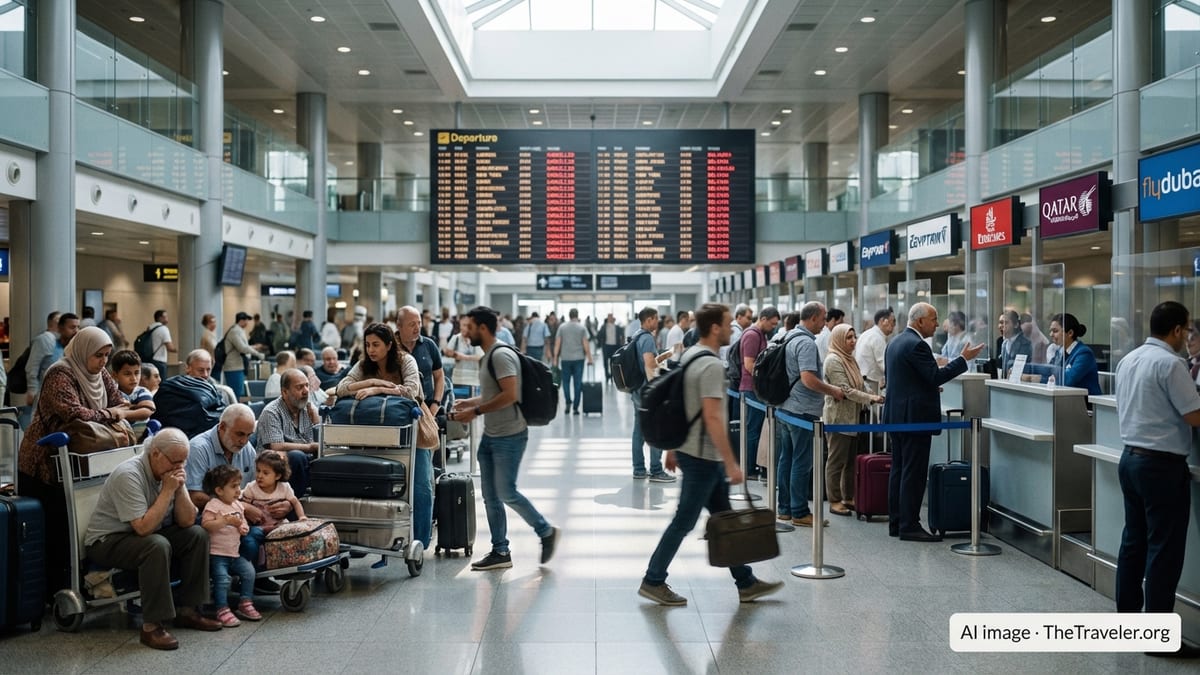
Airspace Closures Ripple Into Egypt’s Key Gateways
Egypt’s role as a vital connector between Europe, Africa and the Gulf left its airports particularly exposed as regional airspace closures took effect on February 28. Aviation authorities in Iran, Iraq, Qatar, Kuwait and Bahrain confirmed full or partial shutdowns of their skies following overnight military strikes, prompting large-scale schedule upheaval for carriers that rely on these corridors.
By Saturday afternoon, operational data and airline statements pointed to at least 49 Egypt-related flight cancellations on routes linking Cairo and major resort cities to Gulf and Levant destinations. Industry analysts warned that the tally could rise sharply through the evening as carriers reassessed risk and awaited guidance from regulators.
While Egypt’s own airspace remained open, flights to and from regional hubs such as Dubai, Abu Dhabi, Doha, Kuwait, Bahrain and Sharjah were among the first to be pulled, effectively severing some of the most heavily traveled business and transit links for Egyptian passengers and international tourists alike.
EgyptAir Halts Services to 13 Regional Cities
National carrier EgyptAir announced an immediate suspension of flights from Cairo to 13 cities across the Middle East, citing what it described as rapid regional developments and the closure of airspace in neighboring countries. The move affects services to Kuwait, Dubai, Doha, Bahrain, Abu Dhabi, Sharjah, Al Qassim, Dammam, Erbil, Baghdad, Amman, Beirut and Muscat.
The airline said the suspension would remain in place until further notice, with its crisis team operating from Cairo International Airport to coordinate with aviation authorities and overseas stations. Passengers were urged to track their bookings through official channels and to expect prolonged disruption rather than isolated cancellations.
For Egypt’s tourism and expatriate travel markets, EgyptAir’s decision hits particularly hard. Gulf routes support large flows of Egyptian workers commuting to and from jobs in Kuwait, the United Arab Emirates, Qatar and Saudi Arabia, while leisure travelers rely on direct connections to Dubai and Doha for onward long haul trips to Asia, Australia and North America.
Gulf Carriers Ground Egypt Services Amid Partial UAE Shutdown
Gulf-based airlines that normally funnel thousands of Egyptian passengers through their hubs also moved swiftly to trim schedules. Emirates confirmed a temporary suspension of operations to and from Dubai as the United Arab Emirates implemented a partial airspace closure, forcing the carrier to cancel multiple rotations touching Cairo and other Egyptian cities.
Qatar Airways similarly halted flights to and from Doha after Qatari authorities enacted a full closure of national airspace. Services that would typically carry Egyptian travelers onward to destinations in Asia and the Americas were grounded, leaving many stranded in Cairo and other departure points or diverted mid journey.
Low cost carrier flydubai reported that it had canceled numerous flights and temporarily suspended operations on Saturday, with Egypt among the markets affected. The airline said it was working with authorities and directly contacting disrupted passengers with rebooking and refund options, but cautioned that the situation remained fluid.
Regional aviation consultants noted that with several Gulf states closing or restricting their skies simultaneously, network carriers faced a complex puzzle of diversions, extended routings and groundings. For Egyptian travelers, the practical effect was a sudden loss of access to some of the region’s busiest transit hubs.
Knock On Impact at Cairo, Hurghada and Alexandria
The broader disruption quickly spilled over into airport operations inside Egypt. Data from travel industry trackers indicated that Cairo International, the country’s main hub, recorded dozens of delays and more than 50 cancellations on Saturday alone, many of them linked to suspended or rerouted services to Gulf and Levant destinations.
Hurghada and Alexandria, both important gateways for Red Sea and Mediterranean tourism, also reported a wave of schedule changes. While some flights to European markets continued to operate, several services involving Gulf connections or overflight of affected airspace were delayed, consolidated or canceled outright.
Aviation officials in Egypt said technical and operational factors compounded the squeeze caused by regional airspace restrictions. Aircraft and crew out of position, refueling challenges for longer rerouted sectors and congestion at alternative hubs all contributed to knock on delays that extended well beyond the initial list of canceled departures.
Airport staff and ground handlers reported unusually heavy crowds at customer service desks as passengers sought answers, with many travelers facing the prospect of overnight stays or complete rebooking of complex multi leg itineraries.
Advice for Stranded and Future Travelers
Airlines operating in and out of Egypt have urged passengers not to travel to the airport without first checking the latest status of their flights. With schedules being adjusted hour by hour in response to changing airspace conditions, carriers warned that departures listed as on time earlier in the day could still be pulled or significantly delayed.
Emirates, Qatar Airways, flydubai and EgyptAir all indicated that they are offering flexible rebooking or refund options for affected customers. Travelers were encouraged to use digital channels where possible to change dates or routes, as call centers and airport desks experienced heavy demand.
Travel agents in Cairo said they expect the disruption to continue at least through the weekend, even if some airspace restrictions are eased, due to the backlog of stranded passengers and the need for airlines to reposition aircraft and crews. They advised travelers with nonessential trips involving Dubai, Abu Dhabi, Doha, Kuwait, Bahrain, Sharjah, Riyadh, Jeddah or Istanbul to consider postponing or exploring alternative routings via unaffected European or African hubs.
Industry observers stressed that the situation remained highly dynamic, with further changes possible at short notice. For now, passengers in Egypt and across the region are being told to build in extra time, monitor airline communications closely and be prepared for continued uncertainty around Middle East flight schedules.