

More news on this day
Thousands of air travelers across Asia faced hours-long delays and unexpected overnight stays today as more than 60 flights were cancelled in Indonesia, Malaysia, Laos, Taiwan, and Hong Kong, disrupting key routes to Jakarta, Bali, Singapore, Bangkok, New York, Boston, Sydney, Manila, and other major cities.
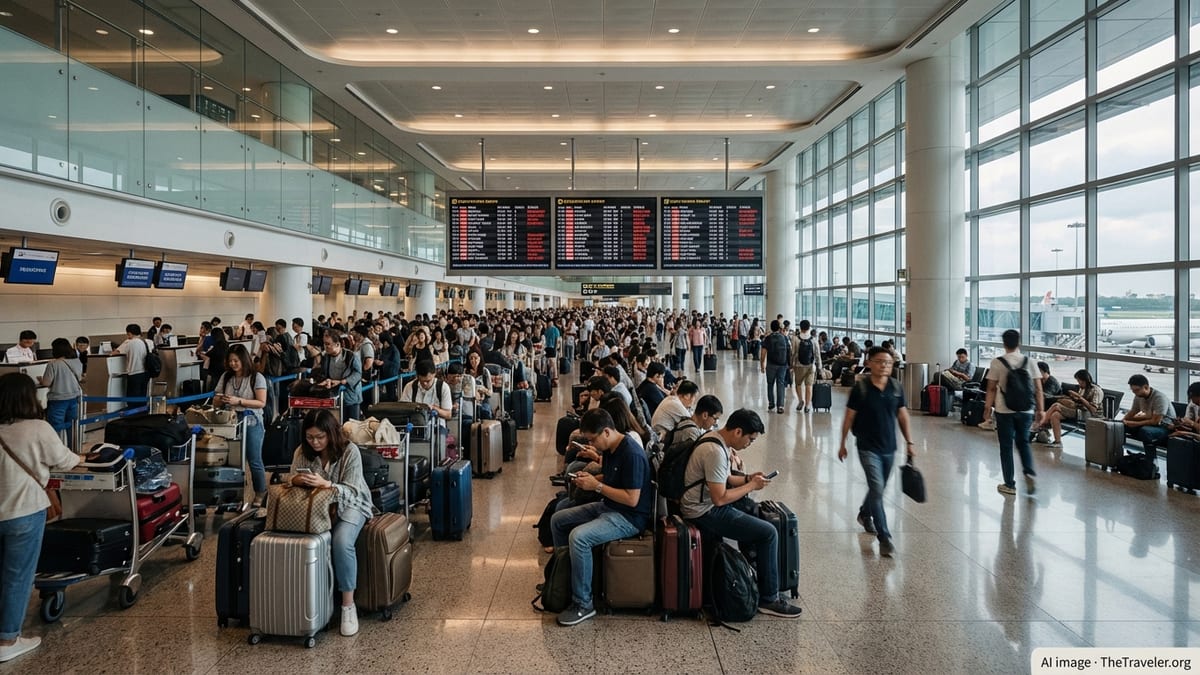
Widespread Cancellations Hit Key Asian Hubs
Major airports in Indonesia, Malaysia, Laos, Taiwan, and Hong Kong reported clusters of cancellations and rolling delays as airlines moved to pull dozens of services from their schedules. Local aviation data and airport operations reports indicated that at least 60 flights were cancelled across the region over a 24-hour period, with additional services operating significantly behind schedule.
The disruptions were most visible at Jakarta Soekarno Hatta, Bali Ngurah Rai, Kuala Lumpur International, Taipei Taoyuan, Hong Kong International, and Bangkok’s Suvarnabhumi and Don Mueang airports. These hubs serve as critical connectors for both regional and long-haul itineraries, meaning cancellations quickly cascaded into missed connections affecting travelers bound for long-haul destinations including New York, Boston, Sydney, and European gateways.
Ground staff in several airports reported long queues at rebooking desks, with many passengers told that the next available seats on popular routes could be one or more days away. Hotels near major transit hubs in Jakarta, Singapore, and Bangkok saw a sudden spike in demand as stranded travelers scrambled for last-minute rooms.
The timing of the disruption, coinciding with a busy post-holiday travel window and strong leisure demand to Bali, Bangkok, and Singapore, amplified the impact on both tourism and business travel.
Airlines From Batik Air To Cathay Pacific Under Pressure
Among the carriers most affected were Indonesian operator Batik Air and flag carrier Garuda Indonesia, alongside Hong Kong’s Cathay Pacific and multiple regional and long-haul partners codesharing on the same routes. Operational logs showed clusters of cancellations on domestic Indonesian sectors linking Jakarta and Bali with secondary cities, as well as on high-demand regional corridors such as Jakarta to Singapore, Kuala Lumpur to Bali, and Hong Kong to Taipei.
Batik Air’s network across Indonesia and neighboring Southeast Asian markets appeared particularly strained, with passengers reporting same-day cancellations on services into Jakarta and Denpasar that were meant to feed onward flights to hubs like Singapore and Bangkok. Garuda Indonesia, which operates a mix of regional and long-haul services, also saw schedule adjustments on select flights, intensifying pressure on limited alternative options for displaced travelers.
Cathay Pacific and other Hong Kong based carriers experienced a knock-on effect as weather, congestion, and slot restrictions tightened outbound and inbound operations. Travelers transiting Hong Kong on long-haul flights to New York, Boston, Sydney, and key European cities reported missed connections and last minute rebookings, with some being rerouted through alternative hubs in Singapore, Tokyo, and the Middle East.
Airline representatives, when reached by local media, largely cited a combination of operational constraints, aircraft rotation issues, and residual weather and traffic disruptions across Asia’s crowded air corridors. Several carriers reiterated that safety considerations and regulatory limits on crew duty hours left them with no option but to cancel rather than risk further schedule instability.
Travelers Face Long Queues, Limited Options
For passengers on the ground, the cancellations translated into crowded terminals, long check in and transfer lines, and uncertainty over when they would be able to depart. At Jakarta, Bali, Hong Kong, and Taipei, travelers described waiting several hours just to speak with airline agents about rebooking or refunds, as call centers and online chat support were inundated.
In some cases, travelers bound for long haul destinations such as New York and Boston found themselves effectively stranded after missing key overnight connections from Asian hubs. With many transpacific and Europe bound flights operating near full capacity, airlines struggled to accommodate everyone, prioritizing families with young children, elderly passengers, and those with medical needs.
Social media posts and local television coverage showed passengers sleeping on terminal floors, lining up at limited charging points, and improvising makeshift camps near closed boarding gates. At smaller regional airports in Indonesia, Malaysia, and Laos, where hotel capacity and alternative flights are more limited, some passengers reported being advised to return home and travel another day, while others said they spent the night in terminal waiting areas.
Consumer advocates in several markets urged airlines to provide clearer communication on the causes of the cancellations, as well as consistent policies on meal vouchers, accommodation, and compensation. They also noted that passengers connecting between multiple carriers on a single itinerary often faced the greatest difficulties, as responsibility for care and rebooking was not always straightforward.
Regional Ripple Effects From Safety And Operational Constraints
Aviation analysts said the latest wave of cancellations highlights how tightly coupled Asia’s air transport network has become, and how quickly localized issues can ripple outward into a multi country disruption. A combination of technical inspections, weather related slowdowns, and air traffic control constraints has left little spare capacity in aircraft and crew rotations across the region.
Recent safety advisories and technical bulletins affecting specific aircraft types have already led regulators and airlines in several Asian markets to ground or temporarily limit certain jets for inspections and software updates. These measures, while preventive and focused on safety, have reduced fleet flexibility and made it more difficult for carriers to recover quickly when faced with storms, runway closures, or sudden surges in demand.
In addition, the strong rebound in demand for travel to leisure destinations such as Bali, Phuket, and coastal Vietnam has pushed seat occupancy levels close to or above pre pandemic norms on many routes. This leaves airlines with fewer empty seats available for last minute reaccommodation when disruptions occur, especially on peak days and on long haul flights linking Asia with North America and Australia.
Industry observers noted that regional carriers are also contending with pilot and technician shortages, delayed aircraft deliveries, and congested maintenance slots, all of which can force last minute schedule changes if even minor technical issues arise on the day of operation.
Advice For Passengers With Upcoming Asia Itineraries
With conditions expected to remain fluid over the coming days, travel agents and airline officials are advising passengers with imminent departures involving Jakarta, Bali, Singapore, Bangkok, Hong Kong, Taipei, Manila, and other major Asian hubs to monitor their bookings closely. Same day checks on airline apps, departure boards, and local airport status updates are being recommended, even for flights that appear confirmed.
Passengers connecting to long haul routes to cities such as New York, Boston, and Sydney are being encouraged to allow longer connection times through Asian hubs or to consider overnight stops where feasible, to reduce the risk of missed onward flights. Travel planners say that, where budgets allow, booking through a single carrier or alliance on one ticket can provide stronger protections and clearer lines of responsibility if disruptions occur.
For those already affected, consumer groups suggest documenting all communications with airlines and keeping receipts for meals, ground transportation, and accommodation, in case partial reimbursement is available under airline policies or local regulations. Travelers are also being reminded to review the fine print of any travel insurance policies, which may offer separate coverage for delays and cancellations in certain circumstances.
While airlines across the region work to reset aircraft and crew rotations, operational experts caution that residual delays and sporadic cancellations are likely to persist before schedules fully stabilize, particularly at busy gateways like Jakarta, Kuala Lumpur, Hong Kong, and Singapore that serve as linchpins for both regional and intercontinental travel.