

More news on this day
Hundreds of air travelers were left in limbo after a surge of cancellations and rolling delays at Oslo Airport Gardermoen triggered widespread disruption across Norway’s domestic network and on long haul routes worldwide.
Get the latest news straight to your inbox!
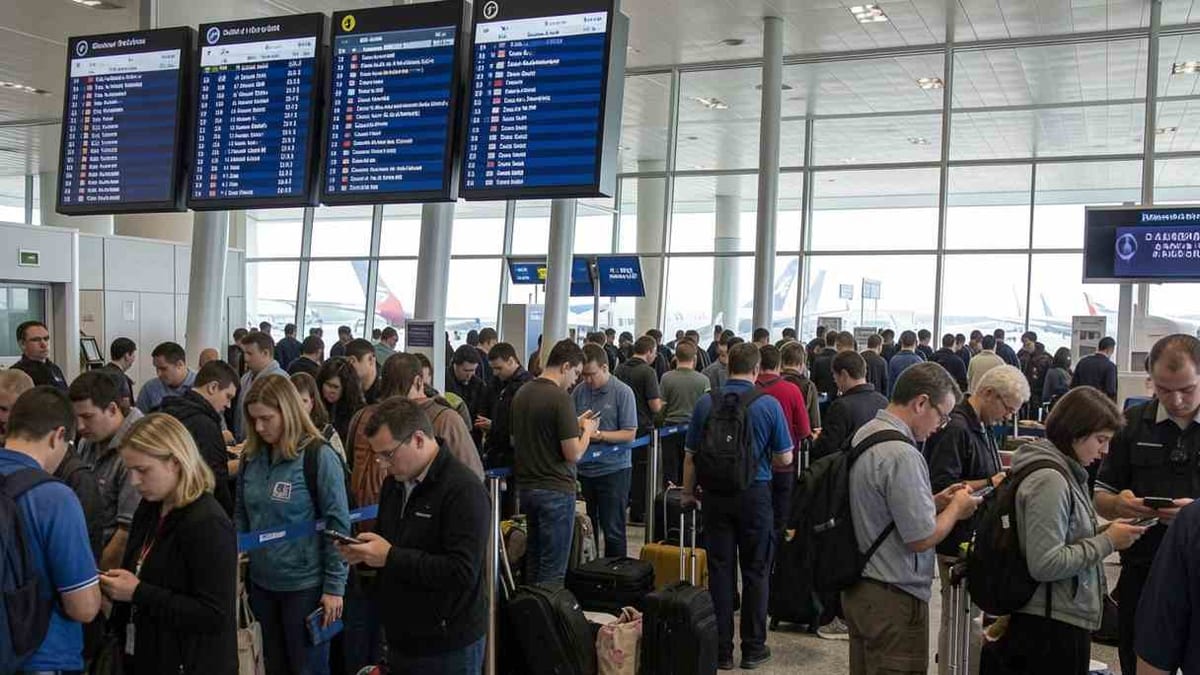
Image by Global Travel Alerts, Advisories, International Travel Alerts
What Is Happening at Oslo Airport Right Now
Oslo Airport Gardermoen, Norway’s main international gateway, has experienced an unusually high number of disrupted flights in recent days, with multiple cancellations on key domestic routes and interruptions to international services. Published coverage and operational data indicate that weather-related constraints, airline scheduling decisions and ongoing operational challenges have converged at one of Scandinavia’s busiest hubs, creating knock-on delays far beyond Norway’s borders.
Traffic statistics for late March show Oslo operating at high volumes for the season, with several hundred daily movements and growing pressure on runway and terminal capacity. At the same time, network reports highlight elevated levels of weather-driven delays at northern European airports this winter, with Oslo among the facilities recording increased disruption compared with the previous year. When conditions deteriorate or aircraft and crews fall out of position, airlines have been cancelling individual rotations, resulting in clusters of stranded passengers on popular domestic and European city pairs.
Travel forums, social media posts and airline status pages together paint a picture of chaotic scenes for some passengers: departures scrubbed at short notice, rebookings pushed to the following day and baggage delayed or misdirected as tight airport resources struggle to catch up. While operations continue and many flights are still departing, the uneven pattern of cancellations has left some routes heavily affected and others running close to schedule, making advance planning difficult for travelers.
Norway’s complex geography and heavy reliance on air links mean that even localized disruption at Oslo quickly cascades into missed connections, especially for travelers heading onward to North America and Asia. With several foreign carriers and Norwegian low cost operators using Gardermoen as a transfer point, cancellations on feeder services into Oslo can leave passengers stranded in regional cities, while long haul cancellations in turn leave travelers stuck overnight at the hub.
Why Flights Are Being Cancelled and Delayed
Several overlapping factors lie behind the current wave of disruptions. Network operations data for February and March point to an uptick in weather-related delay across Europe, including snow, low visibility and de-icing backlogs at northern airports. Even when Oslo Airport itself remains open, adverse conditions at origin or destination airports can lead airlines to cancel or consolidate flights, particularly on thinner domestic routes.
In Norway, reports also indicate a pattern of capacity adjustments by some carriers on cost and fuel grounds. Industry commentary notes that selected domestic and regional departures have been cut back, especially where demand is uneven and aircraft availability is tight. When those removed flights coincide with days of strong leisure or business traffic, remaining services can quickly become oversubscribed, increasing the risk that any subsequent technical or weather issue will strand a larger number of travelers.
Infrastructure challenges play a role as well. Recently documented technical issues at Oslo’s baggage handling system resulted in extended waiting times and misrouted luggage for international passengers, and while those problems were eventually resolved, they underscore how a single system failure can reverberate through an already stretched schedule. When ground operations slow down, turnaround times lengthen and aircraft can miss their assigned departure slots, forcing airlines to reshuffle rotations or cancel later legs.
On top of these structural pressures, isolated incidents such as drone sightings near major Nordic airports and technical events affecting individual aircraft continue to pose intermittent threats to punctuality. While such episodes are relatively rare, they contribute to a broader sense of fragility: when the system is already running close to its limits, even short interruptions can trigger hours of cancellations and missed connections.
Who Is Affected: From Domestic Commuters to Long Haul Travelers
The disruption at Oslo Airport has not been limited to one type of traveler. Domestic passengers shuttling between Oslo and key regional cities report repeated cancellations and last minute rebookings, particularly on early morning and evening departures that are critical for business trips and same day returns. When a series of flights on busy corridors such as Oslo to Bergen or northern hubs are removed, commuters can be forced to extend trips or switch to rail and road transport where alternatives exist.
International and long haul travelers are facing even bigger headaches. Oslo’s role as a connecting hub means that missed domestic feeder flights can cause passengers to lose onward departures to destinations across Europe, North America and Asia. Public posts by affected travelers describe being rerouted through alternate airports, enduring long overnight layovers and in some cases having to wait days for the next available seat on their chosen route.
Travelers booked on itineraries involving multiple carriers or online travel agencies appear particularly exposed. When one leg of a multi segment trip is cancelled, passengers often have to navigate complex ticket rules to salvage the remainder of the journey. Without clear communication on who controls the ticket at each stage, some stranded customers report being bounced between airline desks and call centers while seats on alternative flights disappear.
The ripple effects extend well beyond Norway. Airlines use Oslo based aircraft and crews on rotations that touch airports across Europe and beyond. When one of those rotations is cancelled early in the day, the knock on impact can strand passengers at distant outstations who are booked onto later legs with no obvious connection to Norway. The result is a patchwork of localized bottlenecks in cities where the only common factor is that a portion of the schedule traces back to Oslo.
What Stranded Passengers Can Do Right Now
For travelers caught up in the current turmoil, speed and documentation are critical. Published consumer advice from aviation regulators and travel experts stresses the importance of confirming flight status before leaving for the airport and saving written confirmation of any cancellation or substantial delay. Screenshots of airline notifications, boarding passes and booking confirmations can later prove valuable when seeking refunds, vouchers or statutory compensation.
Passengers who discover that their flight has been cancelled are generally advised to pursue several avenues in parallel. Attempting to rebook through airline apps and websites can be faster than queuing at a physical desk, particularly when call centers are overloaded. At the same time, those already at the airport may still benefit from joining a service desk line, as agents sometimes have access to inventory that is not immediately visible online, especially on partner airlines.
In Europe, including Norway, travelers departing from or arriving into the region on covered carriers may have rights to meals, accommodation and financial compensation when cancellations or long delays are not caused by extraordinary circumstances. Publicly available guidance from consumer agencies recommends that passengers keep receipts for food, hotels and ground transport arranged during an unplanned overnight stay, since airlines may reimburse reasonable expenses when services are disrupted.
Travelers connecting onward to non European destinations should pay particular attention to minimum connection times and consider proactively rebooking if their incoming flight to Oslo shows signs of significant delay. Missing a long haul departure can be far more disruptive than arriving late on a short domestic leg, and alternative options on popular transatlantic or Asian routes often fill quickly when a wave of cancellations hits.
How Long Could the Disruption Last and What Comes Next
The duration of the current chaos at Oslo Airport will depend largely on weather patterns, airline staffing and the speed at which aircraft and crews can be repositioned. Network planning documents suggest that traffic through Gardermoen is set to increase through early April, with daily movements forecast to climb as the spring and Easter travel peaks approach. That growth will place additional pressure on schedules if underlying operational challenges are not fully resolved.
Industry observers note that airlines operating in Norway are likely to continually adjust capacity as they respond to fuel prices, demand fluctuations and geopolitical developments affecting long haul markets. This means that schedules visible to passengers today may continue to change at short notice, particularly on routes with marginal profitability or seasonal demand. Travelers relying on tight domestic connections into Oslo to reach distant destinations may face ongoing risk of short notice cancellations.
Airport operators in Norway have been under scrutiny in recent years following episodes involving drone sightings, technical glitches and winter weather disruptions across the network. While publicly available information indicates that systems have been reinforced in some areas, the latest disruption highlights how vulnerable even well equipped Nordic hubs remain to a combination of external shocks and tight airline scheduling.
For now, passengers planning to travel via Oslo in the coming days are advised by consumer advocates and travel specialists to build extra buffer time into their itineraries, monitor airline communications closely and prepare for the possibility of overnight stays. As carriers work to stabilize their operations and clear backlogs, the hope is that cancellations will gradually recede and Norway’s main gateway will return to more predictable operations. Until then, Oslo Gardermoen remains a flashpoint in a wider story of strain across European aviation.