

More news on this day
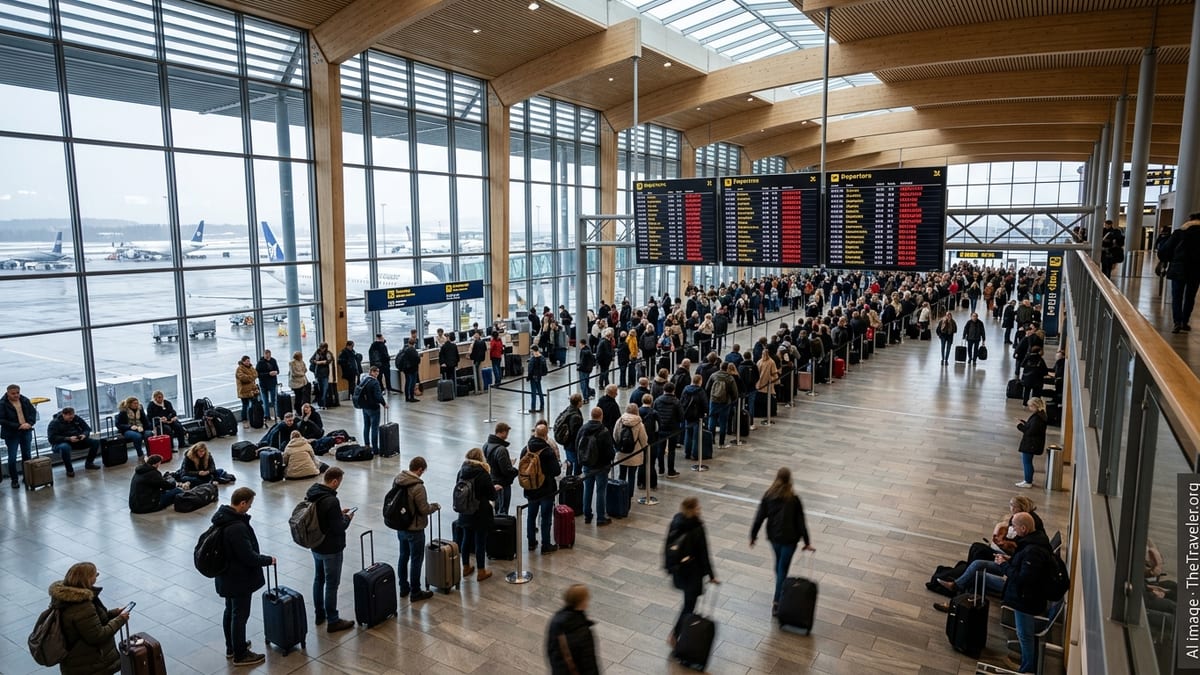
Oslo Airport Gardermoen experienced widespread disruption in late March 2026, as a wave of flight cancellations, diversions and delays created chaotic scenes for passengers traveling through Norway’s busiest aviation hub.
Get the latest news straight to your inbox!
Wave of Cancellations Disrupts Late-March Travel
Publicly available flight tracking data and passenger accounts indicate that Oslo Airport faced an unusually high number of cancellations and heavily delayed departures in the latter half of March 2026. The disruption built over several days as strained airline schedules, residual winter weather patterns across northern Europe and operational challenges converged at Gardermoen. Travelers connecting through Oslo on both European and long haul services reported lost connections, last minute rerouting and overnight stays.
Reports from airline customer channels show that some departures were removed from schedules with limited advance notice, leaving passengers to discover changes only when checking in or reviewing their booking details. In several instances, travelers described entire itineraries having one crucial leg cancelled, effectively stranding them in Oslo or forcing complex rebookings through alternative hubs. The pattern of disruption was most visible on popular leisure and long haul routes, particularly for those heading towards Asia and holiday destinations further south.
Information gathered from airline advisories and online forums suggests that carriers prioritized consolidating traffic onto fewer departures to manage crew, aircraft positioning and turnaround times. That approach helped stabilize operations but reduced overall capacity, intensifying the impact for travelers whose flights were dropped. Many passengers were offered rerouting via other European hubs, while others faced longer layovers and multi stop journeys that significantly extended total travel time.
Knock On Effects from Wider European and Global Disruptions
The turmoil at Oslo cannot be viewed in isolation. March 2026 has been marked by wider turbulence in international aviation, with carriers across Europe adjusting schedules in response to industrial actions, regional tensions and continued pockets of severe winter weather. Published coverage in European and Middle Eastern media points to route suspensions and cutbacks on services to conflict exposed destinations, which in turn has complicated aircraft rotations and crew planning across airlines’ broader networks.
These external pressures have filtered into Scandinavian operations, including flights feeding into and out of Oslo Airport. When outbound aircraft or crews are delayed or grounded elsewhere in Europe, knock on effects often surface hours later at connecting hubs such as Gardermoen. Publicly available timetables and recent cancellation lists show patterns of disrupted services where the underlying cause lay outside Norway, from congested European hubs to overstretched long haul sectors adjusting to geopolitical risk.
In addition, residual late season weather systems across northern Europe and the North Atlantic region have continued to challenge airlines’ on time performance. While Oslo itself avoided the most extreme blizzard conditions seen further west, icing risks, strong crosswinds and air traffic flow restrictions at other airports have contributed to cascading delays that were eventually felt by passengers checking in at Gardermoen. The result in late March was a fragile operational picture in which even minor local issues could swiftly tip into widespread schedule disruption.
Passenger Experience: Long Queues, Limited Information and Scramble to Rebook
Travelers passing through Oslo during the peak of the disruption described a familiar pattern of long queues at check in counters, rebooking desks and airline service points. Online posts and shared experiences show that many passengers struggled to reach call centers or live chat channels once cancellations began to mount, prompting some to head straight to the airport in search of assistance. Those who did secure new itineraries often did so after extended waits, with staff juggling multiple disrupted bookings at once.
Accounts from affected travelers highlight the stress of uncertain onward journeys. Families heading on long planned holidays, students traveling for studies and workers returning home all reported anxiety about missed connections and tightly timed commitments. Some passengers opted to accept rerouting via alternative carriers and hubs, even when that meant longer travel times, simply to secure a confirmed seat out of Oslo within a reasonable window.
At the same time, information channels proved patchy. Flight status tools and airline apps updated at different speeds, and some passengers noted that their bookings still displayed as active even after airport departure boards showed flights as cancelled. This lag added to confusion in the terminal, with travelers queuing at multiple points to cross check what was actually operating. As the disruption unfolded, social media and travel forums became informal support spaces where passengers shared real time observations from check in areas and departure gates.
Operational Strain at Norway’s Main Aviation Hub
Oslo Airport Gardermoen is Norway’s primary international gateway and a critical node for domestic connectivity. When traffic patterns are disrupted, the pressure on its infrastructure becomes apparent. Publicly available operational summaries on earlier incidents at the airport show how quickly small technical issues or adverse conditions can escalate into wider bottlenecks, particularly when aircraft and crew are already tightly scheduled. In late March 2026, similar dynamics appear to have played out, even without a single dramatic trigger event.
Ground handling capacity, de icing operations and gate availability all play a role in determining whether an airport can absorb irregular operations or tip into visible chaos. While no single factor has been identified as the sole cause of the late March disruption, the accumulation of minor delays, aircraft arriving out of sequence and last minute equipment changes contributed to complex gate juggling. As a result, some departures faced rolling delays before eventually leaving, while others were trimmed from schedules altogether when recovery within the same day looked unlikely.
Published planning documents for Oslo Airport emphasize ongoing construction and upgrade projects in 2026, designed to enhance the terminal environment and prepare for future growth. Although these works are typically staged to minimize passenger impact, they can leave less margin for error during periods of irregular operations. The late March episode underscored how interconnected infrastructure constraints, airline decisions and broader regional pressures are in shaping the passenger experience on any given travel day.
What Travelers Can Learn for Upcoming Spring and Summer Trips
For travelers with upcoming journeys through Oslo, the March 2026 disruptions offer several practical lessons. Publicly available guidance from airlines and consumer organizations consistently stresses the value of monitoring flight status from multiple sources, including both carrier channels and airport departure information, particularly in the 24 hours before departure. When widespread disruption seems likely, passengers often benefit from proactively exploring rebooking options rather than waiting until lines build up in the terminal.
Travel insurance and flexible ticket policies have also reemerged as important tools for mitigating stress during uncertain operating periods. In recent months, travel industry reports have highlighted increased interest in products that allow easier same day changes or broader date flexibility. Such options can give travelers more leeway to adjust plans if sudden cancellations or missed connections arise at hub airports like Oslo.
Finally, the March experience at Gardermoen illustrates the importance of time buffers for complex itineraries. Tight self made connections, particularly between separate tickets on different airlines, can quickly unravel when storms, strikes or operational issues ripple across the network. Allowing additional connection time, planning backup routes and budgeting for the possibility of an unplanned overnight stay remain prudent strategies for anyone relying on Oslo Airport as a key waypoint in their spring or summer 2026 travels.