

More news on this day
Passengers at Kuala Lumpur International Airport (KLIA) faced hours-long queues, missed connections and overnight stays on Sunday as 429 flight delays and 23 cancellations rippled through schedules for Malaysia Airlines, AirAsia, Emirates and other major carriers, following sweeping airspace closures across the Middle East.
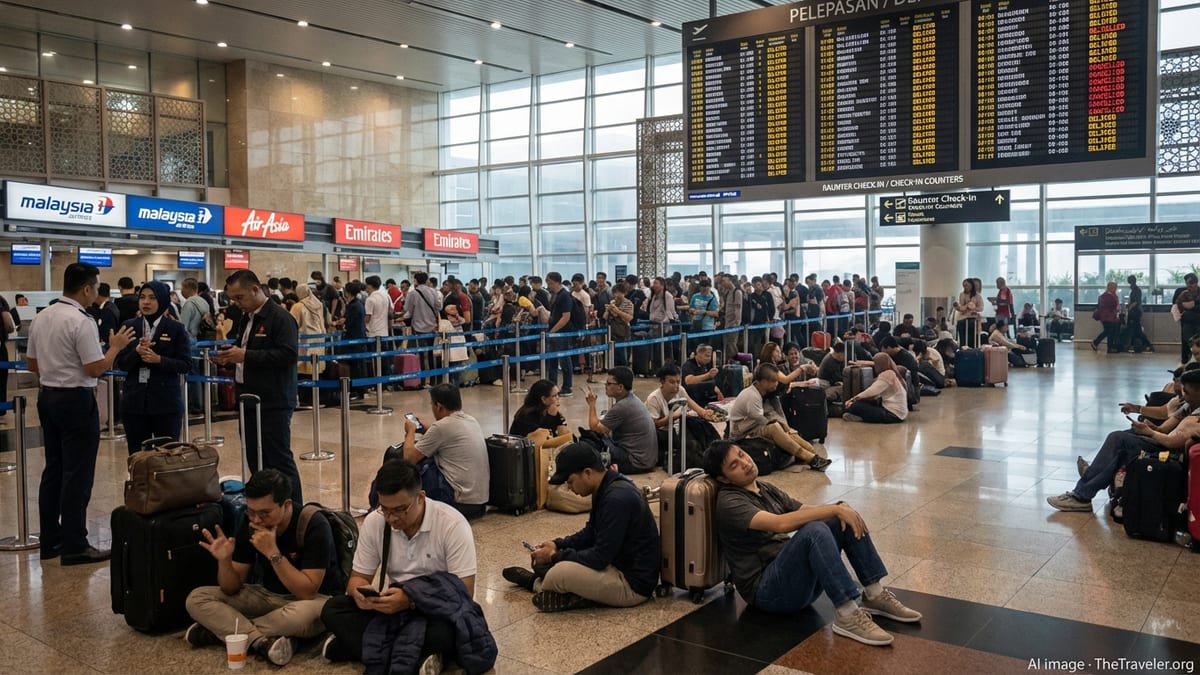
Middle East Airspace Shutdown Sends Shockwaves Through KLIA
The disruption at KLIA on March 1 comes in the wake of coordinated U.S. and Israeli strikes on targets in Iran on February 28, which prompted Iran, Iraq, Kuwait, Bahrain, Qatar and several neighboring states to close large swathes of airspace. Those closures effectively severed some of the world’s busiest east–west flight corridors, forcing airlines to cancel services or send aircraft on lengthy detours.
In Malaysia, the impact has been acute for long-haul routes that rely on overflying the Gulf and adjacent regions. According to operational data seen by aviation analysts, Kuala Lumpur International Airport recorded 29 outright cancellations and 406 delays affecting a mix of regional and intercontinental services, many of them operated by Malaysia Airlines, AirAsia, Emirates, Qatar Airways and other foreign carriers.
While Malaysia Airports Holdings and government officials stressed that terminal operations remained orderly, the sheer volume of disrupted flights translated into crowded departure halls, long lines at check-in and transfer counters, and a surge in demand for rebooking assistance as travelers scrambled to salvage itineraries.
Several airlines serving Kuala Lumpur adjusted schedules repeatedly through the day, updating departure times in small increments as they awaited clarity on routing options over alternative corridors such as Saudi Arabian or Central Asian airspace, adding to passenger frustration and confusion.
Key Routes to Dubai, Doha and Regional Hubs Hit Hard
Services linking Kuala Lumpur with the Gulf’s major hubs were among the worst affected. Emirates flights between KLIA and Dubai operated on heavily revised timings, with some rotations scrubbed entirely as Dubai International Airport grappled with more than a thousand cancellations and a backlog of delayed arrivals and departures.
Malaysia Airlines, which operates direct services to Doha and Jeddah, had already diverted two Middle East bound flights on February 27, turning MH160 back to Kuala Lumpur and rerouting MH156 via Chennai in response to a sudden escalation in airspace risk assessments. Those diversions left many passengers out of position even before Sunday’s wider disruption took hold.
Downstream effects spread quickly across Southeast Asia’s short-haul network. Flights between Kuala Lumpur and Singapore, Jakarta and Bangkok saw knock-on delays as aircraft and crew returning from disrupted long-haul sectors missed their scheduled turns. Passengers heading for connections in Singapore, Jakarta and Bangkok found onward flights to the Middle East and Europe either canceled or severely delayed as Changi, Soekarno–Hatta and Suvarnabhumi airports absorbed their own waves of schedule changes.
Travel agents in Kuala Lumpur reported last-minute requests to reroute via alternative hubs in East Asia or Europe, though options were limited by simultaneous disruption at other major gateways and by airlines’ reluctance to commit aircraft to longer, more fuel-intensive routings while security assessments remained fluid.
Passengers Stranded Overnight Despite Official Assurances
Inside KLIA’s Terminal 1, weary travelers sprawled across benches and on the floor near departure gates, clutching paper boarding passes that had already been reissued multiple times. Families with young children queued at airline counters late into the night seeking hotel vouchers or assurances of seats on the next available departures.
Malaysia Airports said no passengers had been formally registered as stranded under its crisis response system and emphasized that check-in, security and immigration were functioning normally. That characterization, however, contrasted with scenes of travelers sleeping in public areas and social media posts from passengers who said they had been advised to remain in the terminal while airlines worked through rebooking backlogs.
For many, the biggest challenge was uncertainty. Departure boards changed minute by minute, and some travelers reported receiving conflicting information from mobile apps, airport displays and airline staff. Those with complex itineraries involving multiple connections worried that even a modest delay out of Kuala Lumpur could cascade into missed flights in Singapore, Dubai or Doha, where hubs were themselves operating with heavily constrained capacity.
Budget-conscious passengers on low-cost carriers such as AirAsia faced additional hurdles, with limited accommodation support and fewer interline options than full-service rivals, making it harder to switch to alternative routings at short notice.
Airlines Juggle Safety, Rerouting and Customer Care
Airlines operating from Kuala Lumpur stressed that safety considerations were driving decisions to cancel or divert services. Malaysia Airlines said its mid-air U turn of flight MH160 to Doha and the diversion of MH156 to Chennai demonstrated its adherence to strict conflict-zone protocols, under which operations are halted or rerouted when risk thresholds in a given airspace are breached.
Foreign carriers including Emirates, Qatar Airways and other Gulf-based airlines have been forced to rebuild complex long-haul networks overnight. With airspace over Iran, Iraq and parts of the Gulf temporarily off limits, flights between Southeast Asia and Europe or North America require longer routings over Saudi Arabia, the eastern Mediterranean or Central Asia, increasing block times, fuel burn and crew duty hours.
That operational squeeze is filtering down to passengers in the form of last-minute schedule changes, rolling delays and more conservative departure timings as airlines pad timetables to reflect circuitous routings. Industry analysts warn that even once some Middle Eastern airspace begins to reopen, it could take several days for aircraft rotations and crew rosters to normalize, meaning Kuala Lumpur travelers may continue to face longer-than-usual journey times and irregular operations.
Customer service centers across the region have been inundated, with travelers at KLIA reporting hold times of an hour or more to reach call center agents. Airlines have urged passengers to use digital channels where possible, but many stranded travelers, especially those already at the airport, have preferred to join physical queues in search of immediate assistance or written confirmation of new arrangements.
Advice for Travelers as Disruptions Continue
Malaysia Airports has advised anyone due to travel to or through the Middle East, or on long-haul routes that typically overfly the region, to check the latest status of their flights directly with airlines before heading to KLIA. Officials note that disruptions are not confined to direct services to Dubai, Doha or Jeddah; passengers booked via alternative transit points such as Singapore, Bangkok or Jakarta can also be affected if onward flights from those hubs are suspended or rerouted.
Travel insurers and consumer advocates in Malaysia are urging passengers to retain all documentation related to delays and cancellations, including receipts for meals and accommodation, in case they are eligible for reimbursement under policy terms or airline goodwill measures. They also recommend allowing significantly longer connection times for itineraries involving transfers over the coming days, as schedules may continue to change at short notice.
For now, the scene at Kuala Lumpur International Airport reflects a broader pattern across Asia, where cascading operational challenges at major hubs from Dubai and Doha to Singapore and Jakarta have left thousands of passengers in limbo. With the underlying security situation in the Middle East still volatile, aviation authorities and airlines alike are bracing for a protracted period of disruption that could test the resilience of Southeast Asia’s air travel recovery in the weeks ahead.