

More news on this day
Thousands of passengers across Europe remain stranded after a fresh wave of airline disruption triggered more than 360 flight cancellations and around 3,000 delays at major hubs including Istanbul, London, Cologne, Prague and Munich, affecting carriers such as Pegasus, easyJet, Turkish Airlines and Ryanair.
Get the latest news straight to your inbox!
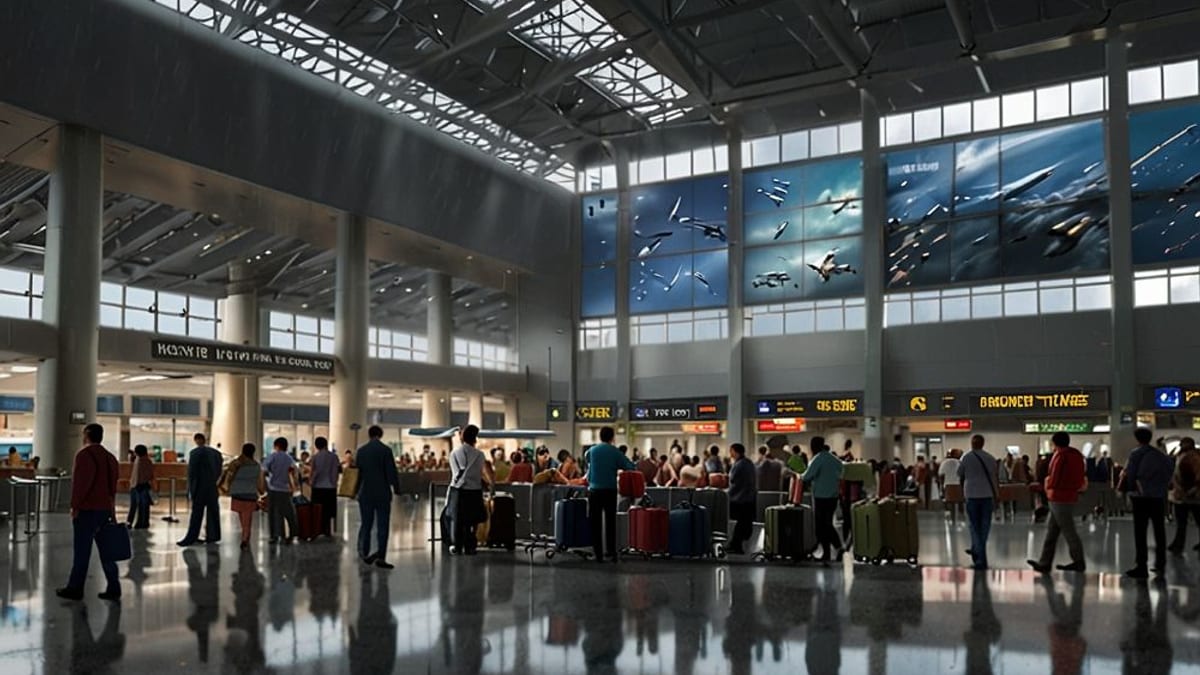
Image by Travel And Tour World
Widespread Cancellations Hit Key European Gateways
Published flight-tracking data and media coverage indicate that a dense cluster of cancellations and delays built up over the weekend and into Monday across several of Europe’s busiest crossroads. Istanbul’s main airport, a critical bridge between Europe, the Middle East and Asia, has seen extensive schedule disruption for both Turkish Airlines and low cost carrier Pegasus, with knock-on effects rippling into onward connections across the continent.
In the United Kingdom, operational difficulties combined with congested airspace have added pressure on London’s airports, where easyJet and Ryanair have cancelled and delayed scores of services. Budget flights linking London with city breaks and sun destinations have been particularly affected, leaving travelers facing lengthy queues at customer service desks and overnight stays in airport terminals.
Germany has also emerged as a pinch point. Reports of cancellations and delays at Cologne Bonn and Munich highlight growing strain on Europe’s aviation network at the tail end of the winter season. Disruption at these hubs is impacting both domestic and intra European routes, leaving passengers unable to reach connecting flights further afield.
Across Central Europe, Prague’s Vaclav Havel Airport has seen a spike in delayed departures and arrivals, affecting a mix of low cost and legacy airlines. With multiple carriers adjusting schedules at short notice, travelers are reporting missed holidays, disrupted business trips and challenges rebooking alternative itineraries on already crowded services.
Airlines Grapple With Operational and Network Pressures
The pattern of disruption points to a combination of operational strain and broader network pressures that have been building through early 2026. Industry analysis has highlighted how staffing gaps, tight aircraft rotations and limited spare capacity leave airlines vulnerable when weather, airspace constraints or technical issues arise, quickly turning local problems into continent wide disruption.
Publicly available airline updates show carriers including Pegasus, Turkish Airlines, easyJet and Ryanair trimming or cancelling rotations at short notice to recover schedules. Low cost operators that typically rely on rapid aircraft turnarounds and high utilization appear especially exposed when delays cascade across multiple sectors during a single day.
Analysts note that recent geopolitical tensions and shifting long haul routings have added another layer of complexity. As some long distance flights are rerouted around restricted airspace and refueling stops are adjusted, European hubs such as Istanbul, London and German airports are absorbing extra traffic and schedule volatility, increasing the risk of congestion during peak travel periods.
Industry data released in recent months has already flagged elevated cancellation and delay rates for several European carriers compared with pre pandemic benchmarks. The latest wave of disruption reinforces concerns that airlines and infrastructure remain under strain as demand recovers more quickly than staffing and capacity.
Travelers Face Long Queues, Confusing Rebooking Options
For passengers on the ground, the immediate reality has been a familiar mix of long queues, uncertain information and competing advice from apps, airport screens and airline staff. Social media posts and traveler reports describe crowded departure halls at Istanbul and London, with rebooking counters overwhelmed and many customers told to manage changes online.
At some airports, travelers have reported waiting several hours just to speak to airline representatives about alternative flights, overnight accommodation or meal vouchers. With many flights fully booked for the next several days, options such as rerouting through secondary airports or traveling via rail on part of the journey are being explored by those able to be flexible.
Families and tour groups have been particularly affected when group bookings cannot easily be split across multiple replacement flights. For business travelers, missed meetings and conferences add financial and logistical headaches, especially when trips involve multiple connecting segments through hubs like Munich or Prague.
Consumer advocates emphasize that passengers often underestimate the time needed to secure alternative arrangements once mass disruption sets in. Seats on remaining services can disappear quickly, and accommodation close to airports may sell out, leaving latecomers with longer transfers into city centers or to more distant hotels.
What Passenger Rights Look Like Under European Rules
The latest spate of disruptions has again drawn attention to air passenger rights within Europe. Under European Union Regulation 261, as adapted and applied in the United Kingdom and other jurisdictions, travelers on qualifying flights may be entitled to assistance such as meals, refreshments and hotel stays during long delays, as well as compensation or refunds in certain circumstances when flights are cancelled.
Eligibility depends on factors including the length of delay, the distance of the journey and the cause of the disruption. When problems stem from extraordinary circumstances outside an airline’s control, financial compensation may not apply, although carriers are still expected to offer care and rerouting. When cancellations or long delays are linked to internal operational issues, consumer organizations often encourage passengers to submit claims supported by boarding passes and written confirmations.
Specialist passenger rights agencies note that many travelers remain unaware of the distinction between the right to be rerouted or refunded and the possibility of additional financial compensation. As a result, some stranded customers accept basic rebooking without realizing they may also qualify for standardized payments when certain thresholds are met.
Given that the latest disruption involves both EU based and non EU carriers operating into the bloc, travelers are being urged in public guidance to check whether their itinerary departs from an EU or UK airport or is operated by an EU or UK airline, as this can influence which regulations apply.
Planning Ahead as Europe Heads Toward Spring Travel Peaks
With Easter and spring holidays approaching, the current wave of cancellations and delays serves as a warning for travelers planning upcoming trips through Europe’s main hubs. Travel industry commentary suggests that continued geopolitical tensions, intermittent weather events and tight airline schedules could create further pockets of disruption in the weeks ahead.
Booking experts recommend building longer connection times into itineraries, especially when transferring between separate tickets or different airlines. Opting for earlier flights in the day, when schedules are less affected by accumulated delays, can also reduce the risk of missed connections if problems emerge later.
Travel insurers are meanwhile highlighting the importance of policies that cover missed connections, additional accommodation and alternative transport in the event of severe delays. Some policies introduced after the pandemic include specific clauses for large scale disruption, but coverage can vary widely, so travelers are being encouraged in public advice to review conditions carefully.
For now, Europe’s aviation system continues to operate, but the current episode underscores how quickly conditions can deteriorate when several high traffic airports simultaneously experience cancellations and delays. As airlines work to restore schedules, passengers stranded in Istanbul, London, Cologne, Prague, Munich and other affected cities are likely to feel the effects of this latest disruption for several days to come.