

More news on this day
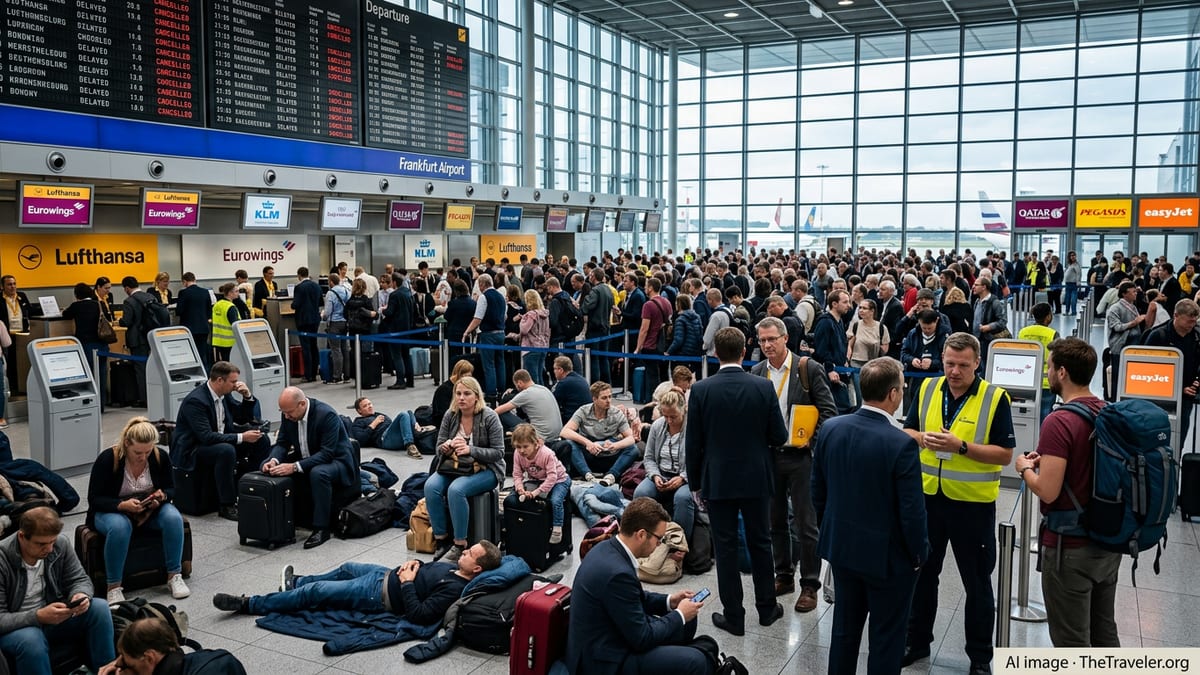
Thousands of airline passengers were left stranded or scrambling for alternatives across Germany today as a fresh wave of flight cancellations and delays hit major hubs including Frankfurt, Munich, Hamburg, Berlin, Düsseldorf, Stuttgart and Hannover, with airlines from Lufthansa and Eurowings to KLM, Qatar Airways, Pegasus and easyJet curtailing operations.
Get the latest news straight to your inbox!
Widespread Disruptions Ripple Across German Hubs
Operational data from European flight trackers showed a sharp spike in disruption today, with 725 flights cancelled and a further 296 delayed across Germany and on routes linked to the country’s busiest hubs. Frankfurt, Munich and Berlin-Brandenburg bore the brunt of the chaos, while secondary airports such as Hamburg, Düsseldorf, Stuttgart and Hannover also reported heavily disrupted schedules.
Passengers arriving at Frankfurt and Munich early in the morning found departure boards peppered with cancellations across a range of carriers, including Lufthansa and its group partners, alongside foreign airlines such as KLM, Qatar Airways and Pegasus. Low cost operators including Eurowings and easyJet also reported multiple delayed or scrapped services, tightening capacity for travellers hoping to rebook later in the day.
The disruption came on top of several days of elevated delays linked to airspace restrictions and ongoing staffing pressures, magnifying the impact for travellers making onward connections within Europe and to long haul destinations in Asia, the Middle East and North America.
Staff at information desks in Frankfurt and Berlin-Brandenburg struggled to keep up as queues stretched through check in halls. Many passengers reported being rebooked onto services from alternative airports, compounding congestion on Germany’s already busy intercity rail network.
Knock On Effects From Airspace Restrictions And Strikes
Today’s disruption did not stem from a single cause but from a combination of wider European airspace issues, lingering knock on effects from recent strikes and ongoing crew and aircraft shortages at several carriers. Recent routing changes around parts of the Middle East have forced airlines such as Qatar Airways and KLM to lengthen flight paths, tightening aircraft rotations and leaving schedules more vulnerable to delay.
In Germany, Lufthansa and its low cost arm Eurowings are still working through the operational hangover of recent industrial actions and schedule reductions. Even where no active walkout is under way, aircraft and crews remain out of position, prompting last minute cancellations of feeder flights into Frankfurt and Munich that are critical for long haul connections.
Airlines not directly involved in labour disputes, from easyJet and Pegasus to Gulf and Asian carriers serving German cities, have been caught in the wider web of disruption. Delays on inbound legs have cascaded across the network, forcing airlines to trim frequencies or combine services at short notice to restore some stability to their timetables.
With February and March typically used by European carriers to reposition fleets ahead of the summer season, analysts say the current squeeze on available capacity is amplifying the impact of any shock, leaving little slack to absorb weather events, airspace bottlenecks or staffing gaps.
Passengers Face Long Queues, Patchy Communication
At check in counters and rebooking desks across the country, passengers spoke of long waits and limited information as they tried to salvage travel plans. In Frankfurt, one of Europe’s largest connecting hubs, lines for customer service and hotel vouchers snaked past security areas as travellers attempted to secure accommodation and alternative flights.
Several travellers reported difficulty reaching airline call centres or using overloaded apps to confirm whether their flights would operate. Others arrived at the airport only to discover their departure had been cancelled hours earlier, with notification emails arriving late or being routed to spam folders.
Families en route to long planned holidays, business travellers with tightly scheduled meetings and students heading back to university all found themselves competing for scarce seats on remaining flights. With capacity constrained, walk up fares for same day or next day alternatives soared on routes linking Germany to Amsterdam, London, Paris and key hubs further afield.
Passenger rights advocates warned that inconsistent handling of compensation, vouchers and care obligations risked deepening frustration. Under EU rules, travellers on many of the affected flights are entitled to meals, hotel stays where necessary and, in some cases, cash compensation, but the practical process of securing those benefits remained slow and uneven.
Rail Alternatives And Rebookings Ease Some Pressure
As flights disappeared from departure boards, many travellers turned to Germany’s dense rail network to bridge at least part of their journey. Rail operators reported strong demand on key intercity routes linking Frankfurt, Munich, Berlin, Hamburg, Düsseldorf and Stuttgart, as airlines encouraged passengers on cancelled domestic legs to switch to trains and pick up long haul flights from alternative hubs.
Lufthansa and Eurowings issued updated travel advisories urging customers to check the status of their flights before leaving for the airport and, where possible, to make use of flexible rebooking options. In many cases, passengers were able to move their trips free of charge to later dates or to different German gateways, though availability on popular routes remained limited.
Foreign carriers including KLM, Qatar Airways and Pegasus also adjusted their schedules and offered waivers, particularly for itineraries involving tight connections through Germany. easyJet said it was focusing on operating core frequencies while supporting stranded passengers with rebookings and, where required, overnight accommodation.
Travel agents reported a surge in demand for creative routings that bypassed the worst affected hubs. Some German travellers opted to connect via Zurich, Vienna or Scandinavian airports instead of Frankfurt or Munich, while others pieced together complex combinations of rail segments and shorter flights to reach their destinations.
What Travellers Should Do If Their Flight Is Hit
With disruption expected to spill over into the coming days as airlines reset schedules and reposition aircraft, travel experts urged passengers with upcoming trips to Germany or itineraries routed through its major hubs to monitor their bookings closely. Checking flight status repeatedly in the 24 hours before departure and signing up for airline text alerts can provide earlier warning of disruption than airport departure boards alone.
Passengers whose flights are cancelled are generally entitled to a choice between a full refund and rerouting at the earliest opportunity, even on other carriers if the original airline has no reasonable alternative. In practice, securing those options may require persistence at service desks or via customer support channels, especially during mass disruption.
Travellers experiencing long delays at the airport are advised to keep receipts for meals, ground transport and essential items, as these may be reimbursable under EU passenger rights rules in some circumstances. Taking screenshots of delay notifications and boarding passes can also help support later claims.
For now, Germany’s airports are bracing for another difficult operational day as airlines try to move stranded passengers to their destinations. With the peak summer season still weeks away, both carriers and travellers will be hoping that today’s mass cancellations serve as a warning shot and prompt renewed efforts to build resilience into Europe’s already stretched aviation system.