

More news on this day
Hundreds of passengers were left stranded across Egypt today after a wave of flight disruptions hit Cairo, Hurghada and Sharm El Sheikh, with publicly available data indicating 51 cancellations and at least 117 delays involving EgyptAir, Emirates, Qatar Airways, easyJet, Nile Air and several other carriers.
Get the latest news straight to your inbox!
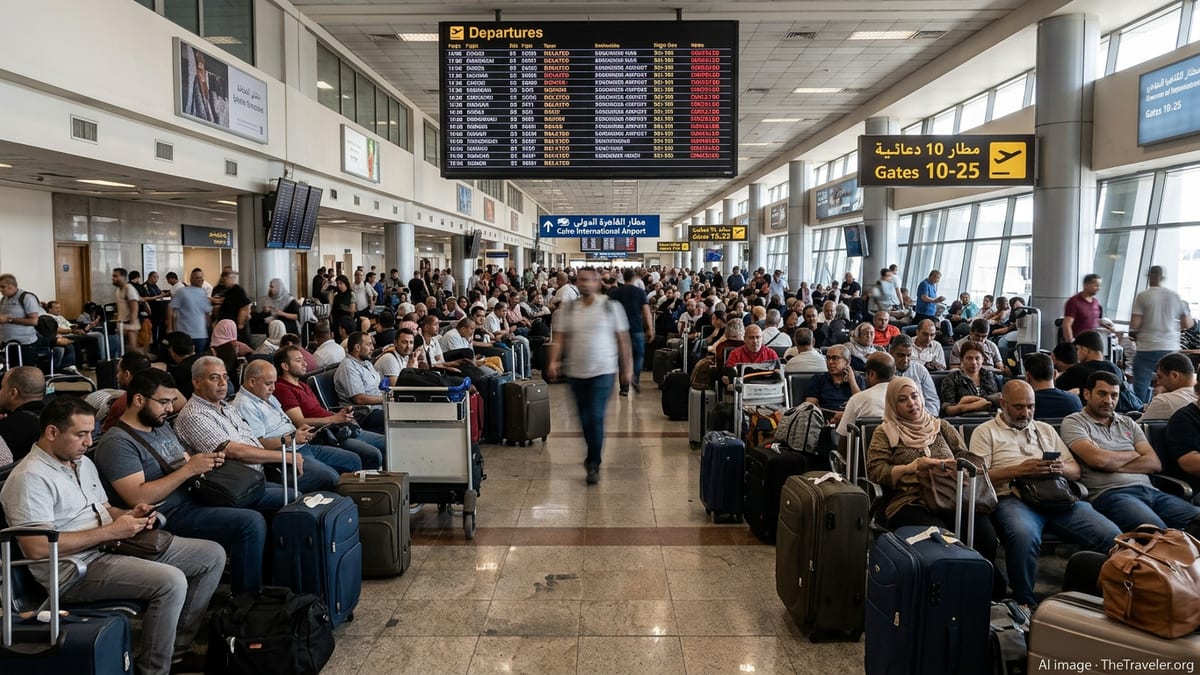
Major Hubs in Egypt Log a Morning of Turmoil
Operational data from flight tracking dashboards and airport information screens shows that Egypt’s busiest gateways, including Cairo International Airport and the Red Sea resorts of Hurghada and Sharm El Sheikh, experienced severe disruption throughout the day. Multiple departures and arrivals were first marked with rolling delays before eventually being listed as canceled, affecting both domestic and international routes.
The disruption appears to have built gradually, with early morning delays cascading into missed slots and crew rotation problems, which then prompted airlines to consolidate or cancel services. As the day progressed, a growing number of flights across different terminals and carriers fell outside their scheduled departure windows, leading to long queues at check in, transfer and customer service desks.
By midday, aggregated flight status information indicated that 51 flights connected to Egypt’s major airports had been canceled outright, while around 117 were operating with significant delays. The impact was visible across both short haul hops to regional hubs and long haul services linking Egypt with Europe, the Gulf and North America.
Airport terminal images and passenger accounts shared on social platforms depicted crowded departure halls, passengers resting on the floor near power outlets, and long lines at rebooking counters. Publicly available updates from airport operators stressed that flights were still departing, but acknowledged longer than usual processing times and advised travelers to arrive well ahead of schedule.
Flag Carriers and Gulf Airlines Among the Worst Hit
Egypt’s national airline EgyptAir featured prominently among the disrupted operations, with timetable and status pages reflecting a mix of cancellations and extended delays to and from Cairo, Hurghada and Sharm El Sheikh. Domestic links and regional flights were particularly affected, with knock on effects for passengers relying on tight connections to Europe, Africa and the Gulf.
Gulf carriers Emirates and Qatar Airways also registered interruptions on services that typically provide vital onward links for travelers transiting through Dubai and Doha. Public information issued by these airlines in recent weeks has already highlighted network volatility related to airspace restrictions and rapidly changing routings in parts of the wider Middle East, and today’s events added further stress to those already stretched schedules.
Low cost and leisure focused operators, including easyJet and Egyptian carrier Nile Air, were similarly caught up in the disruption. These airlines play a key role in delivering holidaymakers to the Red Sea coast during the peak winter and spring seasons, and today’s cancellations hit popular resort routes connecting Hurghada and Sharm El Sheikh with major European cities.
The combined effect of multiple airlines adjusting their operations at the same time strained available airport resources. Check in zones that usually handle a predictable mix of departures had to deal with waves of rebooked passengers and additional baggage, while airline staff worked to move travelers onto later departures or alternative routings where seats were still available.
Possible Links to Regional Airspace Constraints and Weather
While no single universal cause has been attributed to all of the disruptions, today’s pattern of cancellations and delays in Egypt is unfolding against a backdrop of broader regional aviation challenges. In recent weeks, published coverage and airline advisories have described temporary airspace closures and restrictions across parts of the Middle East, compelling carriers to reroute or suspend flights and operate less predictable schedules.
These shifting routings can translate into longer flight times, tighter aircraft rotations and increased fuel and crew planning complexity. When combined with localized factors such as adverse weather, congestion on alternative routings or routine technical checks, a small delay in one part of the network can rapidly ripple into missed slots and ground holds elsewhere, including at Egyptian airports.
Weather has periodically contributed to delays at Cairo, Hurghada and Sharm El Sheikh during the winter season, with occasional fog, sandstorms or low visibility forcing temporary suspensions of arrivals and departures. When such conditions coincide with already constrained regional airspace and busy holiday travel periods, airlines have less flexibility to recover their schedules quickly.
Aviation analysts note that the pairing of regional airspace disruption with strong seasonal demand often increases the likelihood of passengers experiencing cancellations or long delays, particularly on routes served by a limited number of daily frequencies. In those cases, rebooking travelers can take days rather than hours, especially where flights are already operating close to full capacity.
Stranded Passengers Face Long Queues and Limited Options
For travelers caught up in today’s turmoil, the immediate impact has been long waits and uncertainty. Social media posts from passengers at Cairo, Hurghada and Sharm El Sheikh describe extended lines at airline service desks, with some travelers advised to return on later dates due to fully booked alternative flights.
Holidaymakers at Red Sea resorts have reported being informed by hotels and tour representatives that outbound flights may operate on revised schedules or be combined with other services. In some cases, travelers have been told to keep bags packed and be ready to leave at short notice if additional rescue or extra sections become available.
Publicly accessible passenger rights guidance highlights that compensation and care obligations vary depending on the point of origin, airline headquarters, and the reason for disruption. Travelers departing from or arriving in the European Union on eligible carriers may benefit from specific entitlements regarding meals, accommodation and rebooking in cases not linked to extraordinary circumstances such as severe weather or security closures.
However, where regional airspace restrictions, security concerns or extreme weather are involved, airlines often classify the situation as beyond their direct control. In these circumstances, rebooking and basic assistance may be offered, but cash compensation is less likely. This distinction can be confusing for passengers at the airport who are primarily focused on simply reaching their destinations, especially when information desks are crowded and announcements are difficult to hear.
Advice for Travelers Flying To or From Egypt in the Coming Days
With schedules still unsettled and backlogs of displaced passengers expected to take time to clear, travelers planning to pass through Cairo, Hurghada or Sharm El Sheikh in the coming days are being urged by travel industry advisories to monitor their flights frequently. Airline apps, email alerts and airport departure boards remain the primary sources for up to date status changes, including last minute gate switches or aircraft substitutions.
Experts in consumer travel guidance recommend that passengers whose flights show signs of creeping delays consider proactively searching for alternative routings rather than waiting until a formal cancellation is announced. When seats are limited, those who move early tend to have more options, whether rebooking on later services with the same airline or requesting a different connection through a separate hub where agreements allow.
Travel insurers and tour operators are also reminding customers to review policy terms carefully. Some plans offer coverage for extended delays and cancellations tied to airspace disruption, while others exclude such events or require written confirmation from airlines. Keeping all receipts for hotels, meals and local transport arranged while stranded can be essential when filing a claim later.
For now, flight tracking data and ongoing reports suggest that operations across Egypt’s main airports remain fragile. While many services are still departing, the scale of today’s disruption underlines how quickly regional constraints can cascade into widespread interruptions, leaving hundreds of travelers across Cairo, Hurghada and Sharm El Sheikh unexpectedly grounded.