

More news on this day
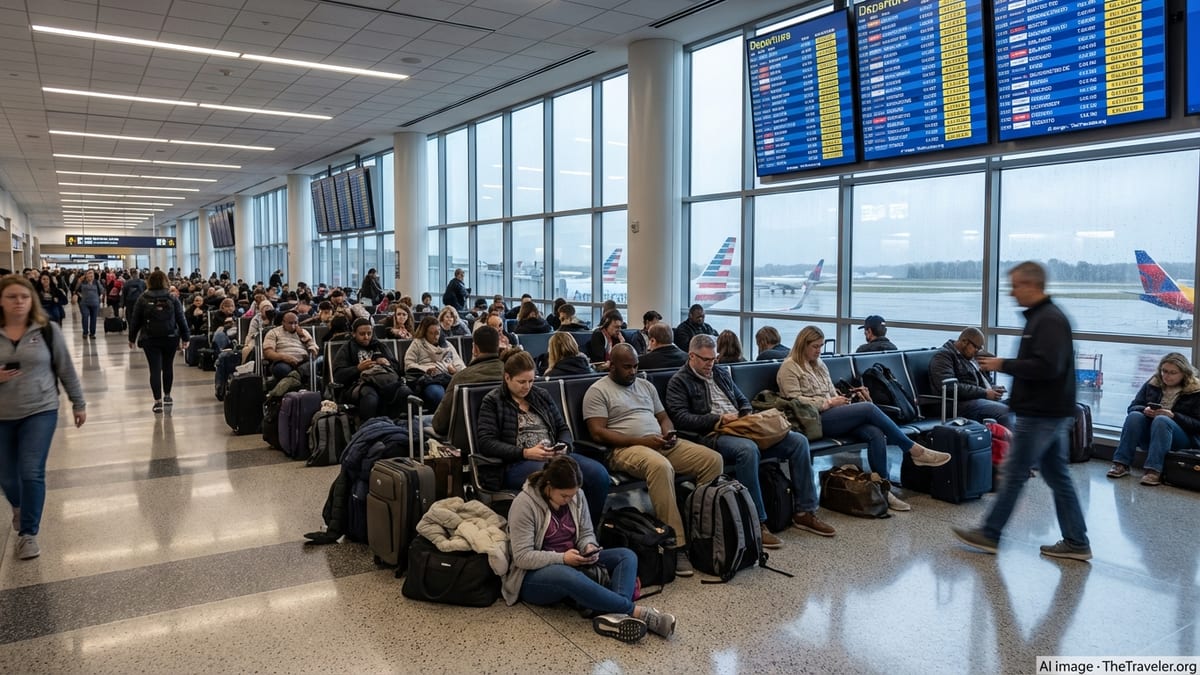
Hundreds of passengers were left stranded or facing hours-long waits at Charlotte Douglas International Airport on February 27, 2026, after 225 flights were delayed and one was canceled, disrupting American Airlines, Delta, Southwest and other carriers on busy domestic and international routes to cities including Boston, Washington DC, Orlando, Chicago, Paris and Toronto.
Major East Coast Hub Bows Under Operational Strain
Charlotte Douglas International Airport, one of the busiest hubs in the United States and the primary connecting center for American Airlines, saw its tightly wound daily schedule unravel as delays cascaded across departure boards. The disruptions hit during an already tense late-winter travel period, when residual schedule adjustments from recent storms and strong demand have left airlines with little slack in their networks.
With 225 flights delayed and one canceled, the knock-on effects were felt well beyond North Carolina. Passengers bound not only for major domestic cities such as Boston, Washington DC, Orlando and Chicago, but also international gateways including Paris and Toronto, reported missed connections, missed meetings and scrapped vacation days as rebooking options quickly narrowed.
The disruption at Charlotte followed days of weather-related turmoil across the Northeast, where powerful winter systems recently forced airlines to cancel or delay thousands of flights nationwide. As carriers recalibrated aircraft and crew positioning, Charlotte’s role as a central connecting node meant even small schedule changes elsewhere translated into longer waits in its concourses.
Airport officials and airline representatives worked through the day to reassign gates, secure replacement crews and manage aircraft rotations, but recovering punctual operations at a major hub typically lags hours behind the first signs of trouble. By late afternoon, departure screens remained crowded with yellow and red notices as queues at customer service desks stretched across terminal corridors.
Travelers Face Long Lines, Missed Connections and Limited Options
For passengers on the ground, the statistics translated into long, uncertain waits. Families returning from winter breaks, business travelers trying to reach end-of-month meetings and international visitors relying on tight connections were all caught up in the disruption. Many described arriving at the airport to find their flights repeatedly pushed back in 30- to 60-minute increments.
Lines formed quickly at airline counters as customers scrambled to secure alternative routings through other hubs such as Dallas, Atlanta or Miami. With most peak-hour flights already heavily booked, agents often had only a handful of seats available on later departures, leaving some passengers facing overnight stays in Charlotte even though only a single flight had been formally canceled.
In the gate areas, travelers clustered around power outlets to charge devices and monitor updates, while food courts and cafes saw steady crowds throughout the day. For international passengers traveling to Europe and Canada, the stakes were particularly high: missed long-haul departures to cities such as Paris or Toronto risked turning into 24-hour delays because of less frequent service.
Some passengers reported difficulty obtaining timely information, citing discrepancies between airline apps, airport monitors and announcements at the gate. While most carriers issued standard apologies for the disruption and reminded passengers of their rebooking options, the sheer volume of affected flights slowed call centers and online chat services, adding to the frustration.
Ripple Effects Across American, Delta, Southwest and Other Carriers
American Airlines, which operates the majority of flights at Charlotte, bore the brunt of the disruption as delays stacked up across its regional and mainline networks. Late-arriving aircraft from weather-hit Northeastern and Midwestern cities left gaps in the departure schedule, while crew duty-time limits added another layer of complexity to recovery efforts.
Delta Air Lines and Southwest Airlines, though smaller players at Charlotte, were not spared. Their point-to-point services linking the airport with Washington DC, Orlando, Chicago and other high-demand markets also experienced schedule slippage, as congestion on shared runways and in regional airspace slowed the rate at which aircraft could depart and arrive.
Other domestic and international carriers, including those operating services to Paris and Toronto, faced similar challenges as they attempted to keep long-haul and cross-border itineraries aligned with delayed feeder flights from around the United States. Even when aircraft and crews were ready, tight sequencing of arrivals and departures at Charlotte’s gates meant some flights were forced to wait on the tarmac for space to open.
Aviation analysts note that modern airline networks are highly efficient but also highly sensitive to disruption. At a hub like Charlotte, where a large share of passengers connect between flights rather than originating or ending their journey, a cluster of delays during one bank of departures can quickly spill into later waves, especially when recovery efforts are already stretched from earlier weather events.
Weather, Airspace Congestion and Staffing Add to Pressure
While no single cause has been formally identified for all of Friday’s delays, the disruptions came on the heels of severe late-winter weather across the Northeast and Mid-Atlantic, where recent storms brought heavy snow, high winds and poor visibility to airports in and around Boston and Washington DC. Those conditions prompted large-scale cancellations and delays earlier in the week, forcing airlines to rework their schedules and reposition aircraft and crews.
Even as skies cleared, residual airspace congestion and ongoing staffing constraints within air traffic control and ground operations continued to exert pressure on the system. When a hub like Charlotte receives a cluster of late inbound flights because of earlier weather or routing slowdowns, gate availability tightens and aircraft turnaround times lengthen, triggering follow-on delays to outbound services.
Industry observers say the situation highlights the thin margin for error in the current U.S. aviation network. With demand rebounding and many carriers operating close to pre-pandemic capacity levels, there is limited buffer to absorb shocks from storms, equipment issues or staffing shortfalls. In practice, that means travelers experience not only more frequent delays but also slower recoveries once disruptions begin.
Airport and airline officials have emphasized ongoing investments in technology, staffing and infrastructure designed to improve resilience, from upgraded scheduling tools and real-time data platforms to expanded gates and deicing facilities. However, they acknowledge that when multiple stressors converge, even the most sophisticated systems can struggle to keep flights moving on time.
What Passengers Can Expect and How to Navigate Future Disruptions
With delays at Charlotte affecting flights across the country and abroad, airlines have urged passengers to regularly check their flight status before leaving for the airport, use mobile apps to manage rebookings where possible and allow extra time for connections through major hubs. Travelers with nonessential trips to or through the most affected cities have been encouraged to consider voluntary changes to off-peak departures.
For those already at the airport, airline representatives advise staying close to the gate for real-time announcements, as last-minute aircraft or crew substitutions can suddenly move a delayed flight forward. Passengers with tight onward connections to long-haul services, particularly to Europe or Canada, are being warned that even modest departure delays from Charlotte could jeopardize the feasibility of same-day transfers.
Travel advisors recommend that passengers build more generous connection times into itineraries involving winter travel through East Coast hubs, and that they consider early-morning departures, which are often less affected by the accumulated delays that can build throughout the day. Purchasing tickets on a single itinerary rather than separate bookings can also give travelers more protection, as airlines are then obligated to assist with rebooking when misconnects occur.
As operations at Charlotte gradually stabilize, industry experts caution that some residual delays and equipment imbalances may persist into the weekend, especially on popular routes to leisure destinations like Orlando and major business markets such as Boston, Washington DC and Chicago. For now, patience and flexibility remain the most valuable tools for anyone planning to pass through one of the country’s most important connecting hubs.