

More news on this day
Thousands of travelers across Europe faced severe disruption as nearly a thousand flights were delayed and dozens cancelled on Friday, tangling operations for major airlines including British Airways, Aer Lingus, SAS and KLM at key hubs from Paris and Amsterdam to Dublin and Oslo.
Get the latest news straight to your inbox!
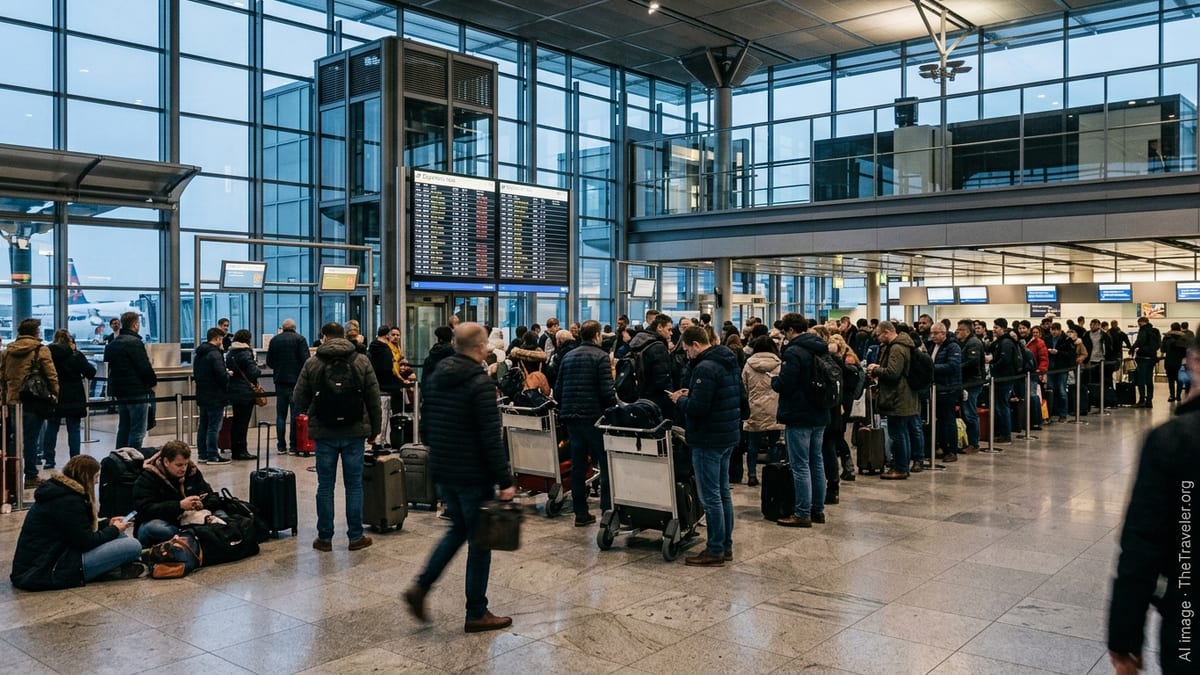
Widespread Delays Hit Major European Hubs
Published operational data and airport tracking dashboards indicate that 983 flights departing or arriving in Europe were delayed and 57 were cancelled over the course of the day, affecting traffic in the United Kingdom, Germany, France, the Netherlands, Italy and several Nordic countries. The disruption concentrated around peak morning and late afternoon waves, when airport schedules are most densely packed.
Large hub airports, including London Heathrow, Paris Charles de Gaulle, Amsterdam Schiphol, Dublin and Oslo Gardermoen, reported some of the heaviest operational strain. Knock-on congestion meant late-arriving aircraft and crews struggled to be turned around in time, pushing delays from one rotation to the next and amplifying the disruption into the evening.
Tracking feeds show departure delays often stretching beyond 60 minutes on short haul European services and, in some cases, significantly longer for long haul departures waiting on both slots and inbound aircraft. While outright cancellations represented a relatively small share of total scheduled movements, the combination of late departures, missed connections and reduced spare capacity left terminals crowded with frustrated passengers seeking rebooking options.
Airport statements and publicly available updates cited a mix of causes, from adverse weather and air traffic flow restrictions to staffing constraints in ground handling and air traffic management, underscoring how quickly Europe’s tightly timed aviation system can seize up when multiple pressure points occur at once.
Flag Carriers and Regional Airlines Disrupted
Operational statistics and airline status boards show that British Airways, Aer Lingus, SAS and KLM were among the carriers most visibly affected, alongside other European and low cost operators. As national and network carriers with dense schedules into constrained hubs, they are particularly exposed when delays ripple through the system.
British Airways services linking London with key European cities such as Paris, Amsterdam and Oslo experienced recurring delays, with some rotations departing late enough to jeopardize onward connections to long haul flights. Public flight data suggests a similar pattern for Aer Lingus on routes touching Dublin, where late arrivals from continental Europe narrowed turnaround windows and forced retiming of later departures.
In Scandinavia, SAS, which operates an extensive network through Oslo and other Nordic hubs, saw schedule reliability pressured by a combination of regional weather and wider air traffic restrictions. KLM’s Amsterdam operation, a major connecting gateway for travelers from the UK and Ireland into continental Europe and beyond, also recorded a series of late departures and missed connections as aircraft and crews fell out of position.
Smaller European and leisure-focused airlines were drawn into the disruption as codeshare partners or as alternatives for stranded travelers seeking replacement routes, leading to heavier than usual load factors and fewer remaining seats on remaining flights.
Passengers Face Missed Connections and Overnight Stays
For travelers, the operational figures translated into long queues at check in, transfer desks and customer service counters, particularly at hub airports where a significant share of passengers rely on tight connections. With 983 flights delayed, even relatively modest schedule changes were enough to push many travelers beyond their planned connection windows.
Reports across social media and consumer forums describe passengers facing multi hour waits to be rebooked, as airlines worked within limited seat availability on remaining same day departures. In some instances, travelers were rerouted via alternative hubs or on partner carriers, adding extra stops or overnight stays to itineraries that were originally planned as simple same day journeys.
Families and business travelers alike reported challenges securing accommodation close to major airports where hotels can quickly reach capacity during large scale disruption. In response, airlines and airports published guidance directing customers to digital self service tools and mobile applications to change bookings, track bags and access information on consumer rights.
Given the scale of the delays and cancellations, travel advisors and passenger advocacy groups are emphasizing the importance of retaining boarding passes, booking confirmations and receipts for additional expenses such as meals, local transport and hotels, which may be relevant for later compensation or reimbursement claims under European regulations in cases where disruption is within airline control.
Operational Strain Highlights Europe’s Fragile Aviation Balance
Industry analysts note that the latest wave of disruption highlights how finely balanced European aviation operations remain, particularly during busy travel periods. Airlines have rebuilt networks significantly since the pandemic years, but many still operate with limited spare aircraft and crew capacity, while airports and service providers continue to contend with staffing gaps and training backlogs.
Air traffic management capacity has also emerged as a recurring constraint, with regional traffic centers periodically imposing flow restrictions that slow the rate at which aircraft can depart and arrive. When these constraints coincide with localized weather, even modest storms or low visibility at a handful of key hubs can produce delays that spread widely across the network.
Observers point out that while overall cancellation rates remain lower than during the peak disruption seen in previous years, prolonged sequences of minor and moderate delays can be just as disruptive from a passenger perspective, particularly for travelers on complex itineraries or those with fixed time commitments at their destination.
The day’s events are likely to feed into ongoing debates among regulators, airlines and airports about how best to balance capacity growth, resilience and environmental considerations within Europe’s crowded airspace, as well as how consistently passenger rights rules are applied across different carriers and jurisdictions.
What Disrupted Travelers Can Do Next
Specialist travel advisors and consumer information services recommend that affected passengers first verify the final recorded arrival or cancellation status of their flights using airline or airport channels, as this information can determine eligibility for assistance under applicable regulations. In Europe and the United Kingdom, passenger protection frameworks typically distinguish between disruption caused by extraordinary circumstances, such as severe weather or air traffic control strikes, and issues within airline control, such as crew or technical problems.
Travelers whose journeys were significantly delayed or cancelled are encouraged to file claims directly with the operating carrier, supplying booking references, times of departure and arrival, and documentation of any extra costs incurred while waiting for rebooking. Some passengers also choose to pursue claims through third party services, though consumer advocates often advise first attempting to resolve issues directly with airlines.
For those still in transit, travel experts suggest monitoring airline apps and airport departure boards closely, remaining flexible about routing options, and considering alternative hubs or nearby airports where ground transport links are strong. In cities such as London, Paris, Amsterdam and Frankfurt, rail networks and intercity bus services can sometimes provide viable alternatives for shorter regional trips when flight disruption is severe.
With forecasts pointing to continued high demand for European air travel, particularly on leisure routes, many commentators recommend that passengers build longer connection times into itineraries, especially when traveling through congested hubs or during peak seasons, to reduce the risk of missed onward flights during future episodes of widespread delay.