

More news on this day
Air travel in and out of Argentina faced fresh turbulence as more than ten flights operated by Aerolíneas Argentinas, American Airlines, and low cost carrier Flybondi were canceled, disrupting services on high demand routes linking Buenos Aires with New York, Bariloche, Jujuy, and several other domestic destinations.
Get the latest news straight to your inbox!
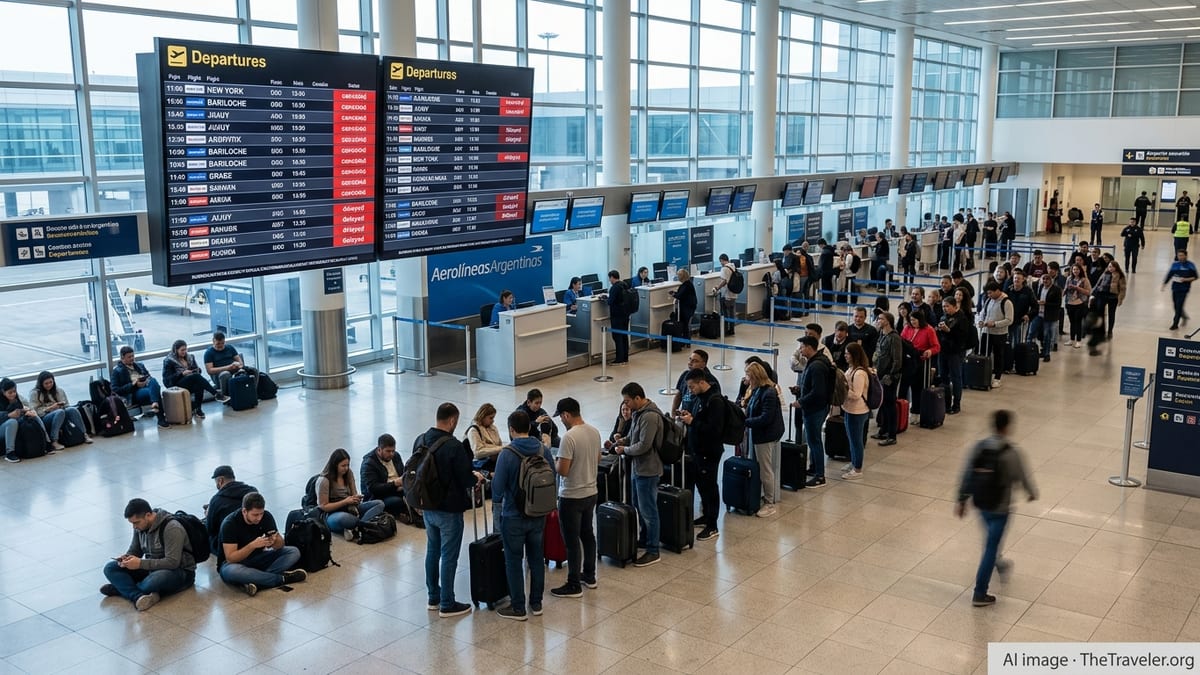
Multiple Airlines Cancel Key Domestic and International Services
According to published coverage from Argentine and international media, a combination of operational issues and broader disruption across the aviation sector led to the cancellation of over ten scheduled flights on a single day, affecting thousands of travelers with plans to or within Argentina. The disruption involved flag carrier Aerolíneas Argentinas, U.S. operator American Airlines, and budget airline Flybondi, hitting both long haul and popular domestic routes.
Publicly available flight information shows that American Airlines scrubbed at least one rotation between Buenos Aires and New York, in addition to adjustments on other U.S.–Argentina services. Aerolíneas Argentinas, which dominates the country’s domestic market, canceled several departures linking Buenos Aires with interior provinces. Flybondi, which operates a network of low cost routes from Buenos Aires to leisure and regional markets, removed multiple services from its schedule on the same day.
The cumulative effect rippled across airport operations at Buenos Aires Ezeiza, which handles most long haul flights, and the centrally located Aeroparque Jorge Newbery, as well as provincial airports that rely heavily on a limited number of daily services. As schedules were redrawn, passengers faced missed connections, overnight delays, and last minute changes to carefully planned itineraries.
While each airline cited its own operational circumstances, the wave of cancellations underscored how quickly capacity constraints, tight turnarounds, and crew availability can cascade into wider disruption across Argentina’s already stretched air transport system.
New York, Bariloche, Jujuy and Tourist Corridors Among the Worst Hit
Routes linking Buenos Aires with New York, Bariloche, and Jujuy were among those most visibly affected, amplifying the impact on both international visitors and domestic travelers. The interrupted New York connection, one of the key nonstop links between Argentina and the United States, stranded passengers at both ends of the route, forcing some onto later departures or alternative hubs.
On the domestic front, Bariloche and Jujuy stand out as critical gateways for Argentina’s tourism economy. Bariloche, a major year round destination for lake, mountain, and winter sports tourism, depends heavily on frequent flights from Buenos Aires to manage surges in visitor demand. Canceled services on this corridor left travelers facing crowded rebooked flights, extended overland journeys, or shortened stays.
Jujuy, a northern province whose colorful Andean landscapes and small towns have grown in popularity among international and local tourists, is similarly dependent on a small number of daily flights. When even a single departure is withdrawn from the schedule, options for same day rebooking can quickly evaporate, particularly for travelers connecting onward to or from long haul services at Ezeiza.
Other interior destinations also experienced knock on effects, as aircraft and crews were repositioned and remaining services filled up. Reports indicate that passengers heading to Patagonia, northwest Argentina, and regional business hubs encountered lengthier travel times and a reduction in same day alternatives.
Operational Pressures and a Fragile Domestic Aviation Network
Recent months have highlighted the fragility of Argentina’s domestic aviation network, where a small group of carriers and limited frequencies can magnify the consequences of any single operational setback. Publicly available data and traveler accounts point to recurring challenges, including tight aircraft utilization, weather sensitive provincial airports, and periodic labor actions that can upend schedules with little warning.
Aerolíneas Argentinas, as the main domestic operator, often bears the brunt of demand surges and network disruptions when conditions change rapidly. Any technical issue, crew rotation problem, or external disruption on a trunk route can require rapid rescheduling on secondary routes such as Bariloche or Jujuy, leading to cancellations or significant delays for passengers far from the original problem.
For low cost carrier Flybondi, which typically operates a leaner fleet than the state airline, removing even a small number of aircraft from service can have an outsized impact. Published commentary from frequent travelers highlights patterns of last minute schedule changes, airport switches, and occasional cancellations on busy leisure routes. When this coincides with limited same day alternatives on other carriers, passengers may be left with long gaps before the next available departure.
American Airlines, meanwhile, operates long haul services that are tightly integrated with its U.S. network. Disruption on a transcontinental sector can affect aircraft rotations and crew duty windows, prompting cancellations that resonate beyond Argentina and into connecting banks of flights across North America.
Passengers Face Rebookings, Missed Connections, and Added Costs
Travelers affected by the latest round of cancellations reported a familiar pattern of disruption: missed onward connections, overnight waits for the next available seat, and the need to reorganize hotel and tour bookings at short notice. In some cases, passengers whose domestic legs were canceled found their carefully timed connections to international flights at risk, particularly when flying onward to or from North America and Europe.
Published accounts describe travelers weighing whether to advance domestic flights by a full day, or to add long buffers between domestic and international legs, in order to reduce the risk of being stranded in transit. This cautious approach can add cost and complexity, particularly for visitors hoping to maximize limited time in Patagonia, the northwest, or other remote regions.
Rebooking conditions also vary by fare type and airline, meaning that some passengers can switch flights at no additional charge while others face change fees or must buy entirely new tickets. Publicly available consumer guidance from Argentine outlets notes that travelers may have specific rights when cancellations are attributable to the airline, but that navigating the claims process can be time consuming.
Reports indicate that, in the latest disruption, airport customer service lines grew quickly, and call centers and digital channels experienced surges in demand as passengers sought clarification on their options. Many travelers turned to airline apps, social media updates, and flight tracking tools to monitor schedule changes in real time while queuing for in person assistance.
Practical Advice for Upcoming Travelers to and Within Argentina
The latest wave of cancellations is prompting renewed advice for travelers planning trips to Argentina in the coming weeks. Travel specialists and widely shared traveler experiences suggest building extra time into itineraries, especially when connecting between domestic routes and long haul flights at Ezeiza.
One commonly recommended strategy is to avoid same day domestic to international connections whenever possible, instead arriving in Buenos Aires at least a day before a long haul departure. While this can add the cost of an extra hotel night, it reduces the risk that a canceled domestic segment to or from places like Bariloche, Jujuy, El Calafate, or Mendoza will jeopardize an onward intercontinental flight.
Travelers are also encouraged to monitor bookings frequently in the days leading up to departure, using airline websites, mobile apps, or flight status tools to check for schedule changes. When significant adjustments appear, early proactive contact with the airline can increase the chances of securing more favorable alternatives before seats on later flights are taken.
Finally, observers note that passengers may wish to compare not just prices but also recent reliability trends when choosing between airlines on key Argentine routes. For routes with few daily frequencies, the potential consequences of a cancellation can be more significant than modest fare differences, making factors such as schedule robustness and rebooking flexibility particularly important for time sensitive travel.