

More news on this day
Passengers traveling through Detroit Metropolitan Wayne County Airport on Friday faced widespread disruption as 467 flights were delayed and at least 43 were canceled, affecting operations for Delta Air Lines, Spirit Airlines, SkyWest, Endeavor Air and several other carriers and leaving travelers scrambling to rebook connections across the United States.
Get the latest news straight to your inbox!
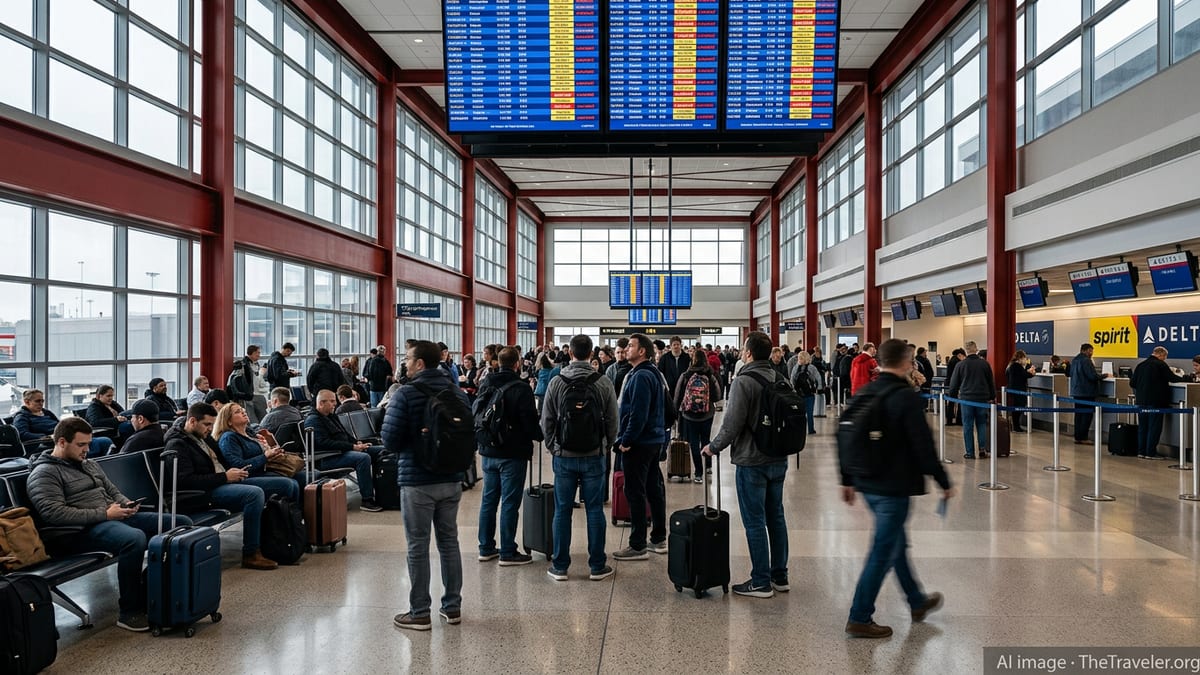
Operational Turbulence Across Multiple Carriers
The disruption emerged early in the day as morning departures began to stack up on departure boards, with knock-on effects spreading into the afternoon. Detroit Metropolitan Wayne County Airport, a major Midwestern hub and a cornerstone for Delta Air Lines and several regional partners, quickly became a chokepoint for domestic and connecting traffic.
SkyWest and Endeavor Air, which operate a large share of Delta Connection regional services, were among the hardest hit by the delays. Their role in shuttling passengers between smaller cities and Detroit meant that local bottlenecks rapidly spread throughout the network, causing missed connections and extended layovers for travelers bound for both coasts as well as the South and mountain states.
Spirit Airlines, which operates from the airport’s Evans Terminal with a focus on leisure routes, also reported significant schedule disruptions. Passengers heading to popular sun destinations reported extended waits at gates and customer service lines as aircraft and crews fell behind schedule, complicating plans for weekend getaways and family visits.
Delta’s mainline operation, which dominates traffic at the McNamara Terminal, was not spared. Even when individual flights were able to depart, late-arriving inbound aircraft and crews created a chain reaction of schedule slippage. For many passengers, relatively short delays on paper stretched into hours of uncertainty as gate assignments and departure times shifted repeatedly throughout the day.
Weather, Congestion and Network Ripple Effects
While a precise, single cause for the disruption was not immediately identified, the pattern of delays reflected a familiar combination of contributing factors. Seasonal weather systems across the Midwest and East Coast, air traffic control flow restrictions and tightly packed schedules all appeared to play a role in constraining capacity and slowing recovery.
In a hub-and-spoke system such as Detroit’s, a series of modest delays can quickly escalate into widespread disruption. Late arrivals reduce the time available for ground crews to turn aircraft, from unloading baggage to refueling and safety checks, forcing subsequent departures to push back later than planned. Once aircraft and crews fall out of their scheduled rotations, airlines face difficult choices about whether to delay additional flights or cancel select services entirely to restore some operational stability.
Regional carriers like SkyWest and Endeavor Air are particularly exposed to these ripple effects. Operating numerous short-haul sectors each day, they have limited slack in their schedules. When a storm or flow restriction affects multiple airports, recovering the network can take many hours, especially when aircraft are dispersed across different cities rather than positioned where they are most needed.
For low-cost carriers such as Spirit, which typically run high aircraft utilization with minimal buffer, even brief interruptions can prove challenging. A single technical or weather delay early in the day can cascade across an entire route map, turning what began as a manageable disruption into an all-day operational headache.
Passengers Confront Long Lines and Uncertain Timelines
For travelers inside the terminals, the statistics translated into long lines at check-in counters, security lanes and gate podiums. Passengers described crowded concourses as departing flights posted rolling delays and arriving aircraft waited for available gates, forcing some to remain on board longer than expected after landing.
Families traveling with children and older passengers connecting through Detroit reported particular frustration with the lack of clear timelines. With departure times repeatedly adjusted, many faced difficult choices about whether to wait at their original gates, seek assistance from customer service desks or attempt to reroute through other hubs where seats were often already limited.
Extended waits at baggage claim also compounded the stress for those whose flights were eventually canceled. Some passengers needed to retrieve checked bags before rebooking on later services, while others opted to abandon plans entirely and seek ground transportation, a daunting prospect given Detroit’s role as a connecting rather than purely origin-and-destination airport for many travelers.
Airport staff and airline agents worked to manage crowds and provide updated information, but the sheer volume of affected flights made it difficult to offer rapid, individualized assistance. Self-service kiosks and airline mobile apps became critical tools for rebooking, with many passengers turning to digital channels in hopes of securing scarce seats on alternative departures.
Advice for Travelers Passing Through Detroit
For passengers with upcoming itineraries through Detroit Metropolitan Wayne County Airport, the day’s events underscore the importance of preparation and flexibility. Travelers are strongly encouraged to monitor their flight status frequently on airline apps or through text alerts, as schedules may adjust with little notice when operations are strained.
Building extra time into connections, particularly for those relying on regional links operated by SkyWest or Endeavor Air, can reduce the risk of missed onward flights. When booking new travel, selecting slightly longer layovers and earlier departures in the day may provide more options if rebooking becomes necessary, especially during seasons when weather disruptions are more common.
Passengers whose flights are significantly delayed or canceled should document communications with airlines and review carrier policies regarding meal vouchers, hotel accommodations and refunds. While specific remedies vary by airline and circumstance, being familiar with applicable rules can help travelers advocate more effectively at service counters or through customer support channels.
Those already at the airport during irregular operations may also benefit from exploring different security checkpoints within the terminals where available, as wait times can vary. Keeping essential items such as medication, chargers and a change of clothes in carry-on bags can make protracted delays more manageable when checked luggage is temporarily out of reach.