

More news on this day
Thousands of travelers across Canada faced another day of widespread disruption as 171 new flight cancellations and 456 delays were recorded at major airports, including St. John’s, Toronto, Montreal, Vancouver and Halifax, affecting services operated by PAL Airlines, Air Canada, Jazz, WestJet, Pacific Coastal Airlines and several smaller carriers.
Get the latest news straight to your inbox!
Major Canadian Hubs See Another Wave of Disruptions
Publicly available flight-tracking data for Canadian airports indicate that the latest wave of cancellations and delays has been concentrated at the country’s busiest hubs. Toronto Pearson, Montreal Trudeau and Vancouver International continued to absorb the bulk of schedule changes, while smaller but strategically important airports such as St. John’s and Halifax also reported elevated disruption levels.
The 171 newly reported cancellations and 456 delays reflect a mix of short-haul and long-haul services, with knock-on effects across domestic and transborder networks. Even airports with relatively clear local conditions experienced ripple impacts as aircraft and crews failed to arrive from already constrained hubs.
Reports indicate that PAL Airlines and other regional operators serving Atlantic Canada were particularly exposed, as cancellations at St. John’s and Halifax disrupted connections to smaller communities. At the same time, major carriers Air Canada and WestJet, together with their regional partners such as Jazz and Pacific Coastal, continued to adjust schedules in response to operational bottlenecks and earlier weather-related disruption.
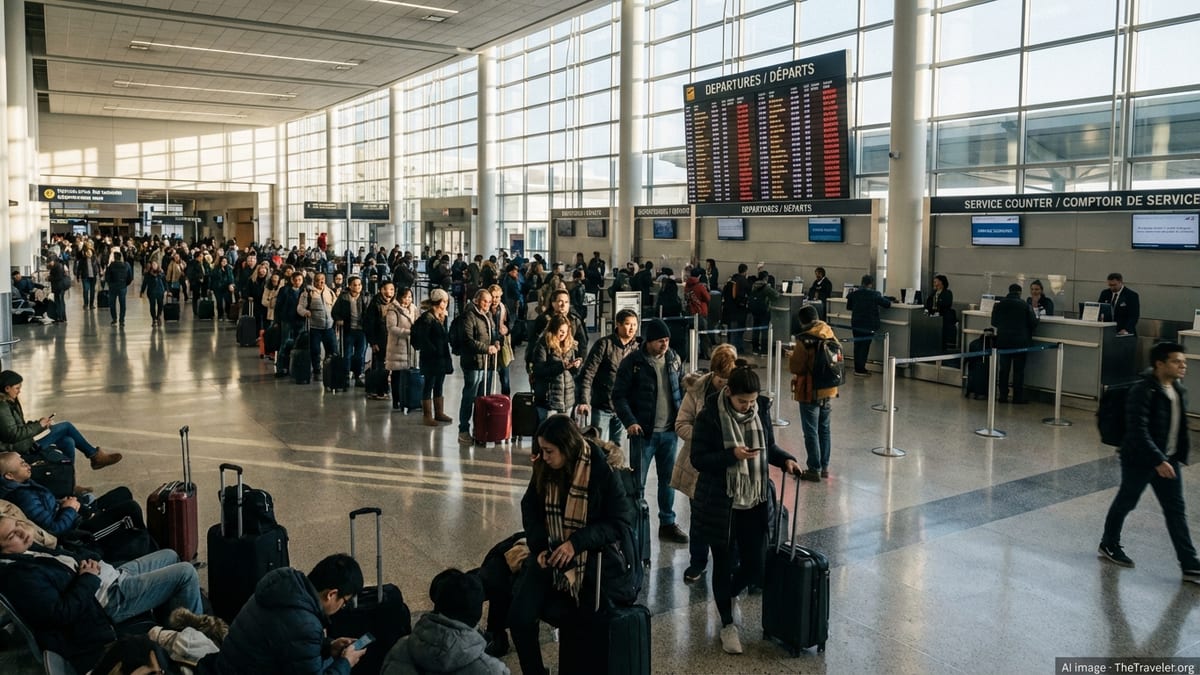
Across the system, travelers encountered long lines at check in and security, as well as crowding around customer service counters, as passengers sought rebooking options or information about overnight accommodation and meal arrangements.
Weather, Congestion and Crew Constraints Combine
Published coverage and operational summaries attribute the current disruption pattern to a combination of late-season winter weather, air traffic congestion and ongoing crew availability challenges. Recent storms and cold snaps in central and eastern Canada have slowed ground handling, de-icing and runway operations, while cross-country routings have magnified the impact on the national network.
In Toronto and Montreal, heavy snowfall and low visibility earlier in the week reduced the number of arrivals and departures airports could safely handle per hour. Those constraints triggered a series of schedule adjustments, including preemptive cancellations intended to thin traffic during peak periods and prevent even more severe delays later in the day.
On the west coast, Vancouver has contended with a mix of low ceilings, rain and lingering congestion from earlier weather systems that affected the transcontinental corridor. When flights arriving from central Canada or the Atlantic region are delayed or canceled, aircraft and crews may not be available for subsequent legs, creating additional cancellations on routes that are otherwise unaffected by local weather.
Operational reports also highlight crew duty-time limitations as a key factor. When earlier delays push pilots and cabin crews beyond regulated working-hour limits, airlines are required to cancel or reschedule flights unless replacement crews can be found. This dynamic has contributed to short-notice cancellations for both mainline and regional carriers.
Impact on PAL, Air Canada, Jazz, WestJet and Pacific Coastal
The disruption has been felt unevenly across airlines but is touching almost every major carrier serving Canadian domestic routes. Air Canada and its regional affiliates, including Jazz and PAL on certain Air Canada Express services, continue to manage a complex recovery operation centered on Toronto, Montreal and Halifax.
WestJet, which operates a large network out of western Canada and key eastern gateways such as Toronto and Halifax, has faced both weather-related and operational cancellations in recent weeks. Public data on flight status suggest that preemptive schedule cuts and aircraft swaps have been used to maintain core routes while trimming marginal frequencies.
Pacific Coastal Airlines, which provides essential regional connectivity in western Canada and operates some WestJet-branded regional services, has also experienced interruptions as conditions at Vancouver and smaller feeder airports fluctuated. These constraints have affected travelers bound for or departing from secondary markets, where alternative flights are limited and cancellations can lead to multi-day delays in reaching final destinations.
In Atlantic Canada, PAL Airlines’ own network has been sensitive to fog, wind and changing runway conditions at St. John’s and other coastal airports. Reports indicate that when inbound flights are scrubbed, the absence of aircraft can force additional outbound cancelations, further compounding local disruption even after weather improves.
Travelers Confront Long Delays, Missed Connections and Limited Options
For passengers, the cumulative effect of 171 cancellations and 456 delays has been missed connections, unexpected overnight stays and, in some cases, the loss of short trips altogether. Travelers passing through Toronto, Montreal and Vancouver have reported spending several hours in queues only to receive rebooking options many hours or a day later than originally planned.
Those departing from or heading to smaller destinations have faced additional challenges. When regional flights to places such as Deer Lake, Gander, Goose Bay or smaller western communities are canceled, alternative routings often require multiple connections and can be constrained by already full flights on parallel routes.
According to publicly available passenger accounts and discussion forums, some travelers have opted to switch airlines at their own expense when same-day alternatives are available, particularly on high-frequency routes such as Toronto to Vancouver or Montreal. Others have chosen to delay or abandon nonessential journeys, citing the uncertainty created by repeated waves of cancellations in recent weeks.
Consumer advocates continue to point travelers toward Canada’s air passenger protection rules, noting that eligibility for compensation or reimbursement depends on whether carriers classify a disruption as within their control, related to safety, or outside their control due to weather or air traffic restrictions.
Outlook for the Coming Days and Advice for Passengers
Forecasts for key Canadian aviation hubs suggest that conditions may gradually improve, but operational recovery can lag behind the weather by several days as airlines reposition aircraft and crews. Publicly available schedule data show carriers trimming some frequencies and consolidating lightly booked flights to create additional slack in the network.
Travel analysts note that winter and early spring remain high-risk periods for disruption in Canada, particularly when storms affect multiple hubs simultaneously. Even as airports clear snow and ice, backlogs of displaced passengers and aircraft can sustain elevated levels of delays and cancellations well beyond the immediate weather event.
Travelers with flexible plans are being advised by many consumer information sources to consider rebooking outside peak travel times, to allow longer connection windows and to monitor flight status closely in the 24 hours before departure. Maintaining updated contact information in airline profiles and mobile apps can help ensure passengers receive notifications as soon as schedules change.
For those already en route, publicly available guidance suggests checking both departure and arrival airport boards, as well as the status of inbound aircraft operating the next leg, to better anticipate potential disruptions. With hundreds of flights across multiple carriers still affected, many travelers are preparing for extended journeys and building additional time into their plans as Canadian aviation works through another period of intense operational strain.