

More news on this day
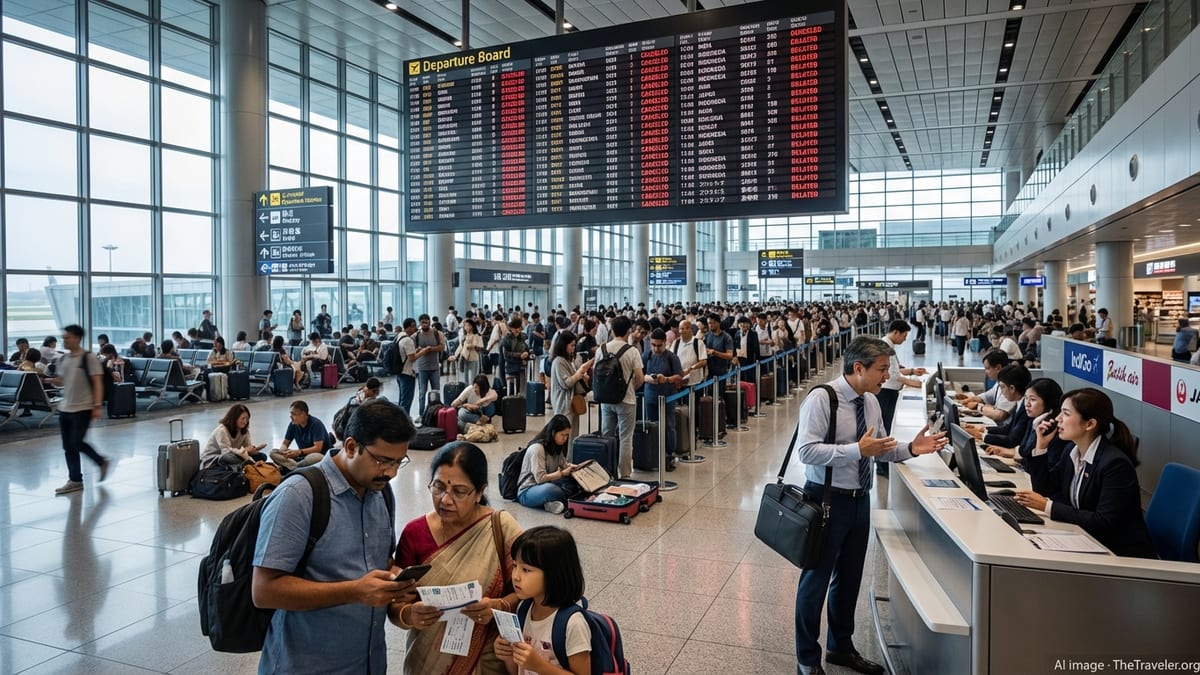
Thousands of travelers across Asia are facing severe disruption as Chinese carriers including China Eastern, China Southern, Air China, Sichuan Airlines and Hainan Airlines report 244 cancellations and 3,704 delays affecting major hubs such as Beijing, Guangzhou, Chengdu, Shanghai, Hami and other cities.
Get the latest news straight to your inbox!
Wide-Scale Operational Disruptions at Chinese Airports
Publicly available operational data from Chinese airports indicates an unusually high volume of same-day schedule disruption, concentrated in some of the country’s busiest hubs. Across multiple carriers, at least 244 flights have been cancelled and more than 3,700 delayed, affecting movements at Beijing Capital, Shanghai Pudong, Guangzhou Baiyun, Chengdu Tianfu, Hami and several regional airports.
The disruption spans both domestic trunk routes and connecting services that feed regional and long-haul networks. Routes linking Beijing and Shanghai, as well as flights into and out of Guangzhou and Chengdu, appear particularly affected, with delay statistics showing heavy congestion in departure and arrival banks for several major airlines.
Air traffic tracking platforms show that China Eastern, China Southern and Air China account for a significant share of the delayed movements, with hundreds of late departures and arrivals recorded in a single operating day. Hainan Airlines, Sichuan Airlines and a range of secondary and regional carriers add to the tally, compounding knock-on effects for tight connections.
While overall cancellation numbers remain far below total daily flight volumes in China, the clustering of delays at a handful of large hubs has created visible bottlenecks for passengers trying to move through Asia’s aviation system.
Flagship Carriers Under Pressure
China’s three largest state-controlled airlines are bearing much of the operational strain. Data on countrywide punctuality shows China Eastern and China Southern handling more than 4,000 delayed flights each over a recent reporting window, with Air China not far behind. These figures reflect a pattern of persistent lateness that can quickly translate into day-of-operation disruptions when conditions deteriorate further.
China Eastern, with its strong presence at Shanghai Pudong and Beijing, has seen high delay counts on key domestic and regional links, magnifying the impact on connecting traffic to Japan, Southeast Asia and long-haul destinations. Public information on the airline’s conditions of carriage underscores that it “will take all reasonably required measures to avoid flight delays and cancellations,” but recent statistics suggest the carrier is operating close to the limits of its schedule resilience.
China Southern and Air China are experiencing similar pressures at Guangzhou, Beijing and Chengdu. Punctuality reports covering these airlines and airports highlight dense departure waves and growing average delay times. When combined with even minor weather or airspace constraints, such load factors can result in a cascade of late operations across an entire day.
Hainan Airlines and Sichuan Airlines, though smaller in absolute volume, play crucial roles on point-to-point and feeder routes, meaning delays on their networks can strand travelers at secondary hubs and reduce options for rerouting.
Beijing, Shanghai, Guangzhou and Chengdu Emerge as Bottlenecks
China’s busiest airports are at the center of the current disruption, with operational dashboards and airport statistics indicating heavy delay traffic through the primary hubs. Shanghai Pudong and Guangzhou Baiyun, in particular, have logged several hundred delayed departures and arrivals in a recent 24-hour period, with Beijing Capital and Chengdu Tianfu also reporting elevated congestion.
Traffic data for major coastal and inland airports shows that flights connecting Beijing, Shanghai, Guangzhou and Chengdu are among those most commonly affected, which is consistent with the role of these cities as primary transfer points for both domestic and international itineraries. When delays stack up at all four hubs simultaneously, passengers making multi-leg journeys across Asia are at heightened risk of missing connections.
Regional airports such as Hami and Hangzhou are also feeling the strain. Hangzhou Xiaoshan, where Air China, China Eastern, Hainan Airlines and Sichuan Airlines all maintain notable operations, has reported clusters of late departures toward Beijing, Guangzhou and Chengdu, suggesting that congestion at the top-tier hubs is pushing schedule instability further out into the domestic network.
For travelers transiting China on their way to other Asian destinations, these bottlenecks translate into longer ground times, unexpected overnights and a scramble to secure alternative connections on already busy routes.
Knock-On Effects Across Asian and International Routes
The disruption inside China is feeding into a broader pattern of irregular operations across Asia. Recent regional tallies cited in aviation-focused coverage point to thousands of delayed flights and more than one hundred cancellations across multiple Asian countries in the last week alone, with Chinese hubs repeatedly appearing among the most affected nodes.
Because Beijing, Shanghai and Guangzhou serve as key gateways between East Asia, Southeast Asia and long-haul markets in Europe and North America, large numbers of late or cancelled domestic segments can quickly interfere with onward connections. Travelers heading for cities such as Tokyo, Bangkok, Kuala Lumpur or Singapore via Chinese hubs are encountering rebookings, missed minimum connecting times and extended airport waits.
International carriers that rely on Chinese partners for feeder traffic may also experience reduced load factors or late-arriving passengers, although the impact varies depending on interline agreements and schedule buffers. Observers note that the cumulative effect of repeated days with elevated delays can undermine confidence in tight connection itineraries through specific hubs, pushing some travelers to seek more direct or alternative routings even at higher cost.
The current wave of disruption follows several years in which China’s aviation sector has been rebuilding capacity and restoring international links, leading to dense schedules and less margin for error when operational challenges arise.
What Travelers Can Expect in the Coming Days
With disruptions concentrated at some of Asia’s busiest transfer points, passengers booked on China Eastern, China Southern, Air China, Sichuan Airlines, Hainan Airlines and other Chinese carriers should be prepared for potential schedule changes in the near term. Airline conditions of carriage and domestic service policies generally provide for rebooking and, in some circumstances, accommodation or meal support when delays or cancellations are attributable to the carrier.
Publicly available guidance from major Chinese airlines indicates that same-day or near-term rebooking windows are often permitted without additional fare collection when operational issues originate with the airline, though specific rules vary by carrier and ticket type. Travelers with complex, multi-leg itineraries may find that even relatively short initial delays can trigger missed connections, making proactive contact with booking channels important.
Aviation analysts point out that China’s air traffic system is entering a period of seasonally strong demand and dense scheduling, which may keep pressure on punctuality across several weeks. Weather, airspace restrictions and rapid growth in passenger numbers can all interact with already tight timetables to produce days with elevated delays and cancellations similar to those currently being reported.
For now, the high counts of delays and the 244 recorded cancellations across Chinese airports serve as a reminder that Asia’s recovery in air travel is coinciding with renewed operational vulnerabilities, with travelers bearing the immediate impact in the form of missed plans, extended journeys and crowded airport terminals.