

More news on this day
Hundreds of passengers were left stranded across Egypt on March 1 as airports in Cairo, Hurghada, Alexandria and Sharm El Sheikh reported at least 73 flight cancellations and 154 delays, disrupting operations for EgyptAir, Air Cairo, Emirates, Pegasus Airlines and several other carriers amid rapidly escalating regional tensions and widespread airspace closures.
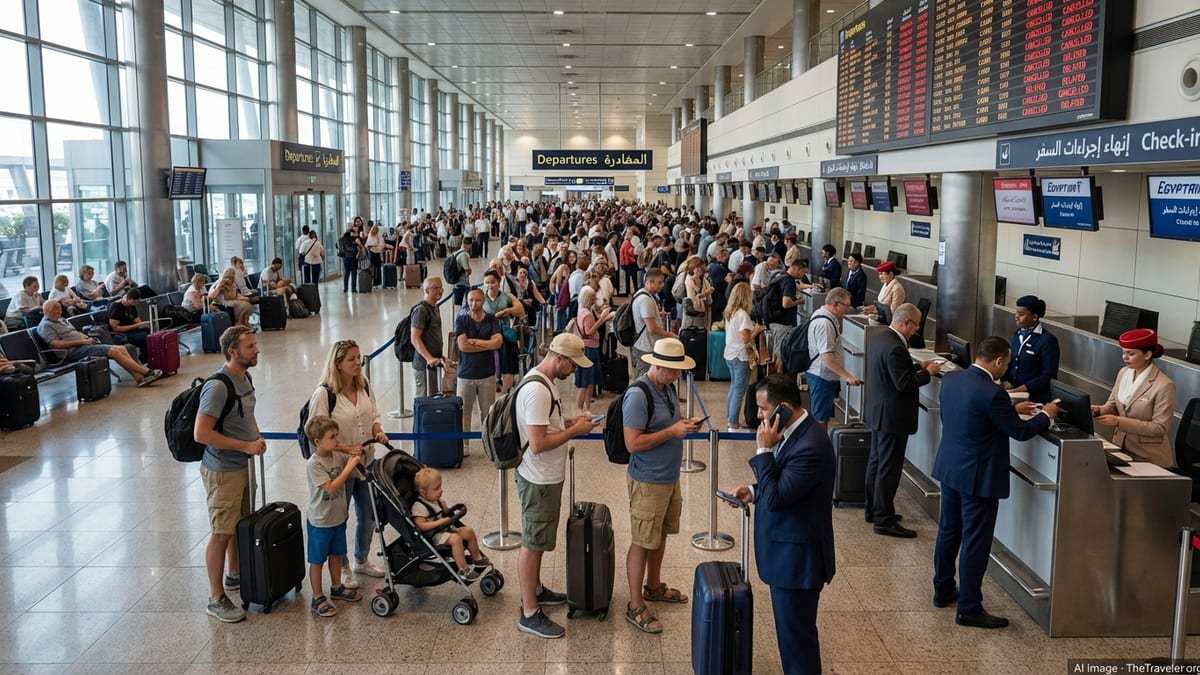
Regional Crisis Ripples Across Egypt’s Skies
Egypt’s busiest airports were thrust into crisis on Sunday as a wave of airspace closures across the Middle East forced airlines to ground or reroute services, triggering knock-on disruption for travelers moving through Cairo, Hurghada, Alexandria and Sharm El Sheikh. Civil aviation authorities reported dozens of cancellations and more than a hundred delays concentrated on routes linking Egypt with Gulf and Levant hubs.
Officials said the upheaval was linked directly to the closure of airspace in several neighboring countries following an escalation in the conflict involving Iran, Israel and the United States. With key regional corridors suddenly restricted, airlines struggled to secure safe, compliant routings or sufficient slots, leaving aircraft and crews out of position and passengers waiting for information in crowded terminals.
Egypt’s Ministry of Civil Aviation confirmed that flight schedules to Gulf Cooperation Council destinations had been particularly affected, with only a portion of planned services operating while the rest were pulled at short notice. Airports across the country were instructed to activate contingency plans designed for regional crises, focusing on passenger care and rapid schedule adjustments while preserving safety standards.
The disruption came as Egypt positions itself as a critical diversion point for carriers unable to use traditional east–west routes, further straining capacity at Cairo and several secondary airports. Authorities said additional diverted flights arrived overnight and through Sunday, even as outbound departures were being scrubbed or heavily delayed.
EgyptAir and Air Cairo Forced to Slash Gulf and Regional Routes
National carrier EgyptAir was at the center of the turbulence, extending an indefinite suspension of flights from Cairo to 11 major regional cities, including Dubai, Abu Dhabi, Sharjah, Doha, Kuwait, Amman, Beirut, Dammam, Bahrain, Baghdad and Erbil. The airline’s Integrated Operations Control Center shifted into emergency mode, continuously revising schedules as new airspace restrictions were issued.
EgyptAir said the move was a precaution to protect passengers and crew on routes that typically transit or border newly restricted airspace. The carrier urged travelers to check the status of existing bookings and emphasized that rebooking and refund options would be made available, though many passengers complained of long waits at airport desks as staff tried to process a surge of requests.
Air Cairo, a key operator on domestic and leisure routes linking Cairo, Alexandria and Upper Egypt with Red Sea resorts such as Hurghada and Sharm El Sheikh, also faced serious disruption. Live flight-tracking data showed a mix of on-time services and abrupt cancellations, with some departures from Cairo to Sharm El Sheikh operating while parallel EgyptAir services on the same corridor were grounded, adding to confusion among travelers at the gates.
Industry analysts said the differing responses reflected each carrier’s route structure, codeshare agreements and fleet availability. EgyptAir’s role as a regional connector to the Gulf and Levant exposed it more heavily to the airspace shutdowns, while Air Cairo’s largely domestic and short-haul network allowed it to maintain a greater share of its schedule, albeit with mounting delays as air traffic flows were reshuffled.
Foreign Carriers Including Emirates and Pegasus Hit by Airspace Closures
International airlines serving Egypt also felt the shockwaves. Emirates, which typically operates multiple daily services linking Cairo with Dubai and beyond, was among carriers forced to cancel or significantly delay flights as the United Arab Emirates and other states imposed temporary airspace restrictions. Passengers hoping to connect via Gulf hubs to Asia, Australia and Europe found themselves stranded in Cairo and Red Sea resorts with limited immediate alternatives.
Low cost and regional operators, including Turkey’s Pegasus Airlines, similarly faced operational challenges on routes touching Egyptian cities and neighboring conflict-affected airspaces. Some flights were diverted to secondary airports in Egypt such as Sphinx or Luxor to avoid closed corridors, while others were scrubbed entirely, leaving aircraft and crews displaced from their normal rotations.
With carriers from the Gulf, Levant and Turkey all adjusting schedules in real time, airport information boards across Egypt were dominated by rolling updates. Repeated announcements of delays and cancellations created long queues at transfer desks and customer service counters, where staff attempted to rebook passengers on the few flights still operating or arrange overnight accommodation.
Travel agents reported a surge in calls from customers trying to reroute journeys away from Gulf hubs, instead seeking scarce seats via European gateways or on domestic connections to reposition for later departures. Some airlines offered voluntary change waivers for tickets touching affected cities, but availability remained limited due to aircraft and crew constraints.
Cairo, Hurghada, Alexandria and Sharm El Sheikh Strain to Support Stranded Travelers
At Cairo International Airport, officials said they had activated a crisis management center to coordinate between airport operators, airlines, security services and ground-handling providers. Extra staff were deployed to terminals serving international departures, where families with young children and elderly passengers waited for hours in snaking lines to receive updates or meal vouchers.
In Hurghada and Sharm El Sheikh, two of Egypt’s busiest holiday gateways, resort-bound tourists encountered crowded arrival halls and uncertainty over return flights. Hoteliers in both Red Sea destinations reported working closely with tour operators to extend stays or arrange late checkouts for guests whose departures had been canceled or pushed back, while coaches that normally shuttle new arrivals instead circulated between hotels and terminals to pick up delayed groups.
Alexandria’s Borg El Arab Airport, a growing hub for both domestic and regional services, also experienced cascading delays. Some passengers arriving from Europe reported being held on board for extended periods while new routings were filed and approved, or while airport authorities confirmed whether onward connections would go ahead.
Across all four airports, food and beverage outlets stayed open beyond regular hours to accommodate the unexpected crowds, and local volunteers in Cairo and Hurghada shared reports of distributing water and snacks to the longest-stranded travelers. Despite the efforts, many passengers took to social media to complain of limited information and a lack of clarity over when normal operations might resume.
Authorities Monitor Situation as Travel Advisories and Contingency Plans Evolve
Egypt’s Minister of Civil Aviation conducted an inspection tour of Cairo International Airport’s operations and crisis rooms on Sunday, seeking assurances that contingency plans were being followed and that airlines were meeting their obligations to passengers. The ministry said it remained in direct contact with international aviation regulators and neighboring states to track developments and adjust flight paths as conditions allowed.
Security and safety officials reiterated that all decisions on cancellations and delays were being made on the basis of airspace risk assessments rather than commercial considerations. They stressed that no departures would be permitted on routes where safe and guaranteed corridors could not be secured for the duration of the flight.
Travel advisers urged passengers with upcoming trips to Egypt or onward journeys via Egyptian hubs to check the latest guidance from their airlines and foreign ministries before departing for the airport. Those holding package holidays that included flights to shuttered destinations in the Gulf were being offered full refunds or alternative arrangements, subject to availability and evolving travel warnings.
With the regional situation still fluid, aviation experts warned that disruption could persist for days, if not longer. Airlines were expected to continue adjusting capacity, rerouting aircraft and consolidating services, while Egyptian airports sought to balance their role as safe diversion points with the challenge of managing surging passenger numbers and constrained airspace all around.