

More news on this day
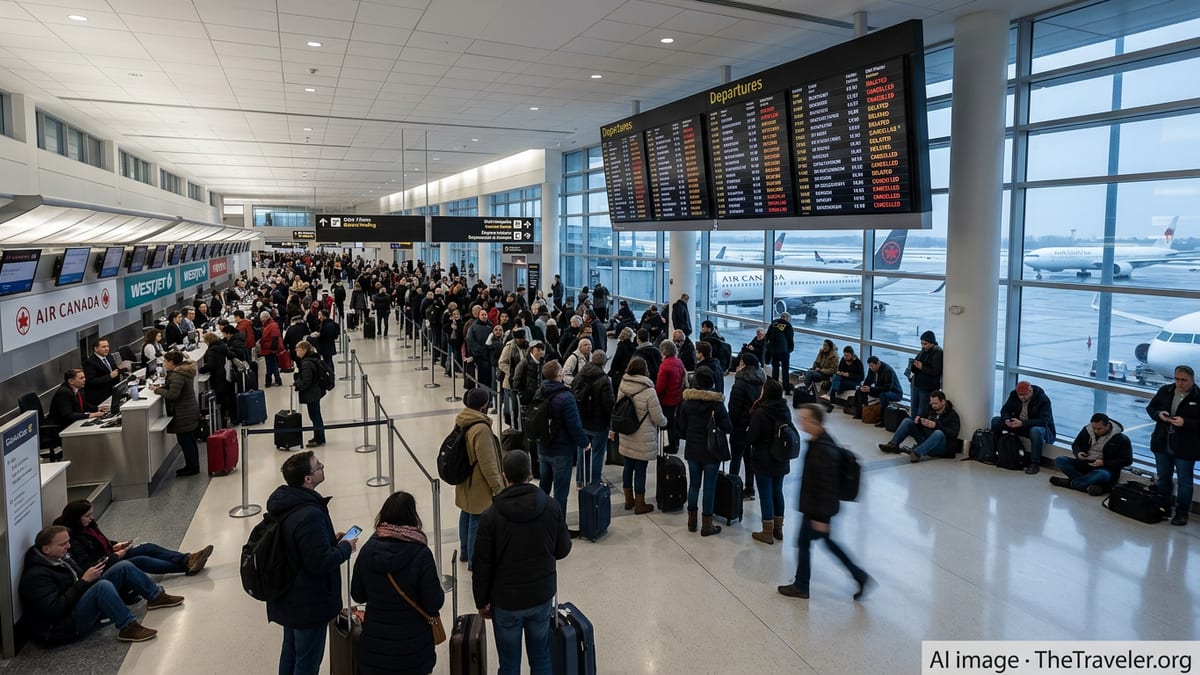
Travelers moving through Toronto Pearson International Airport faced widespread disruption today as Air Canada, WestJet and Jazz reported 286 delayed flights and 27 cancellations, leaving passengers bound for New York, London, Dubai and several major United States cities struggling to rebook and reach their destinations.
Get the latest news straight to your inbox!
Ripple Effects Hit Major International Routes
Publicly available flight-tracking data shows that operations at Toronto Pearson, Canada’s busiest airport, slowed sharply as knock-on delays spread across domestic, transborder and long-haul international services. Routes connecting Toronto with New York-area airports, London and Dubai were among the most heavily affected, creating a backlog of passengers in departure halls and at gate areas.
Multiple departures to New York, including services to LaGuardia and John F. Kennedy International, experienced extended ground holds as earlier late-arriving aircraft and air traffic flow restrictions compressed already tight turnaround times. London-bound services also saw schedule disruption, with both overnight and daytime departures pushed back, in some cases by several hours.
Flights between Toronto and Dubai, a key long-haul corridor linking Canada with the Gulf region, were not spared. Historical schedule data and recent operational reports indicate that this route is particularly susceptible to cascading delays when aircraft positioning or crew duty limits are affected elsewhere in the network, amplifying the impact on passengers with onward connections to Asia, Africa and the Middle East.
Additional disruption was reported on services linking Toronto with large U.S. hubs, including Chicago, Washington and other East Coast and Midwest cities. Weather-related constraints, congested airspace and ongoing recovery from previous operational challenges combined to slow arrivals and departures, increasing the likelihood of missed connections and overnight stays for those already in transit.
Air Canada, WestJet and Jazz Struggle to Stabilize Schedules
According to published coverage and schedule information, Air Canada bore a significant share of the disruption, reflecting its dominant presence at Toronto Pearson and its reliance on the hub to feed both domestic and international routes. The airline has faced repeated scrutiny in recent seasons for its handling of major disruption events, with regulators drawing attention to passenger care obligations when delays and cancellations escalate.
WestJet, which has been expanding and reshaping its network, also reported a notable number of delayed departures and arrivals from Toronto. Regulatory records from earlier cases highlight how penalties have been applied when airlines failed to provide adequate assistance during lengthy disruptions, heightening public sensitivity whenever large-scale irregular operations emerge at major Canadian airports.
Jazz Aviation, operating as a regional partner under the Air Canada Express brand, was similarly affected. Its shorter-haul flights are used to funnel travelers from smaller Canadian and nearby U.S. cities into Toronto for onward connections. When mainline departures fall behind schedule, regional operations often feel the impact quickly, resulting in tight minimum connection times becoming unworkable and passengers facing missed onward flights.
Industry analysts note that while each carrier manages its own operations, integrated hub-and-spoke networks mean that disruption at a central hub like Toronto can rapidly spread across multiple airlines sharing gates, runways and airspace. In such conditions, recovery plans must juggle aircraft availability, crew legal limits and passenger rebooking, a task that becomes more complex as the number of delayed flights grows.
Passengers Face Long Queues, Missed Connections and Limited Options
Social media posts and traveler accounts described long lines at check-in desks, rebooking counters and gate podiums as stranded passengers sought alternative routes. With many flights fully booked at the height of winter travel and business demand, same-day rebooking options were often limited, especially for those headed to major hubs like New York, London and Dubai.
Some travelers reported being offered rerouting through secondary European or U.S. gateways, extending total journey times by many hours and creating additional exposure to potential delays at intermediate airports. Others indicated that overnight hotel availability near the airport quickly tightened as cancellations accumulated and late-evening departures became unviable.
Families, elderly passengers and those with tight onward connections appeared to be particularly affected. In previous disruption events, passenger advocates have emphasized the importance of clear communication about entitlements, including meal vouchers, accommodation and ground transportation when long delays or cancellations fall within an airline’s control, and have urged travelers to retain receipts and records of all expenses.
Travel commentators also pointed out that the complexity of modern itineraries, often involving multiple airlines and ticketing channels, can complicate rebooking. When a disruption occurs on one segment operated by a codeshare partner, passengers may have to navigate conditions of carriage and policies from more than one company in order to secure timely alternatives.
Operational and Weather Factors Behind the Disruptions
Reports indicate that a combination of challenging winter weather conditions and operational constraints at Toronto Pearson contributed to the spike in delays and cancellations. The airport is highly sensitive to heavy snowfall, freezing rain and strong crosswinds, which can force runway closures, extended de-icing times and air traffic control flow restrictions, sharply reducing the number of aircraft that can safely arrive and depart each hour.
Recent weather patterns across central and eastern North America have also strained the wider air travel system, with storms impacting both Canadian and U.S. hubs. When key destinations such as New York, Chicago or Washington impose arrival rate reductions, flights from Toronto are often held at gates or delayed on departure, leading to aircraft and crews arriving late for subsequent legs.
Operationally, airlines must continually balance safety procedures, crew duty limits and maintenance requirements. When disruptions accumulate, crew members can quickly reach their legal maximum working hours, forcing airlines to cancel or consolidate flights even after weather begins to improve. Industry observers note that this can prolong recovery beyond the immediate storm window, with residual delays lasting several days.
Available data and previous case studies suggest that hubs with dense connecting traffic like Toronto Pearson are especially vulnerable to these cascading effects. Once departure waves are significantly disrupted, aircraft become out of position and recovery flights must be carefully sequenced, often prioritizing long-haul and high-load routes, which may further inconvenience travelers on shorter regional services.
What Travelers Can Do During Major Disruptions
Travel experts recommend that passengers affected by extensive delays or cancellations at Toronto Pearson take proactive steps to manage their itineraries. Using airline mobile apps and online tools to confirm flight status, rebook seats and monitor gate changes can sometimes be faster than waiting in airport queues, particularly during large-scale irregular operations.
For those with imminent international departures, reviewing connection times and monitoring the status of both outbound and inbound aircraft can provide early warning of potential missed links. When it becomes clear that a connection is no longer realistic, travelers may seek to adjust itineraries before arriving at the airport, which in past events has improved chances of securing limited alternative seats.
Passenger rights in Canada require carriers to provide certain standards of care and, in some circumstances, compensation when delays or cancellations are within an airline’s control. Consumer organizations advise travelers to document their experience carefully, including screenshots of flight status updates, boarding passes and receipts for food, accommodation and ground transport, in case a claim is pursued later.
With Toronto Pearson once again experiencing large-scale disruption, aviation analysts suggest that the episode underscores ongoing pressure on airlines and infrastructure as they navigate peak-season travel, volatile weather patterns and stretched resources. For passengers, it serves as a reminder of the value of flexible booking options, travel insurance and contingency time when connecting through one of North America’s busiest international hubs.