

More news on this day
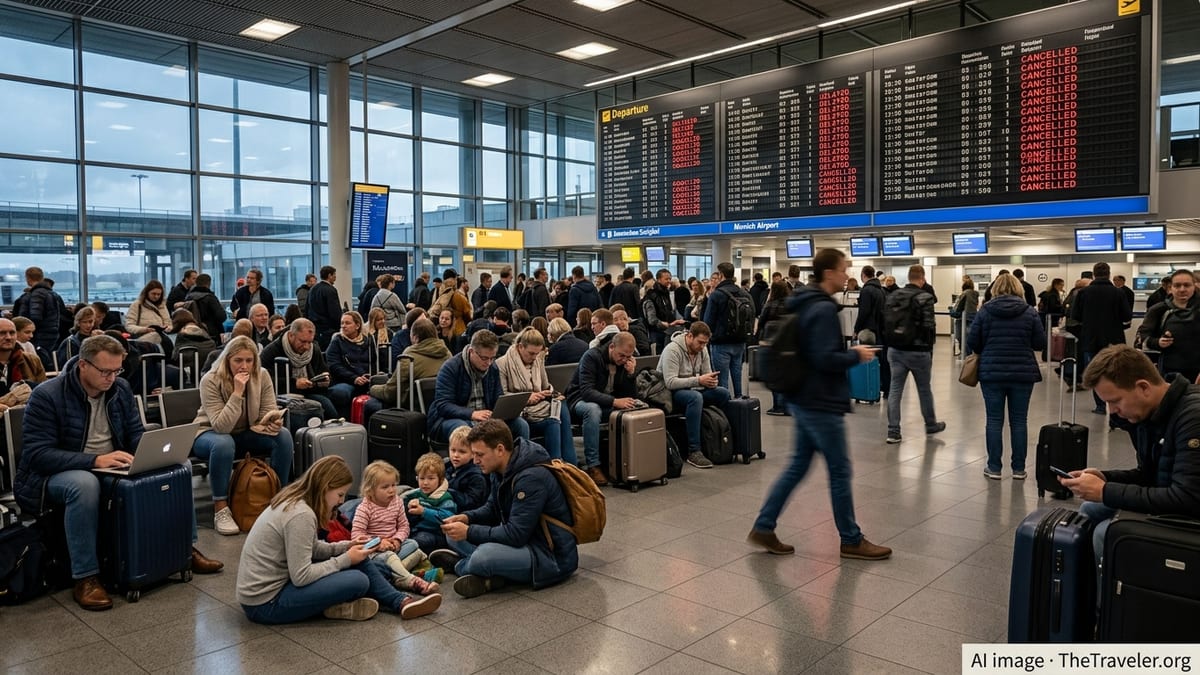
Hundreds of travellers were left stranded across Europe as a fresh wave of disruption rippled through major hubs in the United Kingdom, Denmark, France, Germany, Spain and other countries, with publicly available operational data and media coverage indicating that around 1,872 flights were delayed and at least 42 cancelled, affecting services run by Lufthansa, KLM, Wizz Air, SAS and other airlines at airports in Paris, Munich, Amsterdam, London and beyond.
Get the latest news straight to your inbox!
Major Hubs Buckle Under Mounting Operational Strain
According to airport performance dashboards and aviation tracking platforms, large European hubs including London Heathrow, Amsterdam Schiphol, Paris Charles de Gaulle and Munich have faced intensified bottlenecks in recent days as a combination of weather, air traffic control constraints and knock-on reactionary delays disrupted tightly timed schedules. The impact has been felt across both short-haul and long-haul networks, triggering missed connections and extended waits for rebooking.
London and Amsterdam have been among the worst affected, with publicly available punctuality data for the region showing sharp spikes in late and rescheduled departures compared with typical winter averages. Travellers reported long queues at transfer desks and baggage services as airlines attempted to consolidate flights and reposition aircraft to restore regular rotations.
In France and Germany, congestion at Paris Charles de Gaulle and Munich added further strain to already busy networks. Weather-related ground handling slowdowns, along with crew duty-time limitations after earlier delays, contributed to rolling timetable changes that stretched well into the evening peaks, leaving many passengers facing overnight stays or last-minute itinerary changes.
Regional airports feeding into the big hubs also experienced cascading effects. Departures from secondary cities in the UK, Denmark and Spain were held back or cancelled entirely when onward connections through continental gateways could no longer be guaranteed, concentrating disruption on a relatively small number of overburdened transfer points.
Lufthansa, KLM, Wizz Air and SAS Grapple With Network-Wide Delays
Flag carriers and low-cost operators alike have been swept up in the disruption, with Lufthansa, KLM, Wizz Air and SAS particularly exposed due to their reliance on hub-and-spoke networks centred on the affected airports. Recent punctuality analyses for Europe indicate that these airlines, already operating at high load factors, have limited spare capacity to absorb sudden schedule shocks, amplifying the scale of knock-on delays.
Lufthansa’s operations in Frankfurt and Munich have been especially vulnerable to reactionary delays when aircraft and crews arrive late from earlier sectors. Public reports on recent performance show a notable share of the airline’s disruption being attributed to air traffic control and subsequent reactionary effects, rather than a single isolated cause. As schedules slipped, same-day connections became increasingly difficult to maintain.
KLM, heavily dependent on Amsterdam Schiphol as a transfer gateway, has also been hit by a combination of technical and capacity-related constraints. Consumer-facing advisories published in mid-March highlighted widespread delays and cancellations across the carrier’s European network, particularly at Amsterdam, London and Paris, as air traffic control restrictions and operational issues reduced the number of movements that could be handled each hour.
Low-cost group Wizz Air and Scandinavian operator SAS, with dense intra-European timetables and frequent turns, have faced similar challenges. When individual rotations run late due to weather, congestion or crew availability, the effect quickly ripples across subsequent flights in the same aircraft’s schedule, resulting in late-night cancellations or substantial re-timing of departures from Nordic, Central European and Mediterranean bases.
Passengers Confront Long Queues, Patchy Information and Missed Connections
For travellers caught in the disruption, the most visible impact has been the sudden lengthening of queues at check-in, security and customer service desks. Social media posts and forum discussions from affected airports describe crowded terminals, rapidly changing departure boards and difficulties securing alternative routings on already busy services.
Many passengers with onward connections in Amsterdam, Munich, Paris or London reported missed links when inbound flights arrived hours behind schedule. In some cases, rebooking options were constrained by duty-time limits on crews and the lack of spare aircraft, leading to overnight delays and enforced hotel stays for those unable to secure same-day alternatives.
Information flow has also been inconsistent. While airline apps and airport websites generally reflected cancellations and major delays, travellers described situations in which updates appeared only shortly before departure or changed multiple times within a few hours. This uncertainty complicated decisions about whether to proceed to the airport, seek rerouting, or rearrange accommodation and ground transport.
Consumer advice shared widely online has urged passengers to monitor their flight status closely, keep boarding passes and receipts, and familiarise themselves with applicable passenger rights regulations, particularly for itineraries touching European Union and associated countries where compensation and care obligations can apply under specific conditions.
Weather, Airspace Pressures and Labour Unrest Combine
While there is no single trigger behind the latest wave of disruption, available reporting points to a convergence of seasonal weather challenges, structural capacity pressures and labour-related tensions across parts of the aviation system. Recent European windstorms have brought high winds, heavy rain and snow to several regions since early January, periodically reducing runway availability, slowing ground handling and forcing adjustments to take-off and landing rates.
At the same time, air traffic control networks in parts of Europe have been operating close to capacity, leaving limited flexibility to accommodate sudden reroutings or holding patterns when storms, diversions or congestion occur. Technical issues and staffing constraints at control centres have periodically reduced the number of aircraft that can safely be managed in busy airspace corridors, resulting in flow restrictions that feed through into airport-level delays.
Labour relations have added another layer of uncertainty. In recent weeks, industry coverage has highlighted strike actions and industrial ballots affecting pilots, cabin crew and ground staff at various carriers and service providers, including at least one announced pilot strike period at Lufthansa in March. Even when limited in duration, such actions can disrupt the careful positioning of aircraft and crews, leading to prolonged recovery periods once normal operations resume.
Combined, these factors have created an environment in which minor disruptions rapidly escalate into major operational challenges, especially for network carriers whose schedules rely on frequent, tightly timed connections between multiple hubs.
What Travellers Should Expect in the Coming Days
Looking ahead, aviation analysts and travel industry observers suggest that schedules at major European hubs are likely to remain fragile as airlines work through backlogs and reposition aircraft and crews. With demand for spring and early summer travel remaining robust, there is limited slack in the system to absorb additional shocks from weather, airspace constraints or industrial action.
Travellers planning to pass through key hubs such as London Heathrow, Amsterdam Schiphol, Paris Charles de Gaulle, Munich, Copenhagen and Madrid are being advised, in publicly available guidance, to allow ample connection times, pay close attention to airline notifications and consider earlier departures when itineraries involve time-sensitive events.
Experts also highlight the importance of understanding ticket conditions and passenger rights. For journeys beginning or ending in the European Union, the United Kingdom or associated states, established regulations may entitle travellers to meals, accommodation or financial compensation depending on the length of delay, the cause of disruption and the distance flown. However, eligibility can be complex, particularly when disruptions stem from weather, air traffic control issues or other factors viewed as outside an airline’s direct control.
For now, the situation underscores the continuing vulnerability of Europe’s interconnected air travel network to simultaneous pressures across multiple countries and carriers. As airlines adjust schedules and resource levels for the coming months, passengers using Lufthansa, KLM, Wizz Air, SAS and other operators across the continent may continue to face uneven levels of punctuality, especially at already congested hubs.