

More news on this day
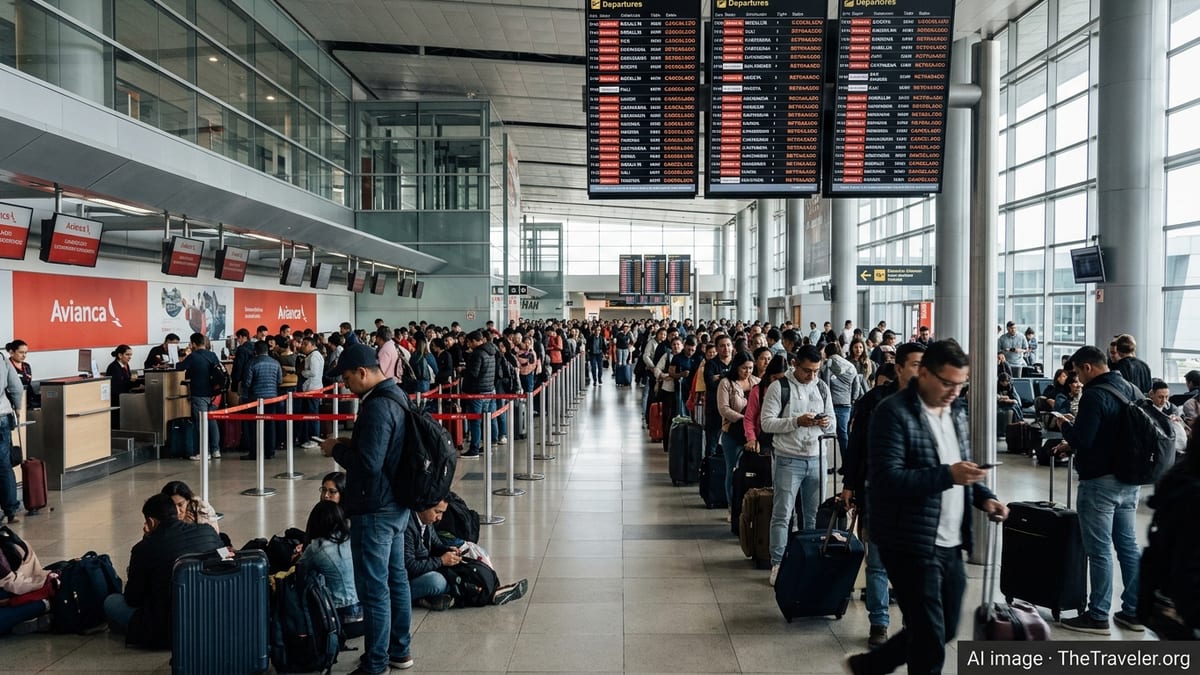
Hundreds of travellers were left stranded in Colombia over the weekend as widespread operational disruption led to at least 77 delayed flights and 43 cancellations across Bogotá, Medellín and Bucaramanga, affecting services operated by Avianca, LATAM Colombia, Air Canada, JetSMART and several other carriers, according to early tallies from local airport data and media reports.
Get the latest news straight to your inbox!
Widespread Disruption Across Three Major Colombian Cities
Reports from airline trackers and airport information screens on April 11 and 12 indicate that Colombia’s main aviation hubs experienced one of the most significant episodes of disruption so far this year. El Dorado International Airport in Bogotá, José María Córdova International Airport serving Medellín, and Palonegro International Airport in Bucaramanga all reported clusters of severely delayed and cancelled flights across domestic and international routes.
Preliminary counts compiled from public flight-status feeds suggest that at least 77 flights were delayed and 43 were cancelled during the period, with the majority of irregular operations concentrated in and out of Bogotá. Delays in some cases extended for several hours, while other services were removed from schedules outright, leaving passengers searching for scarce rebooking options.
The disruption affected not only Colombian domestic traffic but also key regional and long-haul corridors linking the country with North America, Central America and other South American destinations. Travellers reported missed connections, overnight airport stays and mounting uncertainty as departure boards repeatedly shifted throughout the day.
Publicly available information points to a combination of factors behind the cascade of irregularities, including aircraft rotations impacted on previous days, weather-related congestion at peak hours and tight schedules across Colombia’s highly trafficked trunk routes between Bogotá, Medellín and Bucaramanga.
Major Carriers Among Those Hit by Cancellations
Flag carrier Avianca appeared among the most visibly affected, with multiple delayed and cancelled flights across the Bogotá network. Real-time status services showed selected domestic services to and from cities such as Bucaramanga and San Juan-linked connections into Bogota listed as cancelled, while other departures operated with substantial delays. The airline’s dense schedule and reliance on rapid aircraft turnarounds left little margin to absorb compounding disruptions.
LATAM Colombia, a key competitor on the Bogotá–Medellín corridor and other domestic routes, also experienced knock-on delays. Historical schedule data for the route shows tight frequencies and already elevated average delay times, and the latest wave of irregular operations added further strain to both airline operations and airport infrastructure.
JetSMART, which has been expanding its Colombian domestic footprint, was also affected on routes linking Medellín and other secondary cities. While the carrier operates a smaller network compared with Avianca and LATAM, a handful of cancellations and extended delays had an outsized impact on travellers in markets with limited alternative options and fewer daily frequencies.
Internationally, select codeshare and partner services involving Air Canada were disrupted, complicating connections for travellers moving between Colombia and North America. Passengers booked on itineraries marketed by one airline but operated by another faced particular challenges in obtaining clear information on rebooking, refunds and responsibility for assistance.
Stranded Travellers Face Long Queues and Limited Options
Across the three affected cities, travellers described crowded departure halls, long queues at airline counters and limited communication as carriers struggled to handle the volume of disrupted itineraries. With dozens of flights pushed back or removed from departure boards in a short window, airport staff and call centres were quickly overwhelmed.
In Bogotá, which functions as the primary hub for connections across Colombia and the wider region, the disruption created a domino effect for passengers relying on onward flights to secondary cities. Missed connections left many travellers facing overnight stays and last-minute hotel searches, while others opted to reroute overland between Bogotá and Medellín or Bucaramanga to salvage their plans.
In Bucaramanga and Medellín, where frequencies are lower than in the capital, a single cancellation or multi-hour delay could erase the possibility of same-day alternatives. Families, business travellers and tourists reported being offered rebookings days later in some cases, reflecting the limited spare capacity in Colombia’s domestic market during busy periods.
Publicly available consumer guidance highlights that passengers facing long delays or cancellations may be entitled to assistance such as meals, accommodation and rebooking support, depending on the cause of disruption and the applicable regulations. However, obtaining that support in practice often proves difficult when large numbers of travellers seek help at the same time.
Spotlight on Punctuality and Passenger Rights in Colombia
The latest wave of disruption has renewed attention on punctuality across Colombia’s aviation sector and the resilience of airline schedules. Historic performance data for major carriers operating in the country has long pointed to challenges in maintaining on-time operations on busy domestic routes, particularly those linking Bogotá with Medellín and other high-demand cities.
Consumer advocates point to a pattern in which short turnaround times, congested airspace and weather-sensitive airports combine to make schedules especially vulnerable to cascading delays. When several flights in sequence run late, subsequent rotations can be thrown off for hours, culminating in cancellations when crew time limits or maintenance windows are reached.
The episode is also focusing public discussion on passenger rights and compensation frameworks for travellers caught in widespread disruption. Information published by airlines and regulators outlines circumstances under which travellers may receive refunds, rerouting or financial compensation, but these rules vary by jurisdiction, route type and the stated cause of the disruption.
Observers note that ongoing scrutiny from consumer groups and frequent flyers in Colombia, amplified through social media and online forums, has already prompted some carriers to clarify their policies and communication strategies. The latest events are likely to intensify calls for clearer, more proactive information when large-scale disruptions unfold.
Operational Outlook as Airlines Work to Restore Schedules
By late April 12, publicly accessible tracking services indicated that airlines were working to gradually restore regular operations across Bogotá, Medellín and Bucaramanga. Some delayed flights eventually departed with revised schedules, while others were consolidated or removed entirely, freeing aircraft and crews to stabilise subsequent rotations.
Industry analysts commenting through published reports note that recovery from such a concentrated disruption often extends beyond the immediate day of cancellations. Aircraft and crew positioning must be rebalanced, and residual delays can linger on certain routes for several days until schedules are fully realigned with planned rotations.
For travellers heading into or out of Colombia in the coming days, updated guidance recommends close monitoring of flight status through airline channels and airport displays, as well as leaving additional time for connections where possible. Those impacted by cancellations are being advised, through public consumer information, to keep documentation of receipts and communications in case they pursue claims for assistance or reimbursement later.
The latest irregular operations underscore both the importance of Colombia’s main air corridors and the fragility of schedules when multiple stress factors converge. As airlines refine contingency plans and regulators review performance data from the episode, the experience of stranded travellers is likely to remain central to discussions on improving reliability across the country’s fast-growing aviation market.