

More news on this day
Passengers traveling through Shanghai, Jakarta and Tashkent are facing severe disruption as China Eastern, Batik Air and Uzbekistan Airways record 42 cancellations and 499 delays across regional and long-haul networks, stranding travelers from the United Arab Emirates to Indonesia, Uzbekistan and beyond.
Get the latest news straight to your inbox!
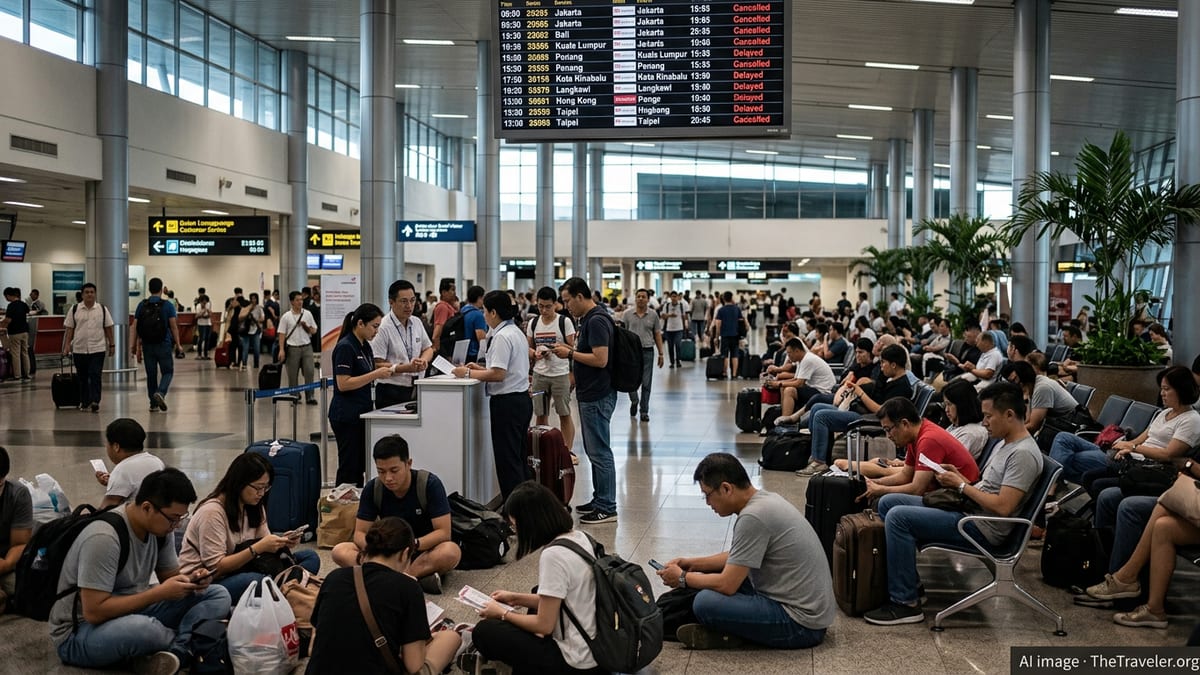
Wave of Cancellations Hits Key Asian Gateways
Recent operational data and aviation tracking platforms indicate a sharp uptick in flight disruption involving China Eastern, Batik Air and Uzbekistan Airways, focused on major hubs in China, Indonesia and Central Asia. Across their combined networks, 42 scheduled flights have been cancelled and 499 services delayed, affecting itineraries that connect Asia, the Middle East and Europe.
Shanghai, home base for China Eastern, has been among the hardest-hit hubs, with a mix of regional and long-haul departures reporting late operations and isolated cancellations. Publicly available performance statistics show elevated delay rates on several China Eastern routes, even as the carrier expands international services from the city.
In Indonesia, Batik Air’s services from Jakarta and other key airports have seen persistent schedule disruption in recent weeks. Industry-focused travel outlets have documented clusters of cancellations and several hundred delays involving Batik Air and other Indonesian carriers, underscoring ongoing operational pressures across the country’s domestic and regional network.
Uzbekistan Airways has also reported interruptions on selected routes from Tashkent, where earlier technical and airspace constraints have contributed to schedule changes and knock-on delays. While the carrier continues to open new international links, irregular operations on some services are creating additional challenges for passengers transiting Central Asia.
Passengers Stranded From the Gulf to Southeast Asia
The combined impact of 42 cancellations and 499 delays is being felt far beyond the main hubs. Connections linking the United Arab Emirates, Central Asia and Southeast Asia rely heavily on through-flights via Shanghai, Jakarta and Tashkent, meaning disruption at one end often cascades across several countries.
Travelers flying between Gulf cities and Indonesia have reported extended waits at intermediate airports, missed onward connections and last-minute rebookings when services operated by Batik Air and partner airlines are delayed or removed from the schedule. For some, overnight stays and improvised rerouting through secondary hubs have been necessary to complete journeys.
Similar patterns are emerging on routes linking the UAE and Central Asia via Tashkent, where schedule adjustments by Uzbekistan Airways and partner carriers have pushed some passengers into longer layovers. Public reports point to crowded transfer areas, pressure on customer service desks and increased reliance on airline apps and airport displays for real-time updates.
For China Eastern’s international customers, knock-on effects are particularly visible on multi-leg itineraries that include Shanghai as a transfer point. Even modest delays on feeder flights are lengthening overall journey times, and cancellations on individual sectors can force travelers to wait for the next available service on heavily booked routes.
Operational Strain Behind the Numbers
The spike in cancellations and delays comes as airlines across Asia adjust to new seasonal schedules, evolving demand patterns and lingering capacity constraints. In China, the transition to the summer and autumn flight season has seen carriers, including China Eastern, add and resume routes at a rapid pace, increasing complexity for crew and fleet planning.
In Indonesia, recent travel industry coverage highlights how domestic carriers are balancing strong passenger demand with congested airspace and busy airport infrastructure in Jakarta, Bali and other major gateways. Batik Air’s delays and suspensions in Jakarta, Surabaya and Medan, tracked over recent weeks, are part of a broader struggle to maintain on-time performance in a crowded market.
Central Asian operations face their own pressures. Uzbekistan Airways has previously adjusted schedules in response to technical issues and external factors such as temporary airspace closures on certain routes. These disruptions can trigger rolling delays as aircraft and crews are repositioned, leaving some departures from Tashkent operating significantly behind schedule.
Industry analysts note that when multiple carriers simultaneously experience elevated delay levels, the impact on passengers is multiplied. Shared use of key hubs, limited spare aircraft capacity and tightly timed connection windows mean that a cancelled or heavily delayed flight in one location can quickly ripple across several regions.
Travelers Face Missed Connections and Complex Rebookings
For affected passengers, the most immediate consequences of the 42 cancellations and 499 delays are missed connections, disrupted itineraries and uncertainty at the airport. Travelers on multi-leg journeys that combine flights from China Eastern, Batik Air and Uzbekistan Airways with partner airlines are particularly vulnerable when one segment falls out of place.
Publicly available guidance from airlines and aviation regulators typically urges travelers to monitor their flight status closely, use official mobile apps where possible and arrive at the airport well ahead of departure. In practice, however, passengers stranded in Shanghai, Jakarta, Tashkent and intermediate hubs are often left relying on check-in counters and transfer desks to secure new routings.
Some travelers have reported extended waits for rebooking on popular routes where spare seats are limited, especially on peak travel days. Others have encountered challenges coordinating separate tickets bought through different platforms, which can complicate eligibility for complimentary rebooking or assistance when delays occur outside a single booking.
Airports in the affected cities have seen surges in demand for customer service, lounge access and basic amenities as passengers wait for revised departure times. Families and business travelers alike are adjusting plans in real time, rebooking hotels, rearranging meetings and, in some cases, shortening or cancelling trips altogether.
What the Disruptions Signal for Regional Air Travel
The current wave of disruptions involving China Eastern, Batik Air and Uzbekistan Airways comes at a time when Asia’s aviation sector is expanding route networks and restoring capacity. New services such as recently launched links between East Asia and Central Asia demonstrate growing demand, but the tally of 42 cancellations and 499 delays shows how fragile on-time performance can be amid rapid growth.
Observers suggest that airlines operating complex regional and long-haul networks may need to build greater operational resilience into their schedules, including additional buffer time and reserve aircraft, to manage spikes in disruption. The experience of passengers stranded across the UAE, Indonesia, Uzbekistan and other connecting markets highlights the importance of clear communication and flexible rebooking policies.
The recent pattern of delays and cancellations is also likely to influence traveler behavior. Some passengers may choose longer layovers to reduce the risk of missed connections, while others could shift to alternative carriers or routings perceived as more reliable. Online forums already feature mixed feedback on punctuality and disruption management across several Asian airlines, reflecting heightened sensitivity to reliability as a key factor in booking decisions.
As airlines and airports refine their operations for the busy months ahead, the disruption surrounding Shanghai, Jakarta and Tashkent serves as a reminder that even modest percentages of cancelled and delayed flights can translate into thousands of affected passengers when measured across extensive regional networks.