

More news on this day
Thousands of travelers across the United States faced widespread disruptions as 721 flight cancellations and 2,801 delays rippled through major hubs including Buffalo, Miami, Nashville, New York, Pittsburgh and San Francisco, affecting operations at Republic Airways, Endeavor Air, Air Canada, Delta Air Lines and several other carriers.
Get the latest news straight to your inbox!
Major Hubs See Cascading Operational Disruptions
Publicly available tracking data shows that a wave of cancellations and delays spread across a network of key U.S. airports, with Buffalo, Miami, Nashville, New York, Pittsburgh and San Francisco among the hardest hit. The disruption translated into more than 3,500 affected flights nationwide in a single day, straining airport infrastructure and overwhelming customer service channels as travelers attempted to rebook.
The pattern of disruption was not confined to a single region. From the Northeast corridors around New York and Buffalo to the busy transcontinental links through San Francisco and the leisure and international traffic flowing through Miami and Nashville, delays in one part of the system frequently compounded issues elsewhere. As aircraft and crews missed scheduled rotations, later departures faced knock on effects even at airports that were not directly impacted by the initial problems.
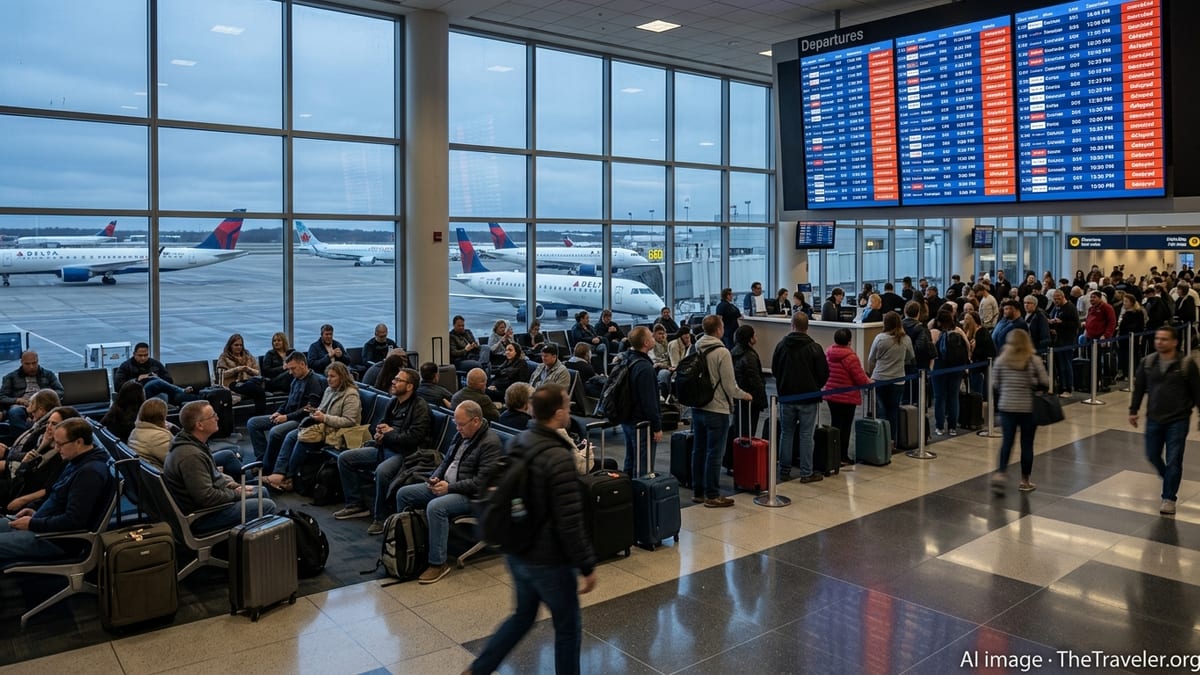
By evening, airport departure boards in several cities showed long blocks of red cancellations and extended delays, particularly on short haul and regional routes. According to published coverage and tracking platforms, some routes experienced multiple schedule changes before flights were ultimately canceled, adding to traveler frustration and increasing congestion at gate areas and rebooking counters.
Regional Partners Bear Brunt Alongside Major Carriers
The disruption was felt across a mix of mainline and regional operators. Republic Airways and Endeavor Air, which operate regional flights under contract for major U.S. carriers, reported significant schedule impacts, especially on feeder routes connecting smaller cities to large hubs. These flights play a critical role in keeping the broader network flowing, so cancellations at the regional level often translated into missed connections and broken itineraries for passengers bound for longer haul services.
Delta Air Lines and its regional partners were among the carriers experiencing substantial operational pressure, while Air Canada and other North American airlines also saw notable levels of delays and cancellations. Publicly available information indicates that the concentration of issues among regional operators can magnify the effect on travelers who rely on these shorter legs to access the main network of domestic and international flights.
Industry data from the U.S. Department of Transportation and recent performance reports show that regional carriers such as Republic Airways and Endeavor Air typically operate dense schedules with tight turnarounds. When disruptions occur, spare aircraft and crew capacity can be limited, making it more difficult to restore normal operations quickly. That dynamic appeared to be reflected in the day’s disruption, as some regional markets saw repeated schedule revisions and rolling delays.
Weather, Congestion and Network Complexity Drive Delays
While a single dominant cause was not immediately clear, recent aviation performance analyses highlight a familiar combination of contributing factors. Non extreme weather, congestion in the national airspace system, crew timing constraints and maintenance needs frequently interact in ways that turn localized problems into system wide events. Federal reporting on airline delays notes that issues categorized as national aviation system delays, such as air traffic flow management and volume related restrictions, have become a significant share of overall disruptions in recent years.
Major hubs like New York and San Francisco are especially sensitive to these pressures. Their heavy traffic volumes mean that even small reductions in capacity can quickly ripple through daily schedules, forcing airlines to delay or cancel flights as they juggle aircraft positions and crew duty limits. When those hubs are simultaneously connected to weather affected airports elsewhere, the result is often a chain reaction that reaches cities such as Buffalo, Pittsburgh, Nashville and Miami over the course of the day.
Operational data from previous disruption events indicates that once large scale delays take hold, recovery can take multiple schedule banks to stabilize. Aircraft arriving late into hubs often depart late again, and crews can time out before completing planned sequences. That pattern appeared to repeat here, with late evening departures still showing extended delays on some routes as airlines worked to get planes and crews back into position for the following morning.
Traveler Experience Marked by Long Lines and Uncertain Timelines
For travelers on the ground, the numbers translated into long lines at check in counters, rebooking desks and customer service hotlines. Reports from affected airports described crowded gate areas as passengers repeatedly checked departure screens and mobile apps for updated departure times. In some cases, flights shifted from delay to cancellation after several hours, prompting renewed searches for alternative options and overnight accommodation.
Public posts on social platforms highlighted cases of travelers missing onward connections at hubs such as New York and Miami after delays on regional links from cities including Buffalo, Pittsburgh and Nashville. Others reported arriving hours late into San Francisco after aircraft repositioning and crew scheduling challenges pushed back departure times from earlier points in the network.
Consumer guidance from aviation regulators and passenger rights organizations emphasizes the importance of documenting disruption details, monitoring airline notifications and understanding fare rules when irregular operations occur. During large events such as this, airlines may issue travel waivers that allow passengers to rebook without change fees within defined date and routing windows, although specific options can vary by carrier and ticket type.
Airlines Focus on Recovery and Upcoming Travel Peaks
As the day progressed, airline operations teams shifted attention from real time troubleshooting to broader recovery planning. Publicly available operational summaries and past disruption patterns suggest that carriers typically prioritize restoring key trunk routes and early morning bank structures in order to stabilize the broader network. That may mean additional isolated cancellations as airlines reposition aircraft overnight, but it also aims to protect the greatest number of travelers in the following day’s schedule.
The timing of this disruption comes at a period when U.S. air travel demand remains strong, with many airports reporting passenger volumes at or above pre pandemic levels on peak days. That backdrop leaves limited slack in the system when irregular operations strike. Industry analysts note that staffing, maintenance capacity and gate availability remain tight at many hubs, increasing the risk that future weather or airspace constraints could again lead to elevated cancellation and delay counts.
Travel planners and frequent flyers observing the latest disruptions are likely to factor recent performance trends into their decisions about connection times, airport choices and buffer days around important events. While airlines continue to invest in technology, fleet renewal and schedule adjustments intended to improve reliability, the scale of the latest wave of cancellations and delays underlines the ongoing vulnerability of the complex U.S. air travel network to cascading operational shocks.