

More news on this day
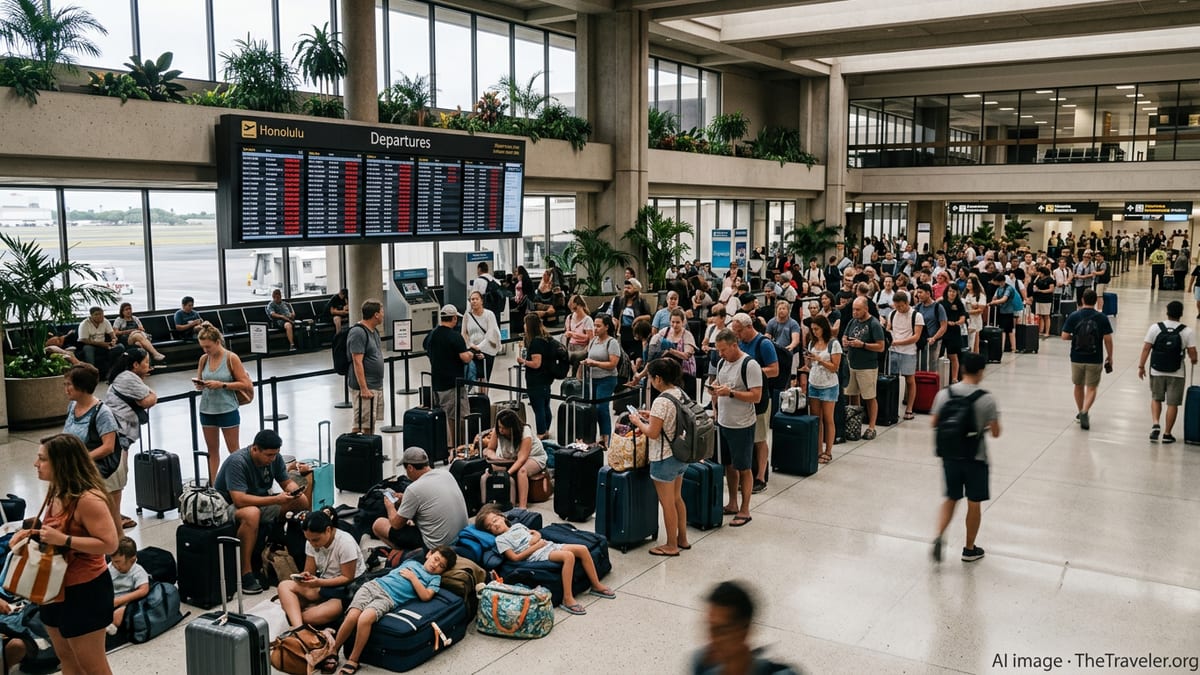
Operations at Daniel K. Inouye International Airport in Honolulu have been severely disrupted in recent days, as widespread flight cancellations and delays linked to severe weather across the Hawaiian Islands leave travelers stranded and raise new concerns about the resilience of one of the world’s most tourism-dependent air hubs.
Get the latest news straight to your inbox!
Severe Weather Triggers a Chain Reaction of Cancellations
Publicly available information from airline advisories and travel waivers indicates that a powerful spell of unsettled weather over the Hawaiian Islands in mid-March has rippled across air schedules, triggering hundreds of delays and cancellations on routes into and out of Honolulu. United Airlines, among others, issued a severe weather travel waiver for Hawaii covering flights between March 12 and March 22, signaling the scale of anticipated disruption to the network serving Daniel K. Inouye International Airport.
While Honolulu itself has not borne the brunt of the worst conditions every day, the island-hopping nature of Hawaii’s air system means that storms, high winds, and operational constraints at one airport can quickly spill over to others. Aircraft and crews positioned in Maui, Kauai, or on the mainland have struggled to maintain tight schedules, resulting in knock-on effects that cascade into Honolulu. Travelers connecting through the state’s primary international gateway have increasingly encountered last‑minute schedule changes and prolonged delays.
Social media posts and traveler reports describe long stretches waiting on tarmacs for weather windows, repeated gate changes, and abrupt cancellations announced late in the evening when flight crews reach maximum duty limits. Those operational limits, while intended to protect safety, have compounded the chaos once weather-related disruptions pushed schedules beyond their margins.
Travelers Face Long Lines, Uncertainty, and Packed Terminals
Accounts shared by passengers over the weekend depict overwhelmed check‑in counters, backed‑up baggage drops, and security lines snaking through Honolulu’s aging concourses. Many travelers arriving to find their flights delayed or canceled have been forced to rebook days later, scramble for scarce hotel rooms, or attempt circuitous routings through multiple mainland hubs to reach their destinations.
Parents traveling with young children, vacationers at the end of long‑planned trips, and residents trying to return to work on the mainland describe spending hours refreshing airline apps, seeking help from overextended customer‑service desks, and searching for any available seat out of the islands. Some report being rebooked via distant connection points such as West Coast hubs, adding many hours and multiple takeoffs and landings to journeys that were originally planned as nonstop.
The sense of uncertainty has been compounded by limited real‑time information. Passengers describe departure boards that lag behind airline app updates, conflicting notifications about departure times, and sudden boarding calls followed by new holds for aircraft inspections or weather checks. For visitors unfamiliar with Honolulu’s terminal layout, the confusion of repeated gate changes and rerouted flights has added to the stress of already difficult travel days.
Airlines Struggle With Crews, Aircraft Positioning, and Weather Windows
According to airline operations updates and public travel waivers, carriers are contending with a complex mix of constraints that extend far beyond a single storm cell over Honolulu. Aircraft and flight crews arriving late from weather‑hit mainland cities or other Hawaiian islands frequently miss the narrow connection windows that keep the system running smoothly. Once a single aircraft falls behind schedule, every subsequent leg linked to that plane is vulnerable to delay.
Staffing and crew‑duty rules have emerged as another critical pressure point. With weather forcing longer taxi times, holding patterns, and ground stops, crews can quickly time out under federal safety regulations. When that happens late in the day, airlines are often left with a fully boarded aircraft and no legally available crew to operate it, leading to last‑minute cancellations that strand travelers in Honolulu overnight.
Maintenance checks triggered by turbulence, hail, or hard landings elsewhere in the network also push some aircraft out of service until inspections are completed. While such precautions are standard safety practice, they reduce already tight fleet availability during peak travel periods. Together, these factors have created a brittle system in which relatively localized storms can produce days of rolling disruption centered on Hawaii’s primary gateway.
Hawaii’s Tourism Engine Feels the Strain
The timing of the disruption could not be worse for Hawaii’s visitor economy, which relies heavily on predictable air access through Daniel K. Inouye International Airport. Tourism, a cornerstone of the state’s GDP and employment, depends on smooth arrivals and departures for mainland and international travelers heading to Oahu and onward to the neighbor islands.
Local tourism analysts note that repeated episodes of large‑scale cancellations have the potential to erode traveler confidence, particularly among first‑time visitors and long‑haul international guests who build itineraries around tight schedules and prepaid accommodations. When flights are canceled or severely delayed at the end of a stay, visitors may incur additional hotel costs, lose nonrefundable bookings, or face complicated rebooking journeys to get home.
Industry observers point out that, while weather is beyond the control of airlines and airport operators, the broader resilience of the system is a matter of planning and investment. Questions are likely to be raised about whether contingency staffing, spare aircraft positioning, and passenger‑support infrastructure at Honolulu are sufficient for an era of more volatile weather and increasingly busy peak travel seasons.
Calls for Better Communication and Stronger Contingency Planning
Travel‑advocacy voices and frequent flyers tracking the disruption argue that clearer communication and more robust contingency planning could help ease the shock for passengers caught in large‑scale meltdowns. Many travelers impacted by the latest wave of cancellations in Honolulu report difficulty accessing timely information about rebooking options, compensation policies, or available accommodation, particularly late at night once customer‑service counters close or phone queues fill up.
Observers suggest that airlines operating large volumes of flights through Daniel K. Inouye International Airport may need to refine how they push real‑time updates across apps, email, and terminal displays, and how they coordinate with airport managers when mass disruptions occur. Additional staffed help desks during known severe‑weather periods, clearer guidance on passenger rights, and more visible triage support for travelers with urgent needs are among the measures being discussed within the wider travel community.
For now, travelers with upcoming itineraries to or through Honolulu are being advised, in publicly available advisories and consumer guidance, to monitor their flight status closely, allow extra time for connections, and consider flexible booking options where possible. As airlines work to restore normal operations and clear backlogs, the recent turmoil at Daniel K. Inouye International Airport is serving as a stark reminder of how quickly Hawaii’s aviation lifeline can be tested, with consequences that reach far beyond the terminal gates.