

More news on this day
Travelers at Toronto Pearson International Airport are facing major disruptions as at least 46 flights have been suspended and more than 400 delayed, disrupting operations for Air Canada, Jazz, WestJet, Porter Airlines, Icelandair and other carriers and affecting connections to cities including Ottawa, New York, Quebec City, Montreal and Halifax.
Get the latest news straight to your inbox!
Wide Ripple Effect Across Domestic and Transborder Routes
According to publicly available flight-tracking data and airport operations summaries, the disruption at Toronto Pearson is concentrated across high-frequency domestic and transborder corridors. Short-haul routes to Ottawa, Montreal, Quebec City and Halifax have seen clusters of cancellations and rolling delays, while heavily traveled links to New York area airports are also experiencing extended wait times and schedule changes.
Several reports indicate that the majority of suspended services involve narrow-body aircraft operating shuttle-style frequencies, meaning each cancellation can remove a significant number of daily seats from the network. This has intensified the impact on business travelers and connecting passengers, particularly those relying on same-day returns or tight onward connections.
Transborder operations to New York have been especially sensitive, with delays on both morning and evening bank flights reported by multiple carriers. Passengers connecting onward to Europe and other long-haul destinations from hubs beyond New York are experiencing missed connections and forced overnight stays.
The knock-on effects are not limited to routes directly served from Toronto. As aircraft and crews are displaced, schedules in cities such as Halifax and Quebec City are showing secondary delays, even on flights that do not pass through Toronto, as airlines attempt to rebalance their networks.
Multiple Airlines Struggle to Stabilize Schedules
Air Canada and its regional partner Jazz, which together operate a large share of Pearson’s daily departures, appear to be among the hardest hit. Publicly accessible live data show a concentration of cancellations and late departures on Air Canada and Air Canada Express services, especially on high-density routes to Montreal, Ottawa and key U.S. business markets.
WestJet services out of Toronto have also been affected, with several flights suspended and others experiencing long delays as the carrier manages aircraft rotations and crew availability. WestJet’s point-to-point routes from Pearson to western Canada and select leisure destinations are showing rolling schedule revisions as the day progresses.
Porter Airlines, which has expanded its presence at Pearson in recent years, is facing its own operational pressures. Tracking data and passenger accounts point to late turns and gate holds on multiple Porter departures, particularly on routes linking Toronto with regional centers and eastern Canadian cities, compounding congestion during peak periods.
Icelandair and a handful of other international carriers are seeing delayed departures from Toronto as the local ground and air traffic constraints push back pushback and taxi times. Although long-haul flights tend to be prioritized once aircraft and crews are available, any delay at departure can result in missed onward connections for passengers in Europe and beyond.
Operational and Weather Factors Combine
Reports from aviation analytics platforms and recent Canadian transportation updates suggest that the current disruption at Toronto Pearson comes on the heels of a challenging winter period that has already strained airline reliability. Heavy snow events and episodes of severe cold across southern Ontario earlier in the season led to large numbers of cancellations and delays, and recovery from those disruptions has exposed vulnerabilities in staffing, de-icing capacity and aircraft availability.
On days of concentrated disruption, even relatively modest new weather systems can trigger extended ground delays, as de-icing queues build and runway capacity is reduced. Toronto Pearson’s role as a major hub means that minor timing issues early in the day can quickly escalate, especially when airlines are operating near their limit in terms of spare aircraft and reserve crews.
Industry observers note that carriers serving Pearson have also been managing other structural constraints, including maintenance-related fleet groundings and high utilization of popular narrow-body aircraft. When one or more aircraft go out of service unexpectedly, there is limited slack to cover additional flights, so individual cancellations can cascade into wider schedule cuts.
At the same time, strong demand for both domestic and transborder travel has kept load factors high, leaving fewer empty seats on alternative departures. This makes it harder for airlines to re-accommodate disrupted passengers quickly, particularly on peak business and holiday travel days.
Passenger Experience Marked by Long Queues and Missed Connections
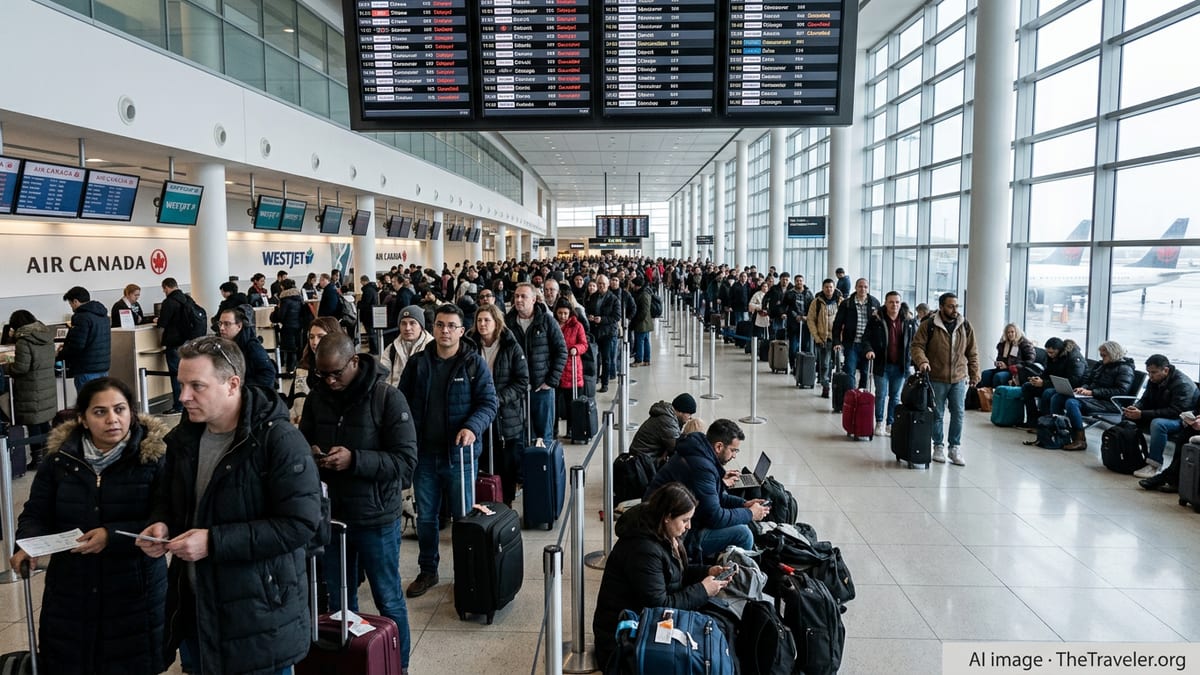
Travelers at Toronto Pearson have reported extensive queues at check-in counters, self-service kiosks and customer service desks as they seek rebooking options or clarification on departure times. Terminal display boards show clusters of delayed flights in successive time bands, reflecting rolling knock-on effects throughout the day.
For passengers connecting through Toronto from smaller Canadian cities, disruptions are particularly stressful. When an inbound regional flight arrives late, onward departures to destinations such as New York or Halifax may already be boarding or closed, forcing travelers to wait several hours for the next available service or, in some cases, to stay overnight.
Families and leisure travelers heading to or from vacation destinations via Toronto are also feeling the impact. With aircraft and crews in the wrong place, some flights have been consolidated, while others have been removed from the schedule altogether. This can mean longer travel days, extended time in crowded terminals and additional expenses for meals and accommodation when delays stretch into the night.
Publicly available guidance from airlines and airport information channels continues to recommend that passengers monitor their flight status frequently and allow additional time at the airport. Same-day itinerary changes and rebooking options vary by carrier and fare type, adding another layer of complexity for affected travelers trying to salvage their plans.
Ongoing Recovery Efforts and What Travelers Can Expect Next
Based on current patterns in published flight data, the disruption at Toronto Pearson is likely to produce residual delays beyond the initial day of cancellations. Aircraft and crew rotations can take several days to fully normalize, particularly for carriers operating complex domestic and transborder networks from the airport.
Travel analysts point out that once a large number of flights is removed from the schedule, airlines often prioritize restoring core business and hub-to-hub routes first, followed by thinner regional and leisure markets. Travelers between Toronto and major centers such as Montreal, Ottawa, Halifax and New York may see service stabilize sooner, while those on secondary routes may continue to encounter irregular schedules or reduced frequency.
Airlines operating at Pearson are expected to adjust their operations in the short term by building longer scheduled ground times between flights, repositioning aircraft from less affected bases and increasing the use of flexible rebooking policies on select routes. These steps can help absorb further shocks but may also lead to later scheduled departure and arrival times on some services as carriers err on the side of caution.
For the immediate future, passengers planning to travel through Toronto Pearson are likely to face a more unpredictable experience than usual. While overall operations are expected to gradually recover as schedules are reset, the combination of recent weather, operational strain and high travel demand continues to place pressure on one of North America’s busiest aviation hubs.