

More news on this day
Travellers across Canada and the northeastern United States faced widespread disruption at Toronto Pearson International Airport on Friday as a wave of flight suspensions and delays affected major carriers including Air Canada, Jazz, WestJet, Porter Airlines, Icelandair and others, with around 46 flights reportedly cancelled and more than 400 services delayed on routes linking cities such as Ottawa, Montreal, Quebec City, Halifax and New York.
Get the latest news straight to your inbox!
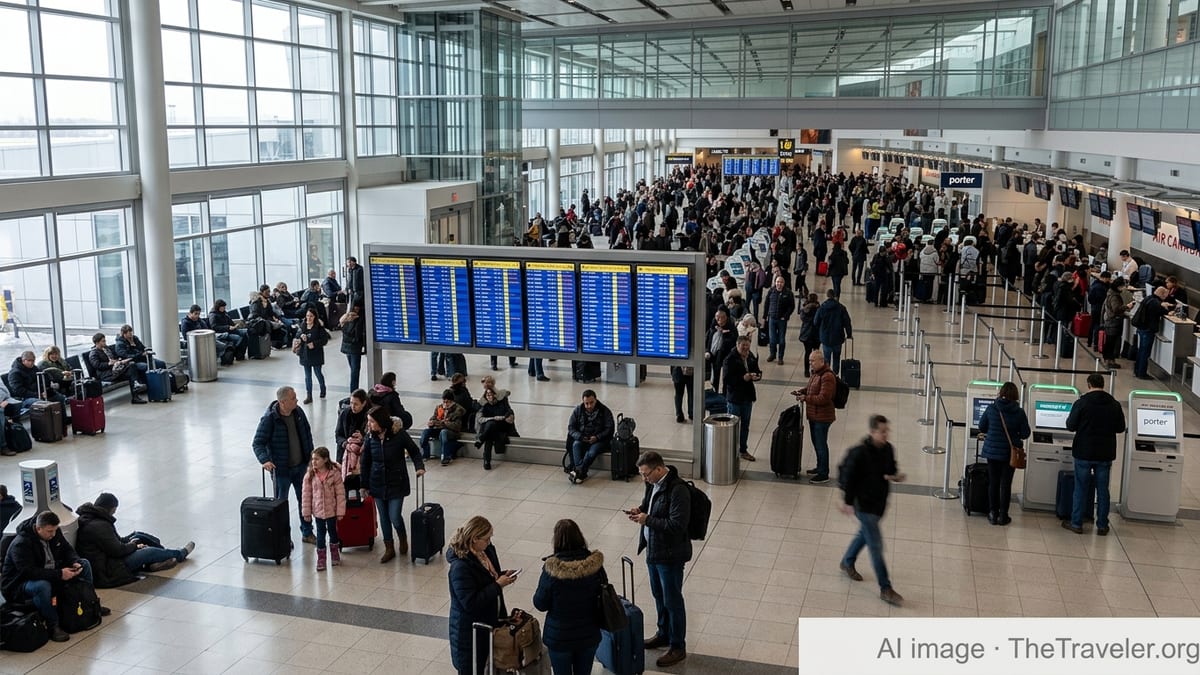
Operations at Canada’s Busiest Hub Strain Under Heavy Disruption
Publicly available flight-tracking data for Toronto Pearson on Friday shows an elevated number of cancellations and late departures compared with a typical day, with dozens of services scrubbed and hundreds running behind schedule. While precise tallies fluctuate throughout the day as schedules are updated, industry dashboards indicate that the cumulative impact has reached the equivalent of roughly 46 cancelled flights and well over 400 delays across domestic and transborder routes.
The disruption is concentrated at Toronto Pearson, Canada’s largest air hub by passenger volume, making the knock-on effects particularly acute for travellers using the airport as a connection point. Even when flights are able to depart, extended turnaround times, crew scheduling limits and residual congestion are contributing to rolling delays across multiple airlines.
According to published coverage and operational data, the pattern reflects a broader trend seen at Pearson during severe weather and high-demand periods in recent seasons, where bottlenecks in ground handling, de-icing and air traffic management compound into system-wide slowdowns. On peak disruption days, the airport has previously recorded several hundred delayed departures and arrivals, leaving aircraft and crews out of position for subsequent rotations.
Multiple Carriers Hit, From Flagships to Regional and Transatlantic
Air Canada and its regional partner Jazz Aviation account for a substantial share of the affected schedule, reflecting their dominant presence on key routes into and out of Toronto Pearson. Public schedules show cancellations and late operations on core domestic links to Ottawa, Montreal and Halifax, as well as on select transborder services to New York area airports. Delays on these high-frequency routes can quickly cascade, as aircraft cycle through multiple cities over the course of the day.
WestJet and Porter Airlines, which have both expanded operations at Pearson in recent years, are also experiencing elevated irregular operations. Porter’s growing fleet out of Toronto, including both regional and longer-haul services, means that delays at the hub can ripple to secondary markets in Atlantic Canada and Quebec. WestJet’s flights linking Toronto to western Canada and sun destinations are similarly exposed when congestion and schedule changes accumulate.
International services are not immune. Icelandair and other foreign carriers serving Toronto have reported schedule adjustments and slower-than-normal turnarounds, particularly on overnight and early-morning departures that rely on efficient ground operations and predictable sequencing. When those assumptions break down, even on-time arrivals can face extended waits for gates, baggage handling and servicing before passengers can disembark or connecting flights can be boarded.
Key Routes Affected: Ottawa, Montreal, Halifax, New York and Beyond
The disruption is being felt most sharply on short- and medium-haul routes linking Toronto with other major Canadian and northeastern U.S. cities. Flights to Ottawa, Montreal and Quebec City, which are typically served by a mix of mainline jets and regional aircraft, show an outsized share of late departures and arrivals. For travellers on these routes, even relatively modest delays can lead to missed connections onto longer-haul services to western Canada, Europe or the United States.
Services to and from Halifax and other Atlantic Canadian cities also appear prominently in delay statistics, reflecting both weather sensitivity and the limited number of daily flights on some routes. When a single rotation is cancelled or significantly delayed, travellers may face long rebooking horizons and fewer alternative options, particularly during busy travel periods.
Transborder links between Toronto and the New York region are experiencing heightened congestion as well. These flights have historically been vulnerable to combined pressures from Canadian and U.S. air traffic control constraints, security screening volumes and weather-related programs. When Pearson experiences a sustained period of disruption, New York flights can be among the first to show stacking delays due to slot controls and tight turnaround schedules.
Weather, Ground Capacity and Network Knock-On Effects
Recent weather systems across southern Ontario have added another layer of complexity to operations at Toronto Pearson. Snow, low visibility and intermittent freezing conditions typically trigger enhanced de-icing requirements and more conservative spacing between aircraft movements, which in turn reduce the number of departures and arrivals the airport can safely handle per hour. Published meteorological data and transport analyses for this winter period point to several episodes of heavy snowfall and prolonged low temperatures across the region, conditions that historically correlate with spikes in cancellations and extended delay times.
When capacity at a major hub is temporarily reduced, airlines face difficult decisions about which flights to operate and which to suspend. Industry practice generally prioritizes long-haul and high-demand services while trimming or consolidating some shorter domestic sectors, which can help explain why routes between Toronto and nearby Canadian cities or U.S. gateways often see a higher proportion of cancellations on disruption days.
The impact is magnified by the interconnected nature of airline networks. A delayed aircraft arriving in Toronto from one city may go on to operate multiple additional segments, meaning a single operational issue can affect passengers across several provinces or states. Crew duty-time limitations add further constraints: when flight and ground delays push pilots and cabin crew beyond regulated working limits, airlines may be required to cancel or significantly reschedule services even after weather conditions have improved.
What Travellers Are Experiencing on the Ground
For passengers at Toronto Pearson and at outstations across the network, the operational picture translates into long queues, extended waits at departure gates and repeated schedule revisions. Recent traveller accounts shared on public forums during similar disruption periods at Pearson describe waits of several hours for rebooking, crowded customer service desks and difficulty securing hotel rooms near the airport once late-night cancellations accumulate.
Airlines have been directing customers to digital tools and mobile applications to manage changes where possible, but system strain and rapidly evolving schedules can make it challenging for travellers to secure seats on the next available flights. In cases involving tight connections, publicly available guidance often advises passengers to proactively seek rebooking options rather than waiting for automatic reaccommodation, particularly when major weather systems or flow-control measures are in effect.
Consumer advocates note that while Canadian and international passenger protection frameworks provide certain entitlements in the event of controllable delays and cancellations, the specific remedies available can differ depending on the cause of disruption, the airline involved and the jurisdiction governing the itinerary. Travellers affected by the latest wave of suspensions and delays at Toronto Pearson are being encouraged, in publicly accessible advisories, to document their expenses and retain all communications with carriers as they navigate claims and potential compensation processes.