

More news on this day
Hundreds of passengers across Australia and New Zealand faced major travel disruptions as at least 521 flights were delayed and 46 services cancelled across key hubs including Sydney, Melbourne and Auckland, affecting operations by Jetstar, Qantas, Alliance Airlines, Network Aviation, Air New Zealand and several other carriers.
Get the latest news straight to your inbox!
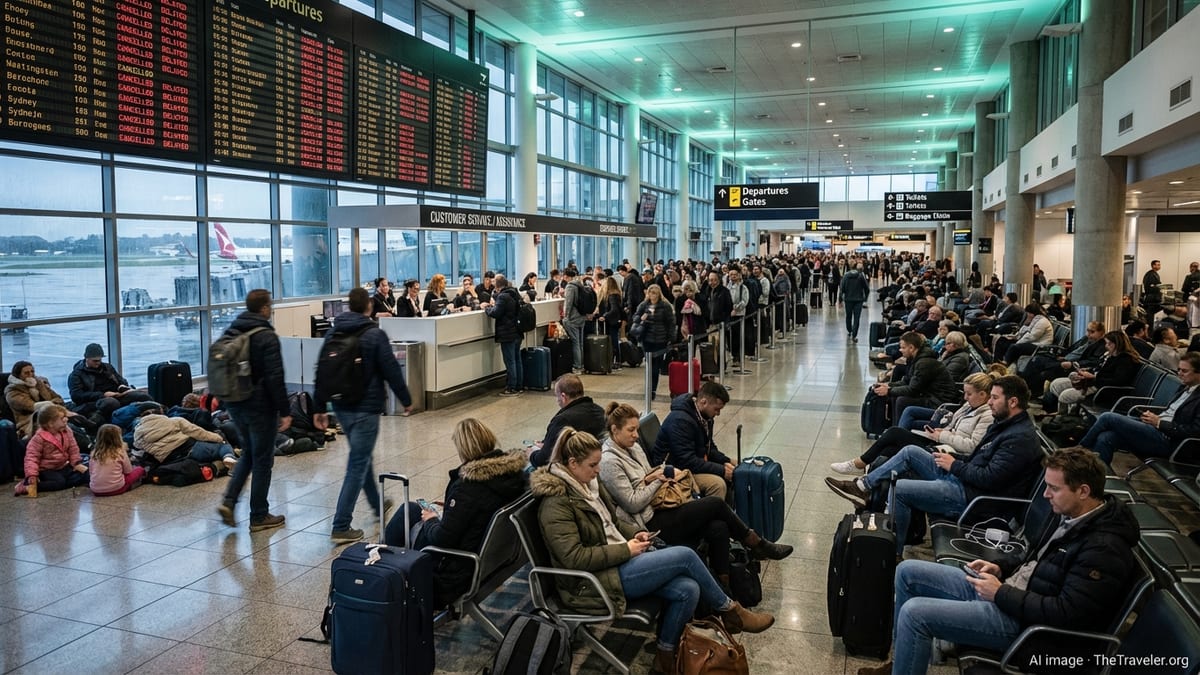
Widespread Disruptions Across Major Trans-Tasman Hubs
The latest operational data and published coverage indicate that airports in Sydney, Melbourne and Auckland have borne the brunt of the disruption, with significant knock-on effects to Brisbane, Perth and other regional centres. The concentration of delays and cancellations on some of the busiest domestic and trans-Tasman corridors left many passengers facing missed connections, rebookings and extended waits in crowded terminals.
Reports from aviation tracking platforms and industry-focused outlets show that delayed departures and arrivals spanned early-morning banked services through to late evening, compressing available capacity throughout the day. With Sydney and Melbourne functioning as primary domestic and international hubs, disruptions on trunk routes such as Sydney–Melbourne and Sydney–Brisbane quickly cascaded into secondary routes serving New Zealand and regional Australia.
Publicly available airport operations boards and performance snapshots suggest that delays were not limited to any single airline or alliance, but instead reflected a system-wide slowdown that caught both leisure and business travellers. Some passengers faced rolling departure estimates as aircraft and crews were repositioned, while others were advised to accept alternative routings or overnight stays.
Multiple Airlines Affected, From Mainline to Regional Operators
Jetstar and Qantas, along with their associated regional and charter partners, appear prominently in the disruption tallies, reflecting their large combined share of the Australian domestic market. Network Aviation and Alliance Airlines, which operate a mix of contracted and charter services often marketed under the QantasLink brand, were also affected, contributing to cancellations and delays on thinner regional routes feeding into major hubs.
Across the Tasman, Air New Zealand services to and from Australia, including routes linking Auckland, Christchurch and Wellington with Sydney and Melbourne, experienced knock-on impacts as schedules tightened. Publicly accessible flight-status tools showed a mix of late-running departures and arrivals, aircraft swaps and, in some instances, cancellations that required passengers to be re-accommodated on later flights.
Other carriers operating in and out of these gateways, including low-cost and full-service competitors, also reported delays, underscoring the interconnected nature of aviation networks in the region. When disruptions occur at large hubs, even airlines with smaller footprints on a particular route can experience secondary effects as air traffic control restrictions, ground handling bottlenecks or limited gate availability slow down turnaround times.
Operational and Capacity Pressures Behind the Numbers
While detailed causal breakdowns for each of the 521 delays and 46 cancellations are not yet consolidated in a single public dataset, a combination of factors commonly cited in regional performance statistics appears to be in play. Recent on-time performance reports for the Australia and New Zealand markets highlight ongoing sensitivity to staffing levels in ground handling and air traffic management, as well as the impact of congested peak periods at major hubs.
Weather continues to be a recurring challenge on both sides of the Tasman, with fog, low cloud and strong winds periodically affecting operations in Sydney, Melbourne, Auckland and Christchurch. Historical monthly statistics for these airports show that even short-lived weather events can trigger flow-control restrictions that reduce arrival and departure rates, leading to extended queues both in the air and on the taxiways.
Industry commentary has also pointed to fleet and maintenance constraints as airlines work to balance high demand with finite aircraft availability. As carriers such as Qantas, Jetstar and Air New Zealand phase in new aircraft types and retire older jets, temporary capacity gaps can magnify the impact of any unplanned technical issues. When spare aircraft and crew are limited, a single disruption early in the day can spread across multiple flights and routes.
Passengers Confront Long Queues, Missed Connections and Rebooking Challenges
Travellers passing through Sydney, Melbourne and Auckland during the disruption period reported lengthy check-in and security queues, as well as crowded gate areas where multiple delayed services competed for space and resources. Social media posts and traveller forums described families waiting hours for updated departure times while seeking clarity on their options for rebooking and compensation.
Publicly available guidance from consumer agencies and airline conditions of carriage indicates that passengers affected by significant delays or cancellations may be entitled to remedies that can include rebooking on the next available flight, meal vouchers or accommodation, depending on the cause of disruption and applicable regulations. However, implementation often varies by carrier and route, leaving some travellers uncertain about what assistance they can expect.
For those on multi-sector itineraries, especially long-haul journeys connecting through Australia or New Zealand, missed onward connections created additional complexity. Some passengers faced rerouting via alternative hubs or overnight layovers as airlines worked within limited spare capacity. Travel advisers note that tight connection windows can be particularly vulnerable in such circumstances, and that travel insurance coverage for delays can help offset unexpected costs.
Airports and Airlines Under Pressure Ahead of Busy Travel Periods
The scale of the latest disruption episode underscores the pressure facing aviation networks in Australia and New Zealand as they prepare for upcoming peak travel periods. Demand for domestic and trans-Tasman travel has remained strong, supported by tourism flows, visiting friends and relatives traffic, and robust business travel between key cities.
Operational data released over recent months shows that on-time performance across several major routes remains below historic highs, even as airlines continue to rebuild capacity. Industry analysts have noted that any combination of adverse weather, staffing shortages or technical issues can quickly absorb remaining resilience in the system, particularly across networks that run dense schedules with relatively tight aircraft utilisation.
Published commentary from aviation observers suggests a renewed focus on infrastructure and staffing resilience at major hubs, as well as clearer communication with passengers when large-scale disruptions occur. For travellers planning upcoming trips through Sydney, Melbourne, Auckland or other affected airports, monitoring flight status closely, allowing extra time for connections and understanding their rights under airline policies may help reduce the impact of any future operational shocks.