

More news on this day
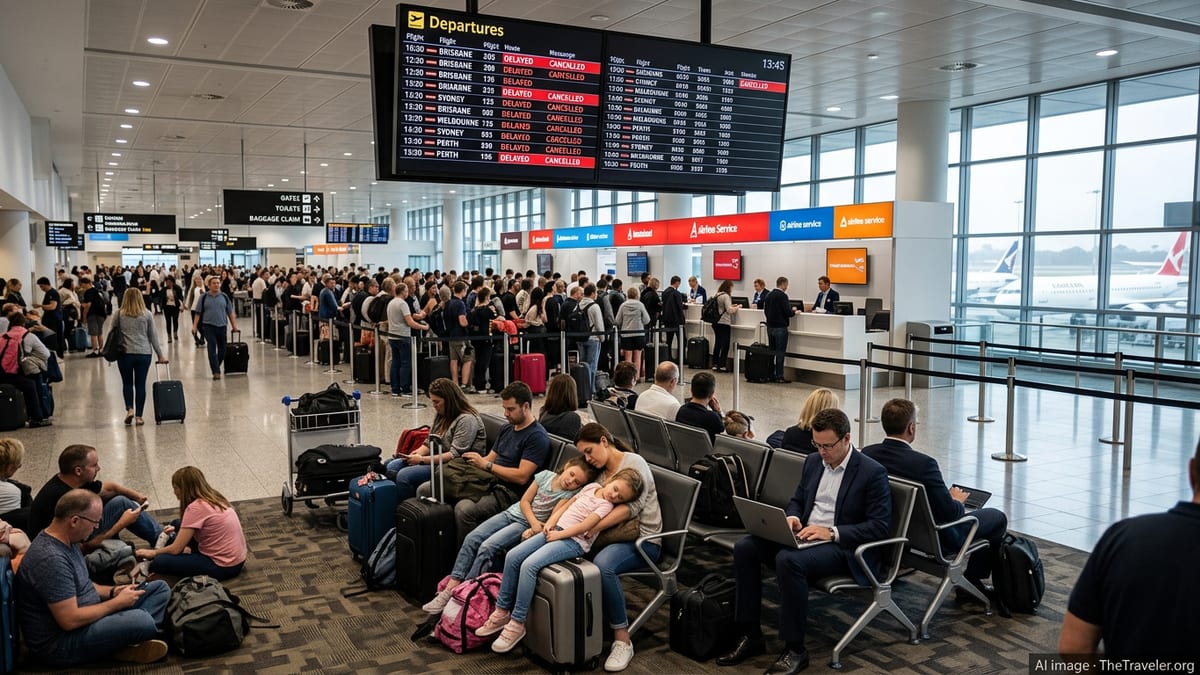
Hundreds of passengers were left stranded or facing severe disruption on Monday as Qantas, Virgin Australia and Jetstar recorded 584 flight delays and 31 cancellations across Australia’s busiest routes, snarling traffic at major hubs in Brisbane, Sydney, Melbourne and Perth.
Major Hubs Grapple With Rolling Disruptions
The latest wave of operational problems rippled through Australia’s east and west coast gateways from the early morning peak, with departure boards at Brisbane, Sydney, Melbourne and Perth increasingly dominated by “delayed” notices. By late afternoon, internal tallies across the three carriers showed 584 scheduled services arriving or departing behind time and 31 flights cancelled outright, leaving aircraft out of position and crews struggling to recover schedules.
While delays of 15 to 30 minutes are common across the domestic network, many services were running more than an hour late, forcing passengers to miss connections and rebook onto later flights. At Sydney and Melbourne, long lines quickly formed at customer service desks as travellers sought meal vouchers, accommodation and alternative routings to reach destinations including Adelaide, Canberra, Hobart and regional Queensland.
Brisbane and Perth were not spared, with knock-on delays spreading through transcontinental services linking the east coast with Western Australia. Frequent flyers reported crowded gate areas and limited information about revised boarding times, compounding frustration for those already dealing with school holiday crowds and higher-than-usual load factors.
Airport operations teams worked to reassign gates and manage congestion on taxiways as carriers juggled aircraft rotations, but high utilisation across the domestic fleet meant there was little slack to absorb disruption. Ground handlers and security screening lanes came under additional strain as surges of delayed passengers converged at similar times.
Passengers Face Long Queues, Missed Connections
For many travellers, the operational statistics translated into hours of uncertainty. Families attempting to begin holidays, business travellers heading to same-day meetings and fly-in fly-out workers bound for mining regions all found themselves stuck in terminal holding patterns, frequently refreshing airline apps and departure boards for updates.
At Sydney Airport, some passengers reported queueing for more than an hour to speak with airline staff about missed connections to smaller centres such as Launceston, Coffs Harbour and Townsville, where limited daily services meant rebooking options were scarce. In Melbourne, travellers bound for Perth and Darwin described last-minute gate changes and repeated boarding delays that stretched across much of the day.
Stranded passengers shared accounts of children sleeping on carry-on bags, queues snaking through food courts and difficulty finding available power outlets to keep phones charged while waiting. Others expressed concern about elderly or mobility-impaired travellers navigating crowded departure halls with limited seating and sporadic updates over public address systems.
Although most delays eventually resulted in flights operating, the cumulative effect across the network left some customers facing overnight stays and unplanned hotel costs. Travel agents reported a spike in calls from clients seeking to rebook itineraries away from the most heavily affected peak periods and routes.
Airlines Cite Operational Pressures and Capacity Constraints
Qantas, Virgin Australia and Jetstar have been operating against a backdrop of persistent strain on domestic aviation, including tight aircraft availability, maintenance backlogs and chronic staffing challenges across engineering, cabin crew and ground operations. Industry monitoring in recent months has highlighted cancellation and delay rates above long-term historical averages on major city pairs, particularly along the busy Sydney–Melbourne–Brisbane triangle.
Carriers have pointed to a combination of factors behind repeated disruption episodes, including air traffic control staffing issues, weather systems moving along the east coast and congestion during peak morning and evening banks. When a single weather cell or airspace restriction slows movements into Sydney or Melbourne, the resulting flow-on effects can reverberate through Brisbane and Perth for much of the day.
Analysts note that while cancellation rates have eased from the worst peaks seen earlier in the decade, airlines are still running schedules that leave little margin for error. High load factors and limited spare aircraft mean that any extended delay can quickly cascade into missed rotations, affecting multiple services and airports before operations can be fully recovered.
Industry observers say the current bout of disruption will likely renew pressure on airlines to build more resilience into their schedules, either by adding buffer time between turns, investing in additional spare capacity or adjusting frequencies on the most delay-prone routes. However, such changes can be difficult to implement when demand remains strong and carriers are focused on maintaining market share.
Advice for Affected and Upcoming Travelers
With residual delays expected to linger into subsequent days as airlines work to reposition aircraft and crews, passengers with upcoming bookings on Qantas, Virgin Australia and Jetstar are being urged to monitor their flight status closely. Travel advisers recommend checking airline apps and text or email notifications regularly in the 24 hours before departure and again on the way to the airport.
Travellers connecting through Brisbane, Sydney, Melbourne or Perth are being encouraged to allow additional buffer time, particularly for itineraries involving separate tickets or tight domestic-to-international connections. Where possible, passengers are also advised to travel with essential medication, a change of clothes and basic toiletries in carry-on baggage in case of extended delays or overnight disruptions.
Consumer advocates say passengers should familiarise themselves with each carrier’s disruption and compensation policies, including entitlements to meal vouchers, accommodation and rebooking options when delays or cancellations are within the airline’s control. They also recommend keeping receipts for any out-of-pocket expenses incurred while stranded, as some costs may be recoverable through travel insurance or post-travel claims processes.
As Australia’s domestic aviation network continues to operate under sustained pressure, regular travellers are increasingly building contingency plans into their itineraries, from choosing earlier flights in the day to avoiding the tightest connections on delay-prone routes. For many of those caught up in the latest disruption, however, the priority remains simple: securing a seat on a departing aircraft and finally getting airborne.