

More news on this day
Hundreds of passengers were left stranded across Japan and South Korea after a fresh wave of disruption led to 538 flight delays and 55 cancellations on Japan Airlines, All Nippon Airways, Korean Air and Jeju Air, snarling air travel through major hubs including Tokyo, Sapporo, Fukuoka, Kushiro and Seoul.
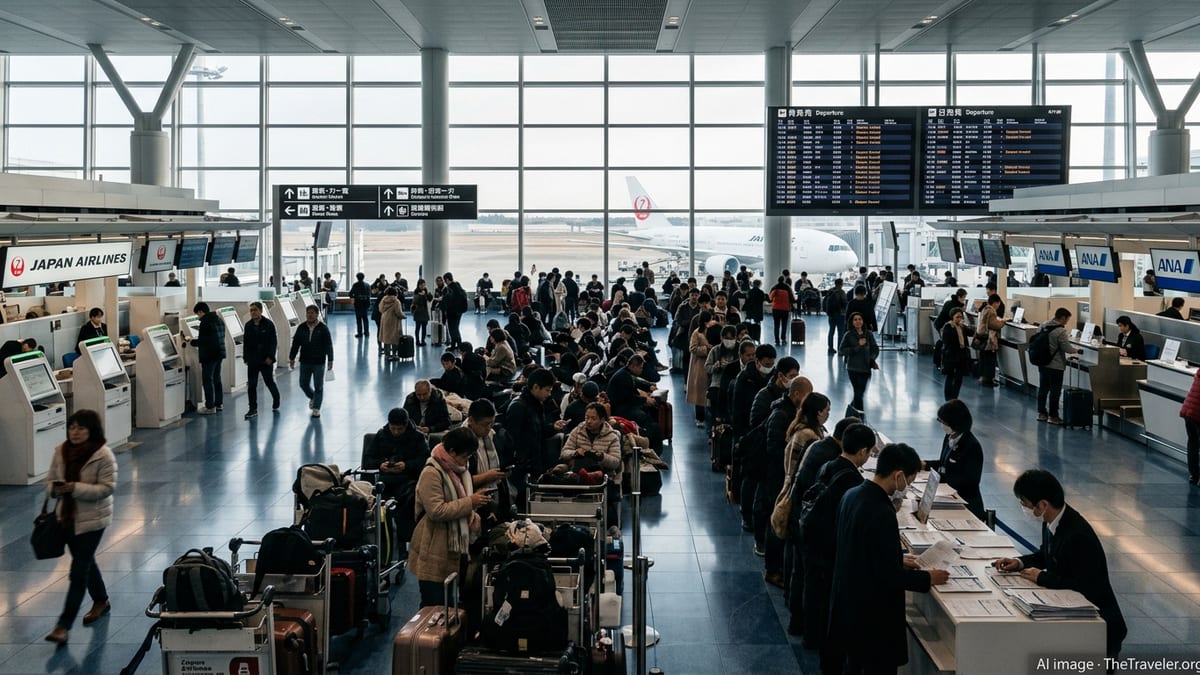
Storm Systems and Operational Strains Hit Key Northeast Asia Hubs
The latest disruption comes as late-winter weather systems and strong winds sweep across northern Japan and Hokkaido, prompting airlines to trim schedules and impose tighter operational limits. Airlines have warned that poor visibility and gusting crosswinds around Sapporo’s New Chitose Airport and Kushiro Airport are particularly challenging for maintaining on-time operations.
Japan’s two largest carriers, Japan Airlines (JAL) and All Nippon Airways (ANA), have both reported elevated delay levels at Tokyo’s Haneda and Narita airports, as aircraft and crews cycle in and out of weather-impacted airports in Hokkaido and northern Honshu. Downstream effects are being felt in Fukuoka in Kyushu, where crews and aircraft arriving late from the Tokyo and Sapporo corridors are pushing back departure times throughout the day.
In South Korea, Korean Air and Jeju Air are contending with knock-on impacts at Seoul’s Incheon and Gimpo airports, where air traffic control spacing and aircraft repositioning have contributed to the growing delay tally. With flight banks in Tokyo and Seoul tightly linked, disruptions in one hub are swiftly rippling across the region’s busy short-haul routes.
While exact numbers are still being updated by carriers, regional aviation data compiled by industry trackers indicate that the four airlines together have now logged 538 delayed flights and 55 outright cancellations tied to the current spell of adverse conditions and capacity constraints.
Tokyo, Sapporo and Fukuoka See Schedules Buckle Under Pressure
Tokyo’s dual-airport system has once again found itself at the center of the turbulence. Haneda, the capital’s primary domestic hub, has seen rolling delays build through the day as aircraft wait for departure slots to weather-affected destinations such as Sapporo and Kushiro, or for incoming flights to arrive from those cities. Narita, which handles a mix of international and domestic services, has also reported stretched turnaround times as airlines juggle late inbound aircraft and tight connection windows.
In Sapporo, New Chitose Airport has emerged as one of the hardest-hit facilities. Arrivals and departures to and from Tokyo and Fukuoka have been repeatedly pushed back as carriers err on the side of caution amid changing wind and snow conditions. Airlines are spacing flights more widely and occasionally holding aircraft on the ground to ensure that de-icing, runway inspections and other safety procedures can be completed without compromise.
Further south, Fukuoka Airport, a key domestic gateway for Kyushu, has been grappling with a cascade of delays tied to late-arriving aircraft from Tokyo and Sapporo. Ground staff report crowded departure halls, long lines at customer service counters and mounting frustration among travelers facing missed connections and curtailed itineraries.
Smaller airports such as Kushiro on Japan’s eastern Hokkaido coast, while handling fewer overall movements, have played an outsized role in the disruption. When flights into Kushiro are delayed or canceled due to crosswinds and low cloud, aircraft and crew rotations that feed larger airports become unbalanced, forcing network-wide adjustments that can take days to fully resolve.
Seoul and Jeju Air Routes Add to Regional Ripple Effect
Across the Korea Strait, Seoul’s Incheon and Gimpo airports are dealing with their own share of operational headaches. Korean Air, which operates dense shuttle schedules between Seoul and Japanese cities including Tokyo, Sapporo and Fukuoka, has seen rotations thrown off by late departures from Japan and by congested arrival banks in Seoul. Even modest delays of 30 to 45 minutes are compounding over the course of the day, contributing to the regional total of 538 delayed services.
Jeju Air, already under pressure after a period of intensified safety oversight and capacity adjustments, has been particularly exposed on popular leisure routes linking Seoul with Japanese destinations. The carrier has been forced to cancel and consolidate several departures, contributing to the 55 cancellations recorded across the four airlines. Travelers booked on Jeju Air’s routes to Sapporo and Fukuoka reported receiving short-notice notifications of schedule changes and being moved to later flights or routed through alternative airports.
At Incheon, departure boards on Friday showed strings of yellow and red indicators next to flights to and from Japan, with delay times creeping up as the day progressed. Some passengers connecting onwards to Southeast Asia and Oceania reported missed long-haul departures after short-haul feeder flights from Japan left late or were scrubbed entirely.
Gimpo Airport, which handles a significant volume of short-haul services to Tokyo Haneda, has faced similar constraints. When Haneda experiences congestion or weather-related flow controls, arrivals from Gimpo are often subject to airborne holding patterns or delayed pushbacks, further adding to crew duty-time pressures and driving late-evening cancellations.
Stranded Passengers Face Long Queues, Limited Seats and Policy Confusion
For passengers caught in the middle, the disruption has translated into long queues at rebooking counters, uncertainty over hotel arrangements and confusion about compensation rules in different jurisdictions. In Tokyo and Sapporo, families with young children and elderly travelers could be seen sprawled across terminal benches waiting for new departure times, while business travelers clustered around power outlets and airline app notifications.
Japan Airlines and ANA have activated flexible handling policies for affected flights, allowing customers to switch dates or routes within a limited window without additional fees. However, seat availability has quickly become constrained on key routes such as Tokyo to Sapporo and Tokyo to Fukuoka, forcing some travelers to accept multi-stop routings or departures several days later than planned.
In Seoul, Korean Air and Jeju Air have similarly offered no-penalty changes and refunds on disrupted services, though airport staff have cautioned that hotel and meal coverage is limited when weather and air traffic control restrictions are the root cause. With nearby hotels filling up quickly, many passengers have opted to stay overnight in the terminals, particularly those worried about missing early-morning rebooked flights.
Travel insurance has emerged as a critical safety net for some stranded travelers. Policies that include trip interruption and delay benefits are helping to offset the costs of extra nights in hotels, meals and rebooked ground transportation, especially for international visitors unfamiliar with local consumer protection rules.
What Travelers Should Do If Flying Through Affected Airports
With flight operations still fragile across Tokyo, Sapporo, Fukuoka, Kushiro and Seoul, airlines and travel advisors are urging passengers to build in extra time, stay flexible and keep multiple backup options in mind. Travelers holding upcoming reservations on Japan Airlines, ANA, Korean Air or Jeju Air are being advised to monitor their booking status closely through airline apps and to sign up for real-time alerts.
Experts recommend arriving at the airport earlier than usual, as check-in and security queues tend to lengthen when large numbers of passengers are being rebooked or seeking assistance. Where possible, travelers are encouraged to travel with carry-on luggage only, which can make it easier to accept last-minute rerouting via alternative airports or partner airlines.
Those with tight connections, particularly between domestic Japanese flights and international services in Tokyo or Seoul, are being urged to review their itineraries and, if necessary, proactively move to earlier feeder flights. While this may involve short-term inconvenience, it can greatly reduce the risk of being stranded mid-journey if disruption intensifies.
With weather systems still moving across northern Japan and schedules under strain, aviation authorities and airlines caution that it may take several days for operations to normalize fully. For now, travelers planning to fly through the affected airports should brace for potential disruption and remain attentive to fast-changing conditions.