

More news on this day
Hundreds of travelers were left stranded at El Dorado International Airport in Bogotá as at least 75 flights were delayed and 20 canceled, disrupting operations for major carriers including Avianca and American Airlines on key routes to Miami, New York, Madrid, São Paulo, and other international destinations.
Get the latest news straight to your inbox!
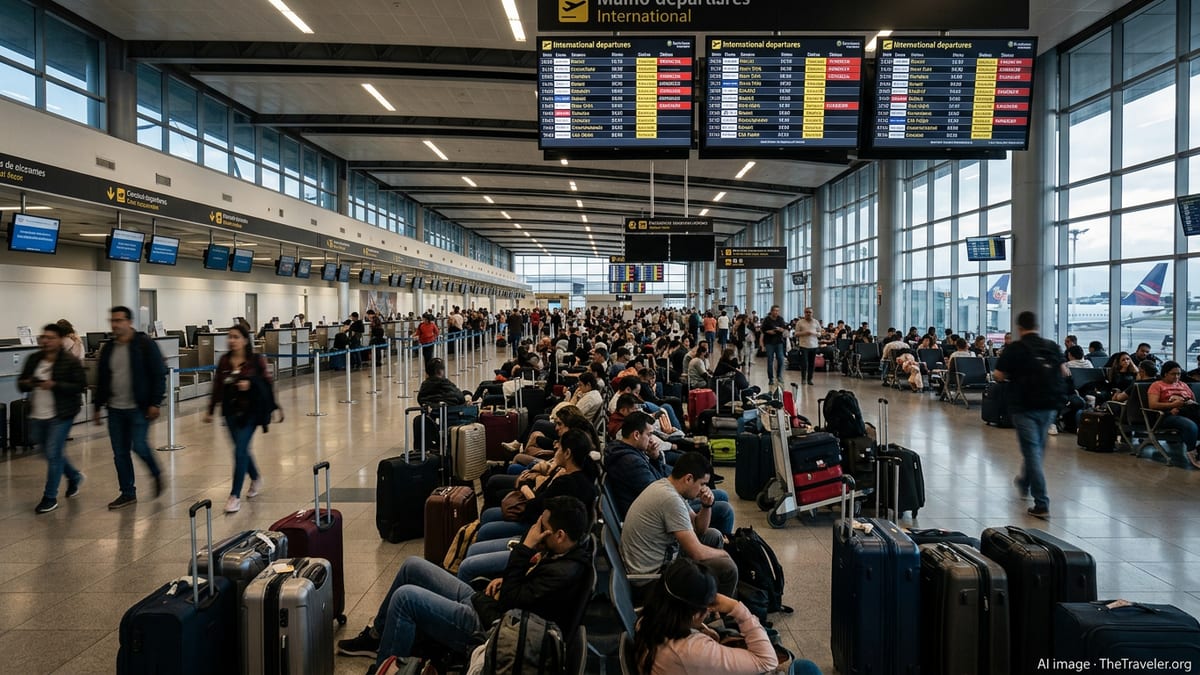
Widespread Disruptions Hit One of Latin America’s Busiest Hubs
El Dorado International Airport, one of Latin America’s busiest aviation hubs and Colombia’s primary gateway, experienced significant operational disruption as delays and cancellations rippled across its international schedule. Publicly available flight-tracking data and local media coverage describe departure boards filled with delayed notices, long queues at check in, and crowded gate areas as passengers waited for updates.
The disruption affected both domestic and international operations, but the heaviest impact was reported on long haul and regional routes served by major airlines such as Avianca and American Airlines. Flights to high demand destinations including Miami, New York, Madrid, and São Paulo saw substantial hold ups, leaving many travelers facing missed connections and unexpected overnight stays in Bogotá.
Reports indicate that the cascading delays turned an already busy travel period into an extended bottleneck, with aircraft and crews out of position and turnaround times increasing throughout the day. As operations slowed, passengers arriving from other Colombian cities also became stranded in the capital as onward flights were pushed back or removed from schedules.
El Dorado’s status as a key regional hub amplified the effect of each cancellation. With the airport serving as a central connecting point between North and South America and Europe, a single disrupted departure often translated into dozens of missed onward connections for passengers who had planned tight itineraries.
Airlines Scramble to Rebook and Accommodate Passengers
Airlines operating at El Dorado moved to adjust schedules, consolidate services, and rebook passengers, but capacity constraints limited how quickly stranded travelers could be accommodated. According to published airline information, some passengers were offered seats on later flights, while others were told that the first available departure to key cities such as Miami or New York would not be until the following day or later.
Travelers on affected flights to Madrid and São Paulo reported particularly long waits, as these long haul routes often operate only once daily or on limited weekly schedules. When such flights are canceled, the number of displaced passengers can quickly exceed the spare capacity on subsequent services, prolonging the disruption.
Publicly available information indicates that carriers applied a mixture of same airline and interline rebooking options, where possible, to redistribute passengers across the network. However, limited seat availability, especially in peak travel periods, meant that some travelers faced extended stopovers in Bogotá or were rerouted through alternative hubs with longer total journey times.
Airlines also had to manage crew duty time limits and aircraft rotation constraints. When aircraft and crews miss scheduled slots, it can complicate compliance with operating rules and require last minute adjustments to rosters. These operational challenges further slowed the recovery of the schedule, particularly for night time and early morning departures.
Passengers Face Long Queues, Missed Connections, and Extra Costs
For passengers, the disruption translated into long lines at customer service desks, uncertainty about rebooking options, and concerns about accommodation and additional travel costs. Accounts shared on social media platforms described crowded terminal areas, with travelers seated on the floor near power outlets and departure gates while waiting for new flight assignments.
Families traveling with children, elderly passengers, and those on tight connecting schedules appeared to be among the hardest hit. Travelers connecting through Bogotá to North America or Europe reported missing subsequent flights from Miami or New York, while others arriving from regional cities in Colombia found themselves unable to continue to their final destinations as cancellations mounted.
Some passengers reported purchasing last minute tickets on alternative routes or airlines at higher prices to avoid extended delays. Others described difficulties obtaining clear information about compensation and assistance, especially when dealing with multiple carriers or complex itineraries that combined domestic and international legs.
Consumer advocates frequently advise travelers in such situations to keep all receipts for meals, transportation, and lodging, and to review the conditions of carriage and applicable passenger rights regulations for each airline and country involved. Although compensation rules vary by jurisdiction and cause of disruption, documented expenses and written records of schedule changes typically play an important role when travelers later seek reimbursement.
Impact on Key Routes to the Americas and Europe
El Dorado International Airport is a critical connecting point for flights linking Colombia with major cities across the Americas and Europe. Routes to Miami and New York serve as vital gateways for Colombian travelers heading to the United States and beyond, while flights to Madrid and São Paulo connect Bogotá to important commercial and cultural centers in Europe and Brazil.
When multiple departures on these routes are delayed or canceled, the effect goes beyond the immediate group of stranded passengers in Bogotá. Travelers waiting to depart from Miami, New York, Madrid, and São Paulo can also experience knock on delays as inbound aircraft and crews are repositioned, contributing to a broader regional impact.
Published aviation data and prior disruption patterns suggest that it can take several days for schedules to fully normalize after a concentrated burst of delays and cancellations at a large hub. Aircraft rotations, crew assignments, and maintenance windows are often planned far in advance, and each unscheduled change has to be absorbed into an already tight timetable.
The disruption at El Dorado also highlighted the interconnected nature of modern airline networks. A delay in Bogotá can quickly cascade into schedule shifts in multiple time zones, affecting not only point to point travelers but also those connecting onward to secondary cities that depend on hub traffic for international access.
What Travelers Can Do When Flights Are Severely Disrupted
Travel experts generally recommend that passengers caught in major disruption events act quickly to understand their options. Monitoring airline apps and departure boards, verifying whether a flight is listed as delayed or canceled, and seeking clarification from airport customer service desks are common first steps.
When an itinerary includes critical connections, such as onward flights from Miami, New York, Madrid, or São Paulo, travelers may benefit from proactively discussing rerouting options that bypass congested hubs or move them onto more reliable departure windows. Rebooking to an earlier connection or a different routing can sometimes reduce the risk of being stranded if problems persist.
It is also advisable for passengers to familiarize themselves with the assistance policies of the airlines involved in their journey. Some carriers provide meal vouchers, hotel accommodations, or ground transportation during extended delays, while others may limit assistance depending on the cause of the disruption and local regulations.
As operations at El Dorado gradually normalize, analysts expect airlines to review the event to identify lessons for handling future irregular operations. For travelers planning trips through Bogotá and other major hubs, the incident serves as a reminder of the value of flexible itineraries, travel insurance that covers delays, and contingency planning when connecting across multiple long haul flights.