

More news on this day
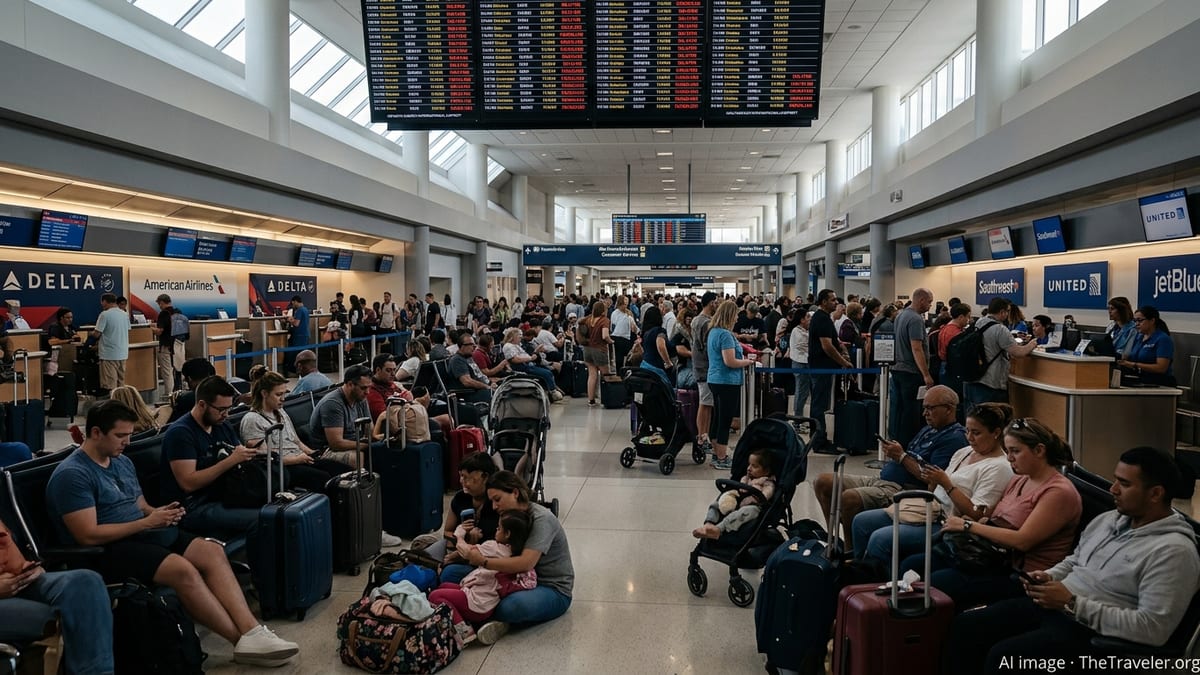
Hundreds of passengers were left stranded at Orlando International Airport on March 20 as publicly available flight-tracking data showed 256 delays and 14 cancellations, disrupting operations for major carriers including Delta Air Lines, American Airlines, Southwest, United, JetBlue, and others on routes to New York, Miami, Chicago, and several international destinations.
Get the latest news straight to your inbox!
Heavy Disruptions Across Major U.S. Carriers
By Friday afternoon, aggregate data from flight-tracking services indicated that Orlando International Airport was experiencing one of the most disrupted travel days of the spring break period, with more than 250 flights delayed and more than a dozen cancelled. The disruption affected a broad mix of domestic and international services, hitting both legacy carriers and low-cost airlines that use Orlando as a key leisure gateway.
Reports on airline performance showed that Delta Air Lines, American Airlines, Southwest Airlines, United Airlines, and JetBlue were among the carriers with delayed departures and arrivals at Orlando. Other operators serving the airport’s three terminals also reported operational knock-on effects, as aircraft and crews scheduled to arrive late in the day were held up at other airports impacted by recent severe weather and airspace constraints across the eastern United States.
Operational statistics for the day suggested that the majority of impacted flights were running with departure delays of at least 45 minutes, with some services pushed back by several hours. While outright cancellations remained limited compared with the volume of delays, the mixture of both created bottlenecks around gate availability, rebooking desks, and baggage handling areas.
The timing of the disruption coincided with the busy March travel window, when Orlando typically handles large volumes of families, vacationers, and conference attendees. That seasonal surge further amplified the impact of each delayed or cancelled departure as aircraft went out close to capacity and rebooking options grew more limited throughout the day.
Key Routes to New York, Miami, Chicago and Beyond Hit Hard
Schedules published for Orlando International Airport show that routes to New York, Miami, and Chicago are among the airport’s highest-frequency corridors, served by a combination of Delta, American, United, Southwest, JetBlue, and other carriers. On March 20, flight-status boards reflected mounting delays on many of these trunk routes, particularly to New York’s LaGuardia and John F. Kennedy airports, Miami International, and Chicago’s O’Hare and Midway airports.
Even relatively short-haul flights between Orlando and Miami experienced extended waits as aircraft arriving from other cities were held up by weather-related congestion and air-traffic-management programs across the broader network. Travelers connecting in Miami to Caribbean and Latin American destinations, or in New York and Chicago to transatlantic flights, faced heightened risk of missed onward connections, with some already forced into overnight stays or multi-stop reroutes.
International traffic at Orlando, which includes services to Europe, Canada, Mexico, and the Caribbean, also saw schedule disruptions ripple outward. Publicly available coverage and social media posts from recent days have described passengers missing long-haul connections after northbound Orlando flights departed late or were cancelled outright during earlier rounds of bad weather in the eastern United States. Those residual effects left today’s operation more vulnerable, as aircraft and crew rotations were already out of their normal patterns.
As the day progressed, delays on the busiest domestic routes contributed to crowding around departure gates serving New York, Chicago, and Miami. With many flights fully booked in both directions during the spring peak, standby lists grew longer and open seats on alternative departures became scarce, particularly for larger families traveling together.
Weather, Airspace Constraints and Spring Travel Surge Converge
The latest round of disruption at Orlando follows a week of unsettled conditions for U.S. air travel more broadly. Recent storm systems sweeping across the Midwest and East Coast have triggered ground stops, ground-delay programs, and large numbers of cancellations at major hubs such as Atlanta, New York, and Chicago. As airlines adjusted schedules to cope with those conditions, knock-on effects spread into secondary hubs and leisure-heavy airports like Orlando.
In addition to weather, airspace flow restrictions and congestion in busy corridors along the East Coast have limited the number of flights that can safely arrive and depart in a given hour. Operational summaries referenced by aviation analysts indicate that when the Federal Aviation Administration imposes such programs at key hubs, downstream airports like Orlando experience cascading delays as aircraft are held at departure points or placed in holding patterns en route.
Orlando’s own operational profile adds another layer of complexity. The airport’s mix of domestic, international, and low-cost carriers, combined with high passenger volumes bound for nearby theme parks and cruise departures, leaves little slack on peak days. During busy spring weekends, most flights depart near capacity, meaning that a single cancellation can displace hundreds of passengers with few remaining options for same-day rebooking.
Recent anecdotal accounts from travelers passing through Orlando have described lengthy check-in lines, crowded gate areas, and extended waits for baggage as airlines and airport staff attempt to clear backlogs created by earlier storms and operational disruptions. Those conditions have raised fresh questions about how well the region’s key tourism gateway can absorb shocks during periods of sustained weather volatility and national airspace strain.
Passengers Face Long Waits, Missed Connections and Hotel Scrambles
For passengers caught in Friday’s delays and cancellations, the operational details translated into long hours in terminals, repeated gate changes, and uncertainty about onward travel. Travelers attempting to reach New York, Miami, and Chicago, or connect through those cities to Europe and Latin America, reported itinerary changes that added multiple stops or stretched originally short journeys into all-day odysseys.
Publicly visible posts on social media platforms and travel forums described families camped out in seating areas with luggage and strollers, as well as reports of long standby lists for later flights. Some travelers who had already endured delays on inbound flights to Orlando earlier in the week found themselves facing fresh disruptions on their return journeys, compounding fatigue and complicating work and school schedules back home.
Accommodation also became a concern for passengers facing cancellations late in the day. With Orlando’s hotels already busy during the spring season, rooms near the airport and along key tourist corridors were in high demand from travelers needing to stay overnight and rebook for the following morning. Travel advisors monitoring conditions recommended that passengers secure hotel options early if their flights appeared at risk, as inventory can tighten quickly during large-scale irregular operations.
The situation added financial strain for some travelers who had to pay out of pocket for meals, transportation, and extra nights in hotels while waiting for the next available departures. In many cases, those costs may only be partially recoverable through travel insurance or specific airline policies, depending on the cause of delay and the fare purchased.
What Travelers Through Orlando Should Expect Next
Industry observers noted that when an airport experiences several hundred delays in a single day, recovery can take more than one operational cycle. Aircraft and crews ending the day out of position can trigger further schedule adjustments the following morning, particularly on early departures that rely on overnighted planes. Passengers booked on the first wave of flights from Orlando on March 21 were advised by many travel resources to monitor their flight status closely and build additional time into their plans.
Travel planning guidance shared by airline-focused analysts and frequent-flyer communities emphasized the importance of checking flight status directly through airline channels before leaving for the airport, especially for connections involving New York, Miami, Chicago, and major international gateways. Many travelers were also urged to make full use of airline mobile apps to receive rebooking options and gate updates as soon as they became available.
For those yet to begin their trips, experts in consumer travel media recommended selecting earlier flights in the day where possible, as morning departures typically offer better odds of avoiding rolling delays that accumulate later. They also advised considering carry-on-only travel to increase flexibility in case of last-minute rerouting, and suggested that passengers build in longer connection times through weather-prone hubs during the late winter and early spring period.
While Orlando International Airport remains one of the country’s busiest and most important leisure gateways, the latest episode of widespread delays and cancellations underscores how quickly operations can be affected when adverse weather, constrained airspace capacity, and peak seasonal demand collide. Travelers heading through the Central Florida hub in the coming days may experience improved conditions as airlines work to reset their schedules, but many will be watching flight boards closely after the latest round of disruption.