

More news on this day
Thousands of air travelers across Australia and New Zealand faced major disruption today as at least 52 flights were cancelled and around 660 delayed, snarling operations for Qantas, Air New Zealand, Cathay Pacific, Emirates and other carriers on routes linking Sydney, Melbourne, Brisbane, Auckland, Perth, Christchurch, Nelson, Los Angeles and additional destinations.
Get the latest news straight to your inbox!
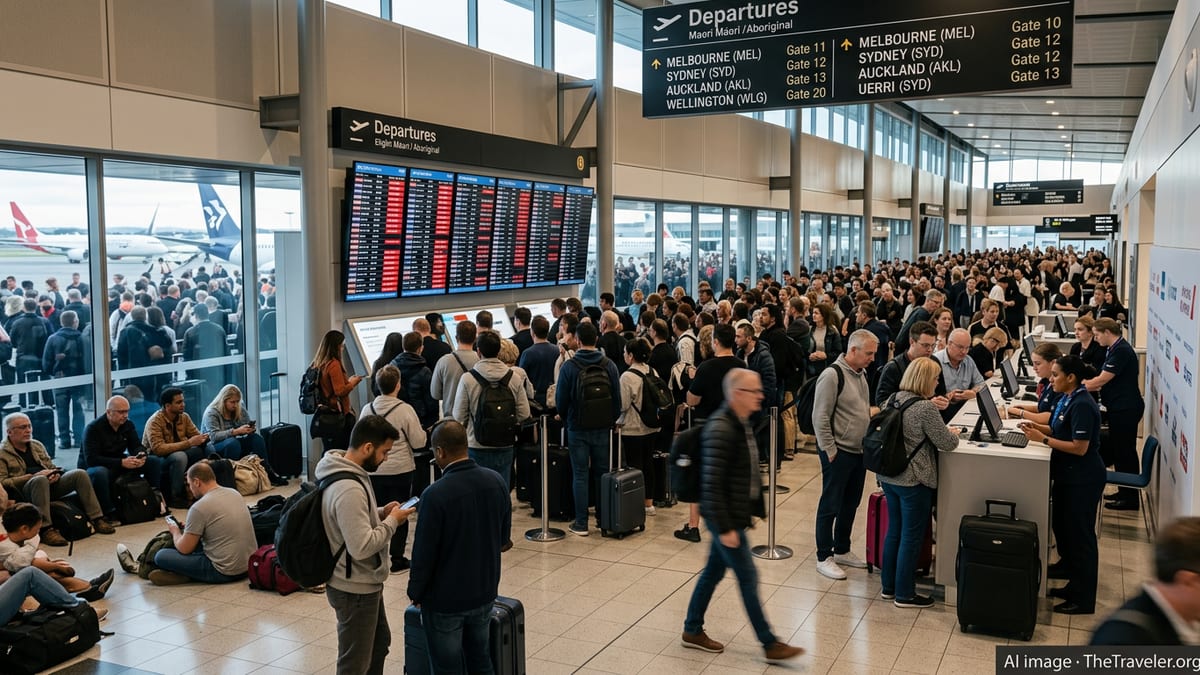
Widespread Cancellations Hit Key Trans-Tasman and Long-Haul Routes
Published airport and airline tracking data for today indicate that the most severe disruption is concentrated at the major east coast hubs of Sydney, Melbourne and Brisbane, together with Auckland in New Zealand, with knock-on effects to secondary airports including Perth, Christchurch and Nelson. While the majority of affected services are domestic or trans-Tasman, several long-haul flights connecting to Los Angeles and other intercontinental gateways have also been delayed or cancelled.
Operational summaries from multiple flight-status platforms show a cluster of cancellations on busy trunk routes such as Sydney to Auckland, Melbourne to Auckland and domestic links into Christchurch and Nelson, where regional schedules are particularly sensitive to network shocks. With aircraft and crew rotations tightly sequenced across the Tasman, a cancellation in one port is contributing to later delays in another, extending the disruption window well beyond the initial problem flights.
Among international operations, services touching Los Angeles feature prominently in delay rosters, reflecting the vulnerability of long-haul routes to any schedule slippage. When aircraft are held on the ground in Australia or New Zealand, subsequent departures from North America are forced into rescheduling or substitution, increasing the risk of missed connections for passengers transiting through Sydney, Melbourne, Brisbane or Auckland to other Asian and European destinations.
By midday local time, aggregated data suggest that cancellation numbers remained modest compared with peak-weather or air-traffic-control shutdowns of previous years, but the volume of delays meant that many passengers were experiencing missed onward flights, unexpected overnight stays and lengthy rebooking queues at already busy terminals.
Qantas, Air New Zealand, Emirates and Cathay Among Most Affected
Australia’s Qantas and New Zealand’s flag carrier Air New Zealand, which operate dense domestic and trans-Tasman networks, feature heavily in today’s disruption statistics. Public on-time performance information for recent seasons has already highlighted the sensitivity of their high-frequency routes to reactionary delays, and today’s pattern of rolling pushbacks and gate changes is consistent with those broader trends.
For Qantas, a complex web of domestic services that feed into international departures is contributing to compounding delays. Where a single late-arriving aircraft operates multiple sectors in one day, each subsequent leg is pushed back, affecting flights from Sydney, Melbourne and Brisbane to Perth and onward to international destinations. Similar dynamics are visible in Air New Zealand’s operations, particularly in and out of Auckland and Christchurch, where regional turboprop services connect into long-haul departures.
Middle East and Asian network carriers, including Emirates and Cathay Pacific, are also experiencing knock-on effects. Their flights between Dubai or Hong Kong and major Australasian hubs such as Sydney, Melbourne, Brisbane, Perth and Auckland depend on tight turnaround times and coordinated slot allocations. When arrival or departure windows are missed, the resulting congestion can ripple across connecting banks of flights onward to Europe and North America.
Publicly accessible timetables and recent announcements from these airlines show that capacity on some routes had already been trimmed or adjusted for seasonal and geopolitical reasons, reducing spare seats available to absorb disrupted passengers. As a result, travelers whose flights were cancelled today in Sydney, Melbourne, Brisbane or Auckland are in some cases being rebooked several days later, or rerouted via alternative hubs such as Singapore, Hong Kong or various North American gateways.
Passenger Experience: Long Queues, Missed Connections and Limited Alternatives
Accounts posted to social platforms and aviation forums from travelers in Sydney, Melbourne, Brisbane, Auckland and Christchurch describe long queues at check-in and transfer desks, with some passengers reporting wait times of several hours to secure new itineraries. With 660 flights delayed across the region today, even modest schedule shifts are resulting in missed connections for those booked on multi-leg journeys.
Particularly hard hit are passengers connecting from regional centers like Nelson and smaller New Zealand or Australian cities into long-haul services. When short-haul feeders into hubs such as Auckland, Sydney or Brisbane are delayed or cancelled, there are often limited same-day alternatives, especially on routes served only a few times daily. Travelers heading to or from Los Angeles have reported needing to route through different continents or accept extended stopovers to reach their destinations.
Travelers are also encountering familiar challenges around accommodation and meal support when overnight stays become unavoidable. While some airlines have well-publicized policies on providing hotel rooms or vouchers during disruption, the practical delivery of that assistance can be inconsistent during peak stress periods, particularly when disruption is spread simultaneously across several major airports.
Consumer advocates in both Australia and New Zealand have in recent years pointed to gaps between passenger expectations and the minimum entitlements set out in local regulations, especially when compared with more prescriptive compensation regimes in some other jurisdictions. Today’s events are likely to renew scrutiny of how airlines communicate options and assistance to customers caught up in sudden large-scale delays or cancellations.
Operational Pressures Highlight Structural Vulnerabilities
Industry analyses of aviation performance in Australia and New Zealand over recent years suggest that days like today are symptoms of broader structural pressures. Published material from airport bodies and air navigation providers highlights reactionary delays, weather, aircraft technical issues and air traffic management constraints as recurring contributors to schedule disruptions, often in combination rather than isolation.
At major hubs such as Sydney, Melbourne, Brisbane, Auckland and Perth, constrained runway and terminal capacity during peak hours means there is little slack available to recover from cascading delays once they begin. When an early bank of flights is disrupted, on-time performance for the remainder of the day typically deteriorates, as airlines juggle aircraft assignments and crew duty limits while attempting to preserve key long-haul departures.
The situation is particularly acute on routes where demand has grown faster than infrastructure expansion. Recent investment plans announced by airports, including runway and terminal upgrades, are aimed at improving resilience over the medium term. However, until such projects are completed, operators in Australia and New Zealand must balance strong demand for travel with the operational realities of congested airspace, weather volatility and finite gate capacity.
Today’s pattern of 52 cancellations and 660 delays underscores how even a relatively contained operational shock can quickly translate into thousands of stranded passengers across multiple cities and international networks. With airlines already managing fleet transitions, evolving safety and security considerations and shifting global travel patterns, there is limited margin for error when irregular operations occur.
What Travelers Can Do on Disruption Days
Publicly available guidance from airlines and aviation agencies offers a number of practical steps for passengers caught up in days like today. Travelers are generally advised to monitor flight-status tools closely, ensure their booking profiles contain up-to-date contact details for notifications, and, where possible, use airline apps or websites to self-manage rebookings instead of joining physical queues.
For those whose flights are cancelled outright, consumer information portals in both Australia and New Zealand explain that entitlements can vary depending on the cause of disruption and the airline’s own conditions of carriage. Passengers are encouraged to keep receipts for essential expenses such as food, ground transport and last-minute accommodation, in case reimbursement is available after travel is completed.
Experts who analyze aviation reliability also stress the value of building additional buffer time into itineraries that rely on tight connections, particularly when traveling through busy hubs like Sydney, Melbourne, Brisbane, Auckland and Los Angeles, or when connecting from regional airports such as Nelson and Christchurch. Allowing extra hours between flights can reduce the risk that a short delay triggers missed long-haul departures.
As operations gradually recover overnight and into tomorrow, airlines and airports across Australia and New Zealand will continue working through the backlog of passengers whose plans were disrupted today. For many travelers, the experience will serve as a reminder of both the complexity and the fragility of the global air network that connects cities across the Tasman, the Pacific and beyond.